 Autodesk Life
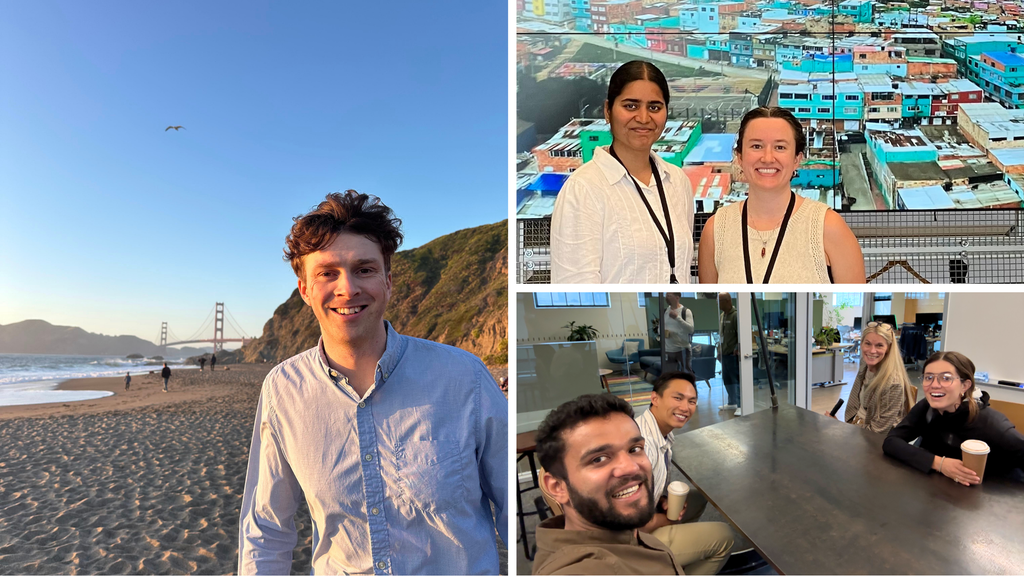
Many Autodeskers started their careers here as interns, and every year we welcome talented students who make an impact from day one. Some of this summer’s internships also supported work related to Autodesk’s role as the Official Design and Make Platform of the LA28 Olympic and Paralympic Games, giving interns exposure to projects spanning sustainable building design, generative design workflows, athlete performance innovation, and digital delivery readiness.
Meet a few of our interns who were involved with this work:
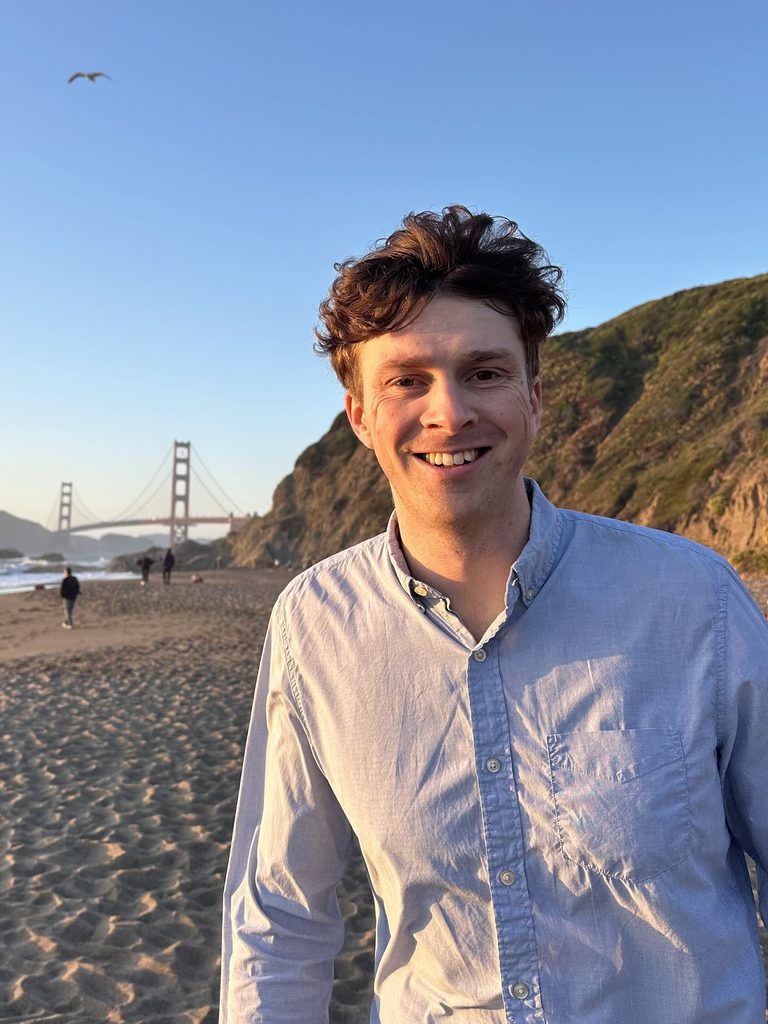
Nicholas Bachand was a Research Intern for Autodesk Research AEC Industry Futures, as well as a Civil and Environmental Engineering PhD Candidate at Stanford University. During his internship, he ran simulations of outdoor thermal comfort to understand where cooling interventions can have the greatest impact.
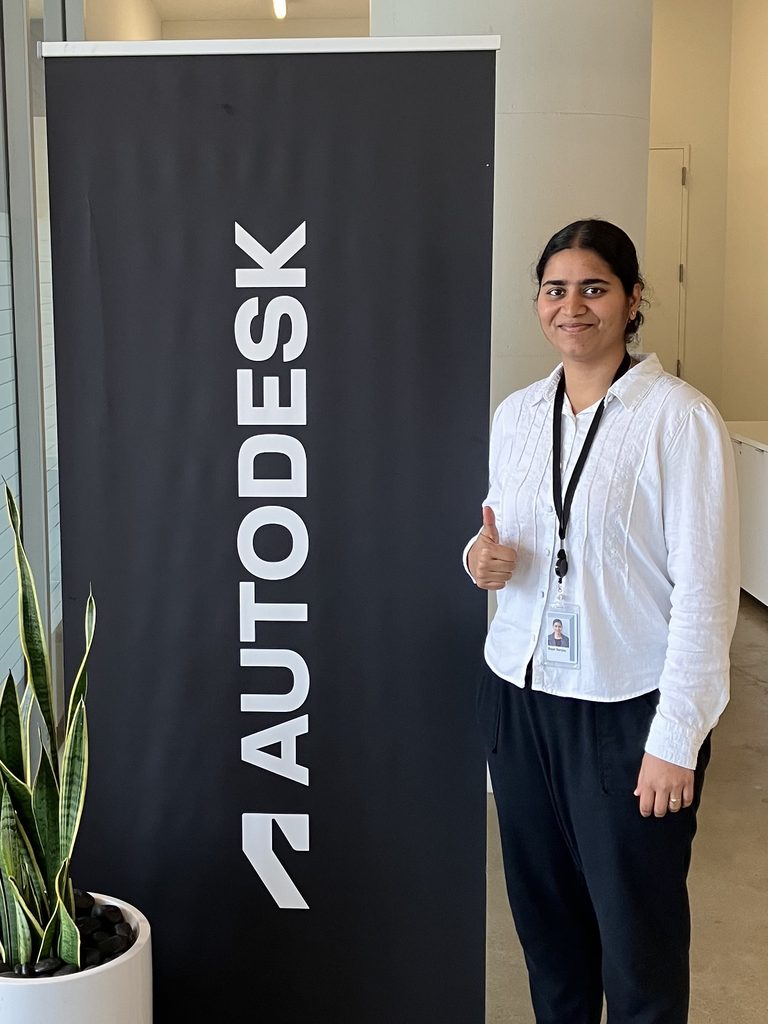
Sejal Sanjay Shanbhag was a Sustainable Buildings and AI Research Intern with Autodesk’s Sustainability Solutions team within the Impact organization. She is pursuing a PhD in Construction Science at Texas A&M University, where her research focuses on sustainability in buildings. A major part of her internship involved testing and helping shape AI-assisted workflows for sustainability analysis.
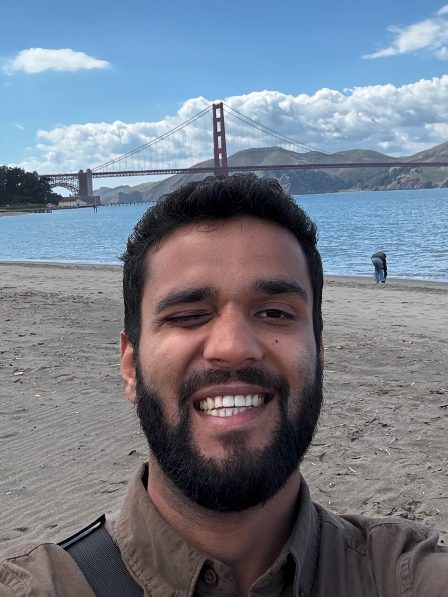
Abhishaik Sud was a Strategy Intern with the Product Development & Manufacturing Solutions (PDMS) Business Strategy & Insights team. He’s currently pursuing his MBA at Georgetown University. This summer, he worked on developing marketing strategies for the Platform Services & Emerging Technologies (PSET) team, brainstorming ways to increase awareness of Autodesk’s role and thinking through how we can create engaging experiences that connect with customers, students, and partners.
What interested you most about working on projects connected to the LA28 Olympic and Paralympic Games?
Nicholas: Looking back at different Olympics I have watched, I feel like they each bring me back to a specific moment in my life when other things paused and I got to enjoy the Games. There are not many events that have this kind of impact on people around the world. From a technical perspective, I can imagine how cool it must be to work across such large sites that require scalable simulation methodologies. And within these sites, there are many competing priorities, so finding optimal designs must be an interesting challenge.
Sejal: The opportunity to explore sustainable decision-making at the scale of globally significant events that Autodesk supports excites me the most. Projects connected to the Games involve many stakeholders, material choices, performance requirements, and changing project conditions. What is meaningful to me is having the opportunity to develop agentic workflows that bring together existing Autodesk tools and then seeing how those workflows might be applied to support a major global event like this.
Abhishaik: Contributing to a project related to the Games was exciting because it’s not often that you get to work on an initiative that could have such global reach and lasting impact. The Games bring together people from around the world, and it was fascinating to get a glimpse of what goes on behind the scenes to bring an event of this scale to life to a project connected to the LA28 Olympic and Paralympic Games was exciting because it’s not often that you get to work on an initiative with such global reach and lasting impact. The Games bring together people from around the world, and it was fascinating to get a glimpse of what goes on behind the scenes to bring an event of this scale to life.
How does your work connect to Autodesk’s role in the LA28 partnership or the broader Design and Make story?
Sejal: My work focused on the connection between design information and sustainability decisions. A building, venue, or temporary structure is not created through one isolated choice. Geometry, materials, performance requirements, procurement information, cost, and carbon all interact with one another. The agentic workflows I have been testing explore how this information could be brought together more effectively.
Abhishaik: While my work isn’t directly designing products or venues, it’s focused on ensuring that more people understand the impact Autodesk has in helping innovators design and make the world around us. Through the lens of the LA28 Games, I’ve had the opportunity to think about how Autodesk can tell its story in a way that resonates with different audiences – from students discovering design for the first time to industry professionals and customers. What I’ve enjoyed most is seeing how strategy can help bring Autodesk’s mission to life. What I’ve enjoyed most is seeing how strategy can help bring Autodesk’s mission to life.
Nicholas: I was able to think about how events like the Games can be the best experience possible for spectators and volunteers who will be outdoors. Towards this goal, I am exploring how thermal comfort can inform design choices and how agentic frameworks can leverage thermal comfort when making design decisions.

What have you learned through this experience?
Abhishaik: One of my biggest takeaways has been understanding how strategy comes together in a large, global organization. I learned what it means to work on initiatives that won’t come to life for years – whether it’s long-term brand strategy or activations tied to future events, you have to think beyond immediate results and make decisions with a much longer time horizon in mind. That requires a very different perspective than solving short-term business problems.
Nicholas: I have learned that strong quantitative analysis can go a long way towards accomplishing qualitative goals. Most people on this project already had a sense that LA can be quite hot in the summer, but they were excited to see numbers that backed these projections. Putting numbers behind heat risk offered people quantitative backing to advocate for real solutions.
Sejal: Because my academic research involves machine learning, optimization, and automated simulation, I was familiar with the technical potential of AI. This internship has helped me think more deeply about usability and implementation. A workflow may be technically impressive, but it is only valuable if users understand what it did, trust the information it used, and can verify the result.
I have also learned that testing, documenting failures, and reporting confusing behavior are meaningful contributions. With emerging technology, discovering what does not yet work can be just as important as demonstrating what does.
What would you tell other students about the opportunity to work on projects like this as an intern at Autodesk?
Sejal: Don’t wait until you feel like experts before contributing. Internships involving emerging technology naturally include ambiguity, unfamiliar tools, and problems that do not yet have established solutions. Also, speak with people outside your immediate project. Some of my most valuable learning has come from conversations with colleagues working in sustainability, engineering, research, product development, and customer engagement.
Nicholas: Partnerships like Autodesk’s with the LA28 Games provide a great opportunity to work on new ideas and think outside the box. There are not many events that have this kind of impact on people around the world.
Abhishaik: I’d say go for it! If you’re curious, willing to ask questions, and eager to learn, Autodesk is an incredible place to grow. You’ll gain exposure to cutting-edge technology, work alongside people who genuinely want to help you succeed and leave with a much deeper understanding of how strategy, innovation, and collaboration come together to solve real-world problems.
Whether they’re supporting work related to Autodesk’s role as the Official Design and Make Platform of the LA28 Olympic and Paralympic Games, exploring emerging technologies, supporting customer-focused work, or bringing new perspectives to complex challenges, interns play an important role in Autodesk’s culture of innovation.
Looking for hands-on experience and meaningful work? Explore opportunities and join our Talent Network to stay connected with future roles at Autodesk!