 Stella Kislyuk
 Daniela Stajic
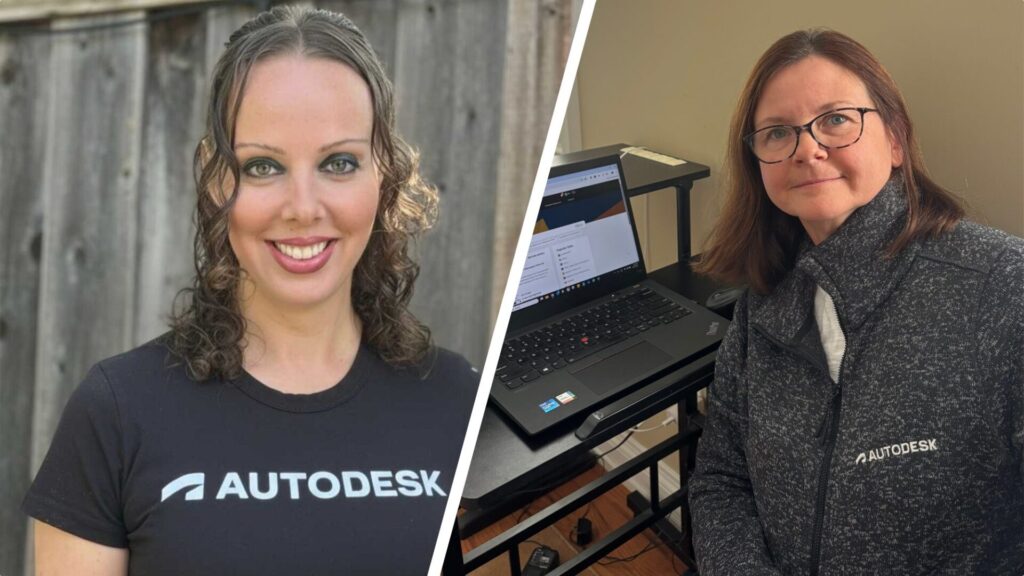
At Autodesk, we talk a lot about building a culture that allows teams to innovate at scale. But innovation doesn’t just come from technology — it comes from people working together to solve shared problems in smarter ways.
Earlier this year, our teams in Entertainment Media & Solutions (EMS) and Developer Relations (DevRel) partnered to rethink how internal developer support works. The result wasn’t just an improvement — it was a transformation. And it’s now becoming a model for scaling a great developer experience across the company.
The problem: Too many channels, too little clarity
As EMS teams grew and our product suite expanded, our internal developer workflows began to show strain. Support questions were spread across multiple Slack channels. Issue tracking lived in Jira but often started in Slack, requiring manual follow-up. Developers were spending more time navigating processes than building products. We knew we could do better, and it had to start with clarity, efficiency, and a platform approach.
The solution: One channel, smart automation, and AI support
Together, EMS and DevRel aligned on a shared strategy:
- Slack consolidation: We unified EMS developer support into a single, focused Slack channel. This gave teams a central space to ask questions, share knowledge, and collaborate.
- Custom Slack-to-Jira automation: Built by DevRel, this workflow allows developers to convert Slack conversations into structured Jira tickets with a click — retaining context and saving time.
- AI-assisted support: On top of that automation, DevRel deployed an AI-powered layer that responds to questions in real time, helps triage issues, and recommends relevant documentation — all directly in Slack.
These tools weren’t off-the-shelf solutions. They were built in-house, tailored to how our developers actually work.
The impact: More focus, less friction
Since launching this approach, our developer response times have dropped significantly, and our internal support load has become more manageable and transparent. Additionally, our engineers are spending less time searching for help and more time writing code, and teams across Autodesk are now exploring how to adopt the same model.
This was never just about streamlining tickets — it was about removing friction from developers’ day-to-day work and giving them back time and focus.
Why it worked: Platform thinking, real partnership
What made this successful wasn’t just the tools; it was also the partnership. EMS brought urgency and on-the-ground insight, while DevRel brought platform thinking, automation, and empathy for the developer journey. This collaboration is a reminder of what’s possible when we solve for the experience first — and use technology to scale it.
We’re continuing to improve and scale this platform across other organizations inside Autodesk, with new features, analytics, and deeper AI integration. And we’re learning a lot along the way.
If you’re thinking about how to improve the developer experience inside your own teams — whether that’s at the scale of dozens or thousands — we’d encourage you to start where we did: with a shared goal, a willingness to rethink old habits, and a commitment to building tools that developers want to use.
Looking for a new career opportunity in tech? Join us at Autodesk!