 Autodesk Forma Team
Forma Site Design, available in the AEC Collection or as a standalone subscription, offers powerful AI-powered tools for architects and designers in pre-design and schematic design phases.
Guest blog post
Author: Marco D’Ambrogio
Lead for Architectural Intelligence, Sweco Denmark
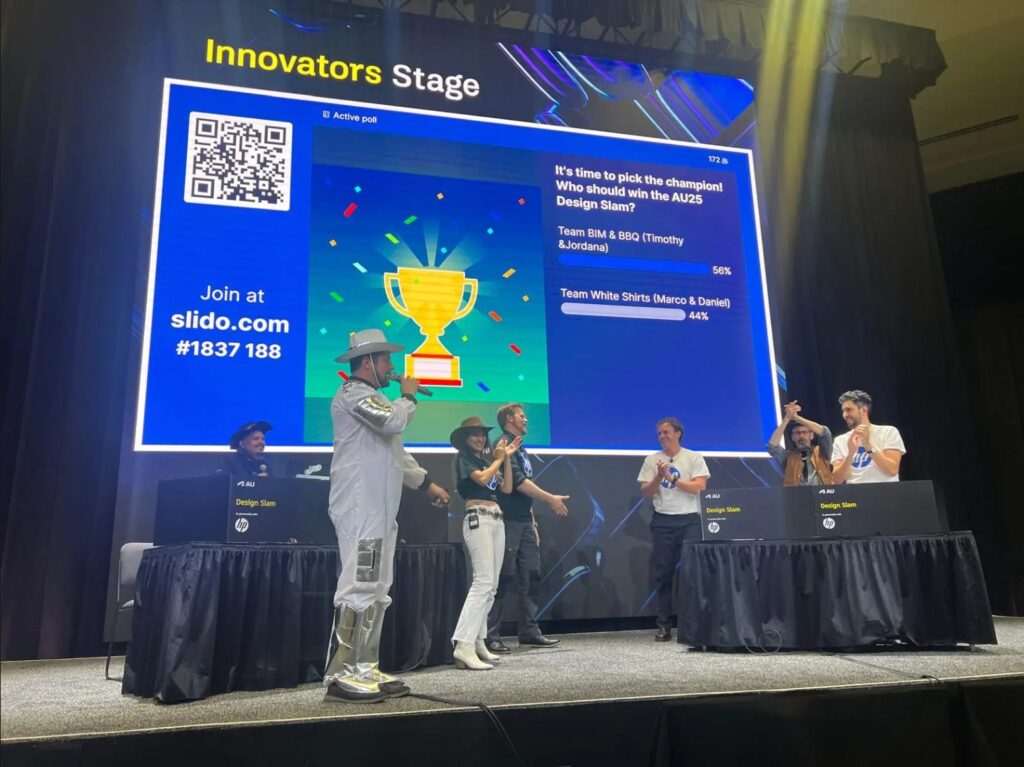
Last September, Daniel Rees from Skanska and I, representing Sweco Architects Denmark, had the honor of competing on stage at the AECO Design Slam during Autodesk University 2025 in Nashville. Watch the full event here.
This year’s challenge was to design a mixed-use neighborhood in The Gulch, Nashville, that celebrates the city’s music heritage. Our deadline was just 40 minutes: 20 minutes to model the concept and 20 minutes to generate plans, visualizations, and performance metrics. And then 5 minutes for the final presentation. To make this work, we had to rethink conventional ways of working in early-phase design, which tend to be production intensive.
The competition was equally stressful and thrilling! While we didn’t take home the trophy (congratulations to Team BBQ & BIM Timothy Halvorson and Jordana de Castro Rosa!) we left the stage with valuable insights and four important questions for our industry, which I’d like to explore:
- What are we truly offering our clients today, and how will AI and data-driven design redefine that value?
- Are we preparing our architectural offices for the next generation of AECO tools?
- Are we training our teams, templates, and workflows effectively?
- Is our approach to architecture ready for an AI-augmented future?

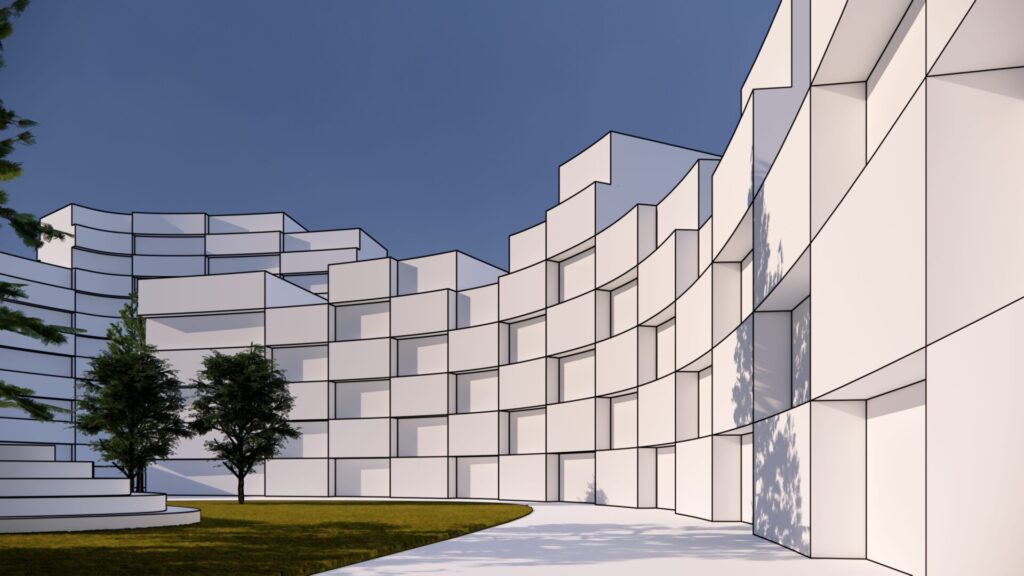
Our design explored this new neighborhood as a living instrument, with architecture responding to sound and movement. Rhythm was a central theme, both in music and how people live, move, and connect.
On the day itself, we used a sequence of tools that mirror how we approach technology and design at Sweco Denmark. It’s never about using tools in isolation; it’s about making them work in harmony in an interconnected workflow to enhance the way we design.
- We started with Forma Site Design for the initial site analysis.
- We then shifted into Rhino with Grasshopper to develop our massing and design logic.
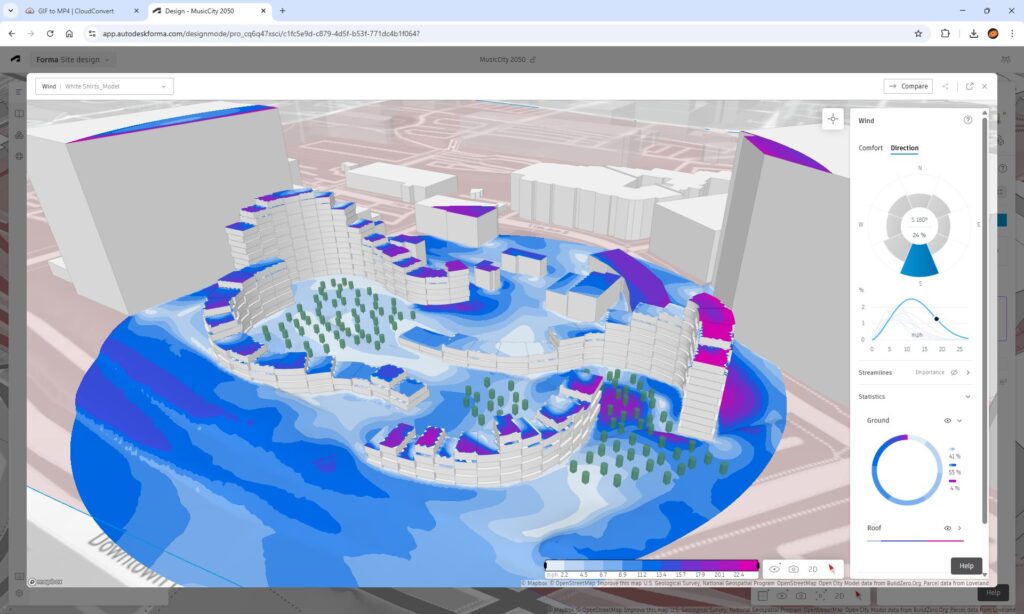
- After that, we circled back to Forma to run microclimate simulations, ensuring that environmental performance was baked in early.
- For program and plan design, we brought in Finch.
- Finally, we used Forma Board to present everything cohesively.
- For visualization, we exported from Rhino into Enscape and used Midjourney for more refined imagery.

The competition highlighted two main strategies which reflect our tech approach at Sweco Denmark. The super tight deadline required a shift from traditional, production-oriented workflows to a performance-driven design process, demanding absolute synchronization between tools, data, and teamwork–there wasn’t a minute to waste.
Traditionally, a lot of early-phase time is spent on execution, such as creating detailed drawings, rather than exploring ideas (see image below). What these tools let us do is shift that balance. By reducing the heavy lifting of execution time, we free ourselves up to focus on creativity and strategy. We can visualize and iterate much faster, and we can invest more time into developing and refining ideas. It’s not that the traditional way is “bad,” but it’s simply not as efficient in placing energy where it counts most.


That’s exactly what we did with the Design Slam: we knew the execution would happen on stage in a tight timeframe, so we spent the month before preparing strategies, diagrams, and team dialogue. That way, we were ready to execute efficiently when the clock started. It was a fantastic way to work.
Secondly, we believe in frontloading knowledge right from the start. The reason is simple: the more we understand a site and its constraints early on, the less we have to fix down the line. By using tools like Forma Site Design in the early phase, we’re essentially bringing in specialized analysis and expertise right from the beginning. That means potential clashes and issues are anticipated and addressed before they become costly problems.
“Forma Site Design gives us a data-driven foundation for the site.”
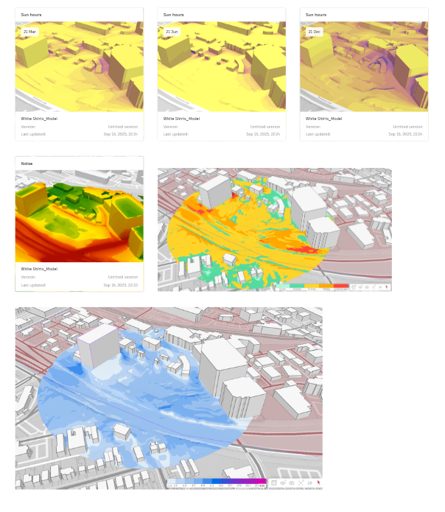
It lets us run microclimate simulations and other analyses upfront (site analysis using Forma Site Design, pictured left). Combine that with parametric and generative design, and we can explore far more options while keeping everything balanced and robust. In short, we’re building a solid, well-informed project structure from day one.
The biggest benefit of this performance-driven design process is that optimization gives us a strong backbone, a solid foundation to hold the project steady while we experiment with new ideas. If we succeed at creating that solid base, we naturally open up more room to explore new potentials and push boundaries further.
In practical terms, this approach becomes a huge driver for sustainability and the green transition; a solid project can evolve into a better project. The real challenge is not to settle. It’s easy to reach a point where things feel “good enough” and stop there. But for us, it’s about using these tools to keep pushing the boundaries and ensuring we always deliver the best possible project for each site.
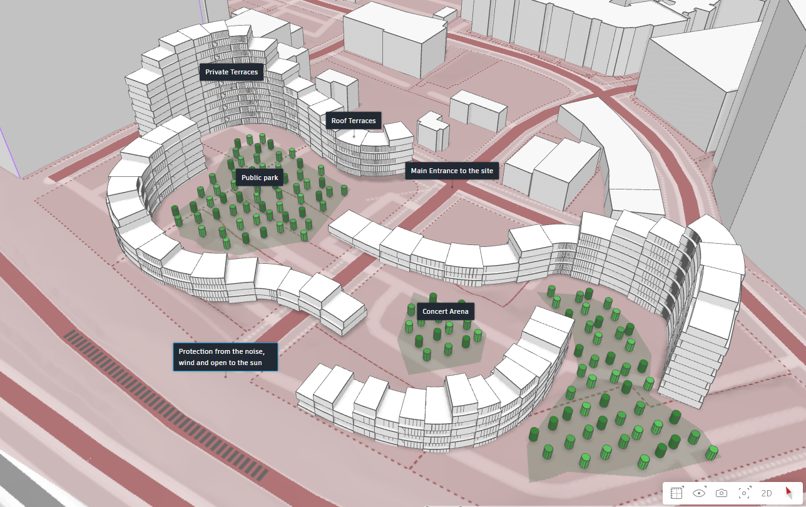
In parallel, we’ve seen how improved performance benefits not only the building itself but also the collaboration process. Thanks to the analysis we get from Forma Site Design, we can bring in specialized engineers and consultants right at the start of a project. Whether it’s about noise, wind, daylight, or microclimate, we open those conversations to consultants early rather than waiting for them to catch issues later when it’s much harder to fix. This early collaboration means we’re not asking engineers to review mistakes–instead, we’re preventing those issues from happening in the first place. Everyone talks early, everyone’s on the same page, and the quality of both collaboration and the project improves as a whole. It’s a win-win scenario for everyone involved.
Moving an entire office or even the industry forward isn’t about forcing innovation; it’s about guiding a natural evolution. We still aim to understand and design based on what we know. The difference is that by using the right tools at the right time, we broaden our knowledge and make decisions using a richer set of inputs. We’re not cutting the overall time–we’re making that time more efficient and ensuring that decisions are based on a wider, more controlled range of information. We are evolving the current workflow so it’s a natural transition, not a radical change. It’s about using our time and our insights more effectively than ever before.

AI and data-driven design don’t fundamentally change what we deliver to clients–they just elevate it. While the core value of what we provide (delivering solid, well-informed projects) remains the same, it’s now enhanced. With data-driven approaches, we’re injecting more stability and quality into every project. AI helps us move faster between multiple scenarios in parallel. So, the real value we’re redefining is a blend of speed and excellence. Clients get more reliable, data-backed outcomes. Our job is to package that value to them clearly so they see it’s not just about doing things quickly, but it’s about doing things better. In short, we’re delivering the same service, but enhanced with a new level of precision and insight that really raises the bar of the spaces we envision and build.
I look forward to continuing this exploration at Sweco Architects Denmark, helping shape the dialogue between technology and industry to bring our profession closer to a smarter and more responsive way of designing.
Images courtesy of Marco D’Ambrogio and Daniel Rees.
All opinions are those of the contributor and do not necessarily represent the views of Autodesk.