 Beth Foster-Chao
 Ade Jimoh
Our investment in Trellis, an Acumen Investment Initiative
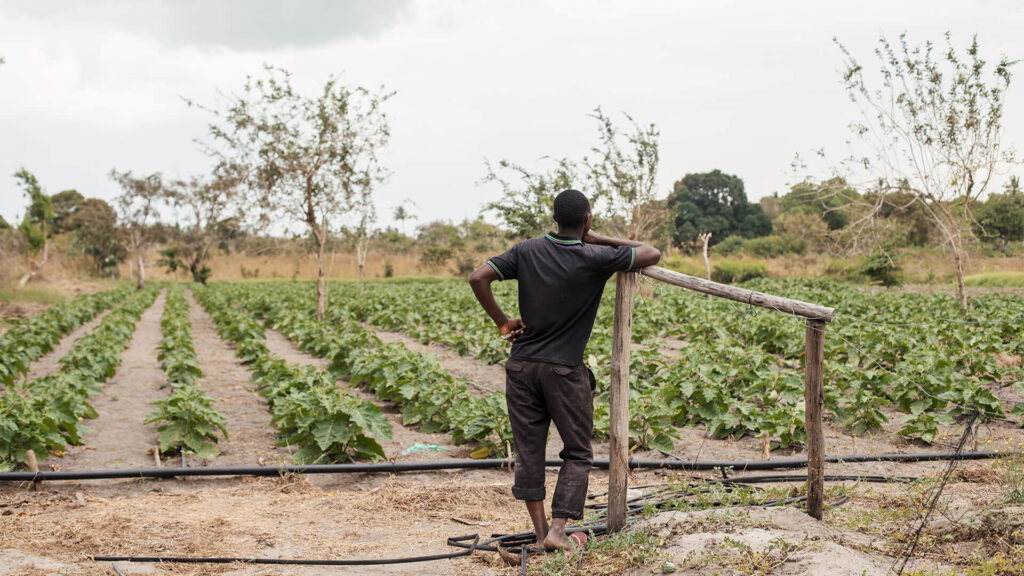
Smallholder farmers (SHFs) produce up to 70% of the food in low- and middle-income countries. Yet they are among the most climate vulnerable people on the planet. Increasingly severe and unpredictable droughts, floods, and heatwaves are threatening their livelihoods and, by extension, the food security of more than 2 billion people.
Despite agriculture’s central role in emerging economies, it remains one of the most underfunded sectors in the climate finance landscape. In 2023, only 0.8% of climate finance, just $5.5 billion, was directed toward small-scale agri-food systems. Even considering climate finance for the entire agri-food systems, which is at $28.5b, it is still at least seven times lower than the most conservative estimated needs.
To build resilience for vulnerable communities, we need to invest in innovation at the ground level. That starts with smallholder farmers and the early-stage companies working to empower them.
Why Trellis?
The Autodesk Foundation is proud to support Trellis, a $25 million philanthropically backed investment initiative launched by Acumen to invest in pre-seed and seed stage companies serving smallholder farmers across East and West Africa. Trellis is one of five initiatives under Acumen’s Patient Capital approach, an impact-first investment model that embraces longer time horizons, greater risk tolerance, and flexible structuring to support solutions that traditional capital often overlooks.
The initiative focuses on deploying capital to four agricultural business models that drive both income generation and climate resilience for SHFs:
- Farmer-Allied Intermediaries: Aggregators, processors, and cooperatives that support regenerative agriculture and strengthen value chains,
- Market-Integrated Producers: Companies that improve yields and enable market access for farmers,
- Value Chain Optimizers: Logistics, storage, and distribution businesses that reduce post-harvest losses and increase profitability for farmers, and
- Systems Enablers: Technology platforms that deliver climate adaptation finance, insurance, and data at scale.
Across these business models, the Trellis team looks for entrepreneurs offering farmers holistic solutions. Acumen’s Investing in Climate Resilience research finds that the models most effective at strengthening farmers’ ability to withstand climate shocks are those that integrate bundled services, market access, and income‑generating opportunities, which together drive measurable improvements in production and resilience. By validating and de-risking these models, Trellis aims to catalyze broader investment into agricultural adaptation and show that climate-smart agriculture can be both impactful and financially sustainable.

“Climate resilience will not be built from the top down. It will be built by backing the entrepreneurs closest to farmers—and giving them the patient capital needed to prove which innovations work at scale.”
-Christopher Wayne, Director of Agriculture, Acumen
Our collaboration
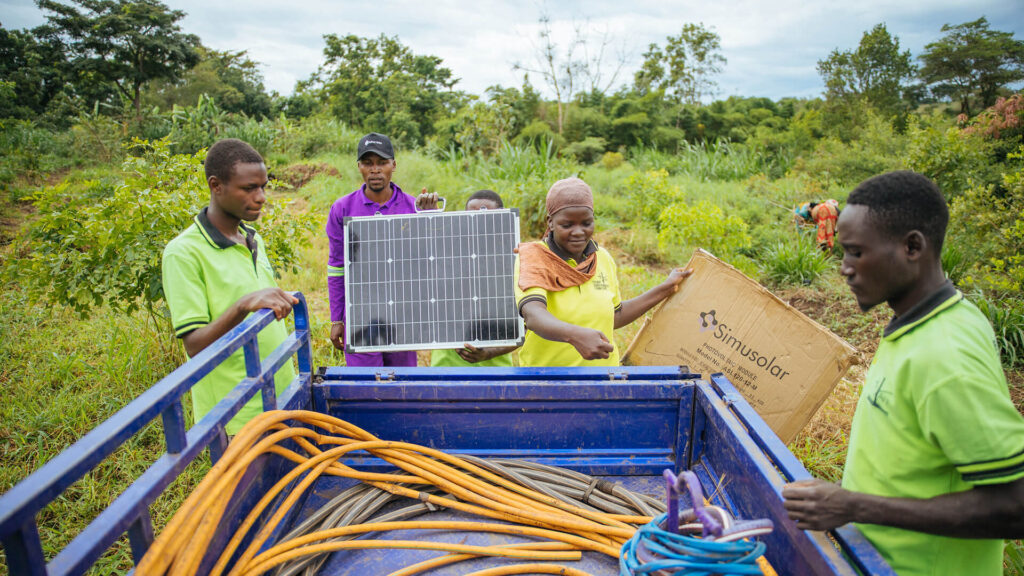
Our collaboration with Acumen brings Autodesk’s technical assistance and design expertise to the Trellis ecosystem. Many of the companies in the Trellis portfolio are developing products that rely on intentional design and manufacturing. These include solar-powered irrigation systems, mobile storage units, and crop-processing facilities. With access to Autodesk technology, pro bono talent, and engineering fellowships, they can design agriculture technologies that are locally relevant, durable, and affordable.
“Great design is a force multiplier for impact. Through this partnership, we’re helping ensure resilient agricultural solutions are not only innovative, but genuinely built around the needs of farmers and the companies who are serving them.”
– Christopher Wayne, Director of Agriculture, Acumen
Smallholder farmers are on the frontlines of climate change. They are also essential to global food systems, local economies, and environmental sustainability. Trellis is demonstrating what is possible when patient capital meets farmer-focused innovation.
Learn more about how Trellis is advancing climate resilience and inclusive growth in agriculture.