 Ameera Azeez
Forma Site Design, available in the AEC Collection or as a standalone subscription, offers powerful AI-powered tools for architects and designers in pre-design and schematic design phases.
When you’re doing a site analysis in architecture and urban planning for pre-design and conceptual design, understanding sun exposure and solar gain is a must – it’s a core principle of passive design. In the early phase of design, architects face the challenge of balancing density with environmental performance and living qualities. Forma Site Design simplifies this by integrating environmental analysis directly into the pre-design and conceptual design workflow. By utilizing sun hours analysis, designers can support their intuition with data-driven passive design strategies that enhance both sustainability and project value.
A building’s orientation in relation to the sun and the ability to effectively control it can make or break the success of a project. In fact, a study from New Zealand, found that each additional hour of direct sunlight exposure for a house per day, averaged across the year, added 2.4% to its market value. More importantly, research also shows how sunlight exposure can contribute to improving mood, reducing stress, and enhancing mental well-being amongst other benefits.
Different regions have different needs when it comes to the sun. Buildings in cooler countries prioritize warmth, positioning outdoor areas and windows to maximize sun, whereas those in warmer countries need to maximize shade and avoid the scorching heat of the high sun. When optimizing a design for sun and daylight, glare and overheating need to be considered for occupant comfort and reducing demand for cooling.
Design and analysis in one platform
Forma Site Design‘s sun hours analysis supports you with fast, visualized results within minutes. The sun hours analysis works by measuring the number of sunlight hours at different points on the ground and on the building’s façade, on any given date. The easy-to-understand data and visuals help guide your choices, empowering you to strike the ideal balance between comfort and efficiency.
Having Forma Site Design’s sun hours analysis means architects can now access data that was not easily available due to the need for in-depth technical expertise and rework and hassle to prepare the model for analysis in a different tool. As the information is integrated into your massing model, this means you can easily run your analysis in one single software.
How to conduct sun hours analysis in the pre-design phase with Forma Site Design
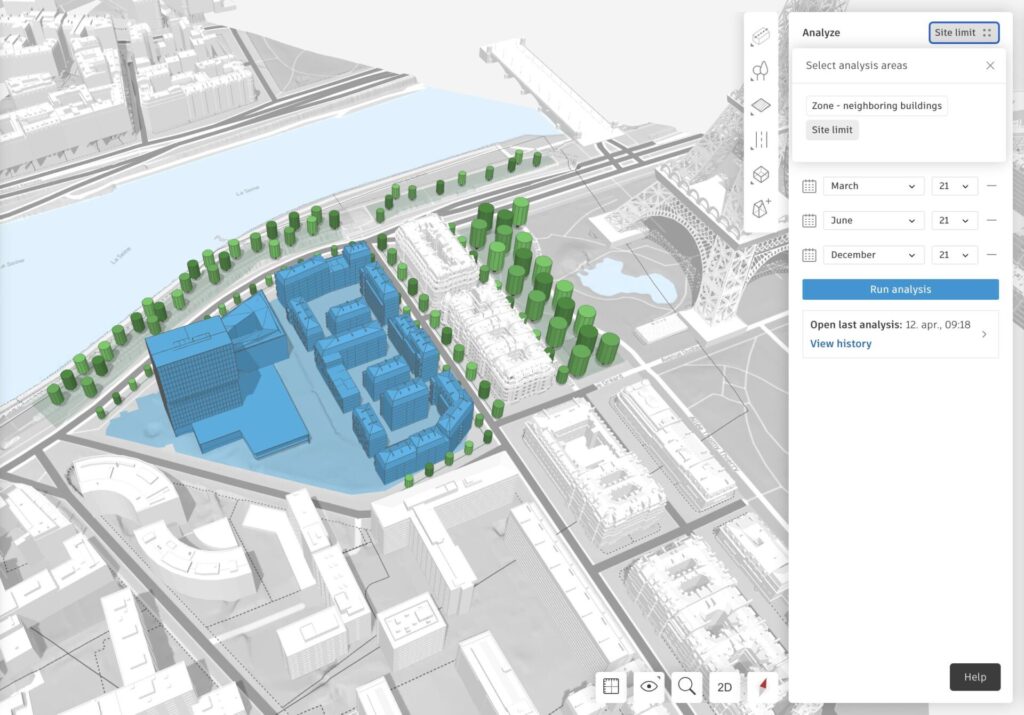
To access the analysis, navigate to the Sun hours option in the Analyze menu on the right panel. Open the Analysis Area Selection menu at the top of the right panel and continue to select one or more site limits or zones. This will define the area where the sun hours analysis will be calculated. You can run this analysis either for your specific site or you can define a wider area to see the impact of your design on its surroundings.
Run the sun hours analysis for multiple dates throughout the year to understand how sun conditions change on your site–for example, through the summer and winter solstices and the spring and autumnal equinoxes. Input the dates of your choice on the right panel.
Interpreting the analysis results
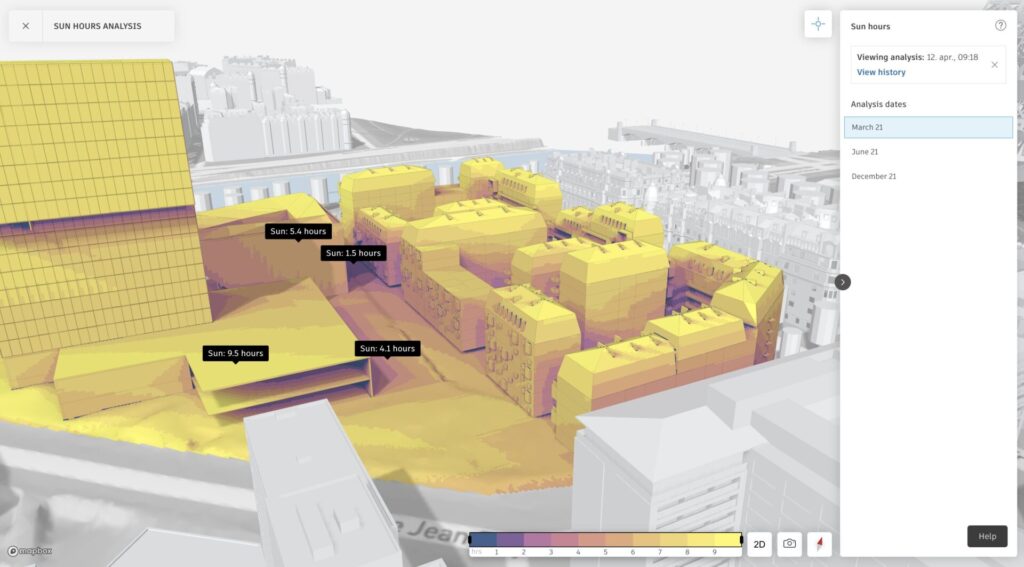
The analysis results will show the number of sun hours for the date selected. Use the inspection points to see the exact number of sun hours for specific points of interest. To enable the Inspect Tool, navigate to the icon on the top right corner of the 3D scene.
How to optimize solar gain on facades and outdoor spaces
Forma Site Design runs two types of direct sun analyses: analyses of sun hours received by buildings and on the ground.
Optimizing solar gain on building facades
This analysis considers the buildings that are within the analysis selection area. These results are vital in understanding future living conditions for the building’s residents. For instance, how sunny are the apartment living rooms or balconies? These can be important deciding factors in the pricing of apartments. Additionally, understanding how your massing might potentially block sun access to neighboring buildings can help you mitigate issues earlier in the pre-design process.
Enhancing microclimates in outdoor spaces
Using the sun hours on the ground allows you to optimize the quality of the outdoor areas and create more enjoyable spaces according to how much shade or sun your site needs. For example, will a cafe terrace be too shaded in winter or a playground too hot in summer? You can also leverage the analysis to check regulatory requirements specific to your project location.
Like all of Forma Site Design’s analyses, the sun hours analysis uses data-driven insights in real-time to help you make faster and more informed design decisions that enhance client and sustainability outcomes and reduce risk. So whether it’s for sunnier courtyards or more shaded facades, Forma Site Design’s sun hours analysis helps you get the best sun conditions earlier and more confidently.