 Jeanne Tan
Forma Site Design, available in the AEC Collection or as a standalone subscription, offers powerful AI-powered tools for architects and designers in pre-design and schematic design phases.
This blog post is based on the Autodesk University 2025 class: Leveraging Forma and its Extension Ecosystem for Airport Design. Watch the full session here.

In this interview, Thesla Collier, Design Technology Manager at HNTB (pictured) shares how advanced tools unlock new opportunities to improve building performance to meet high sustainability goals. Based in the US, HNTB is a leader in infrastructure, transit, and aviation projects.
- By integrating real-time data and energy analysis into the design process at the early stage, architects can get a head start on improving building performance.
- Critical early decisions have major implications for design development and construction operations. New data-driven tools such as Forma Site Design and FenestraPro enable designers to make informed decisions when information, budget, and time are limited.
- It empowers them to make sustainable choices earlier, improve client conversations, and deliver projects that balance aesthetics, efficiency, and environmental responsibility, no matter the project scale.
Thesla, tell us about the specific conditions of airports for envelope performance.
Airports are large-scale, horizontally oriented facilities that rely on extensive glazing to create bright, naturally-lit environments. This design strategy enhances passenger experience while reinforcing the architectural identity of openness and flow. However, these design choices result in high operational costs, particularly due to the high volumes and the need for significant HVAC systems.
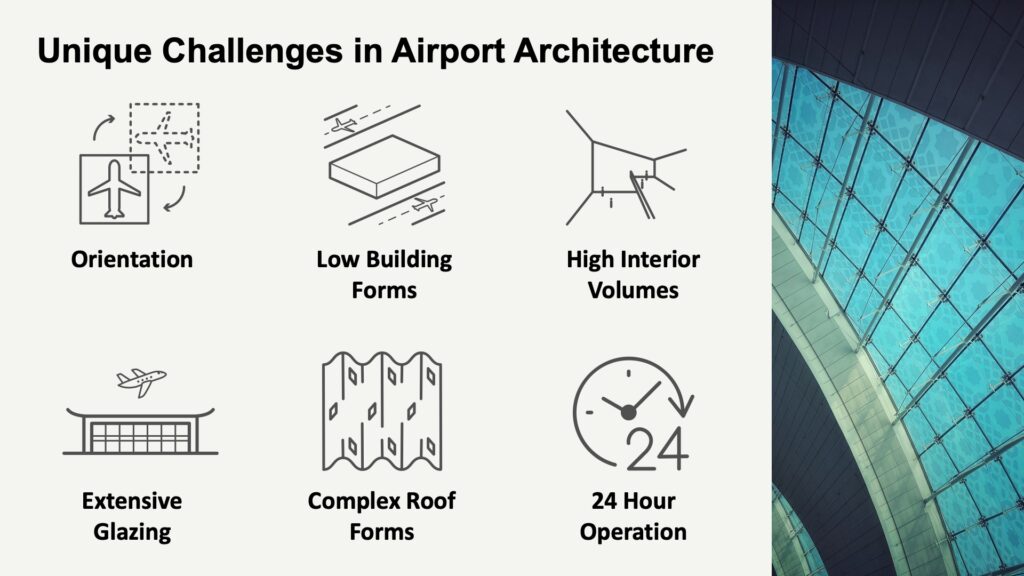
Selecting the optimized type of glazing is crucial; while clear glass is aesthetically pleasing, it increases heat transmission, leading to greater energy consumption and inefficiency. Early conversations with clients about these choices are essential, especially as most airports have firm commitments to sustainability, often aiming for LEED Gold or Platinum certification to optimize their facilities. But you can only make these informed decisions if you have the data.
How did you use Forma Site Design and FenestraPro to optimize envelope design?
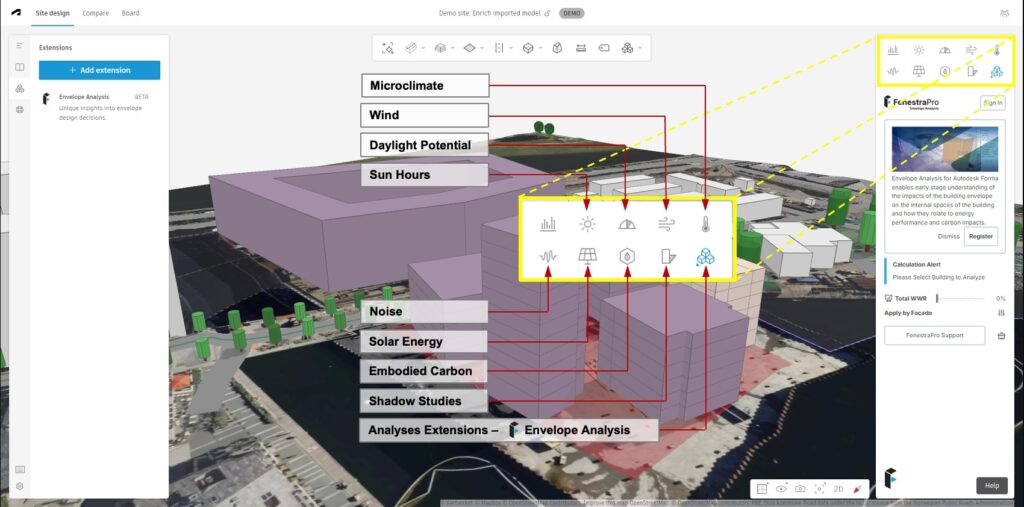
Forma Site Design enables real-time analysis of environmental factors such as sun, daylight, and shadows, that influence building orientation and form. FenestraPro Envelope Analysis complements this by providing envelope performance insights that support energy-efficient design decisions.
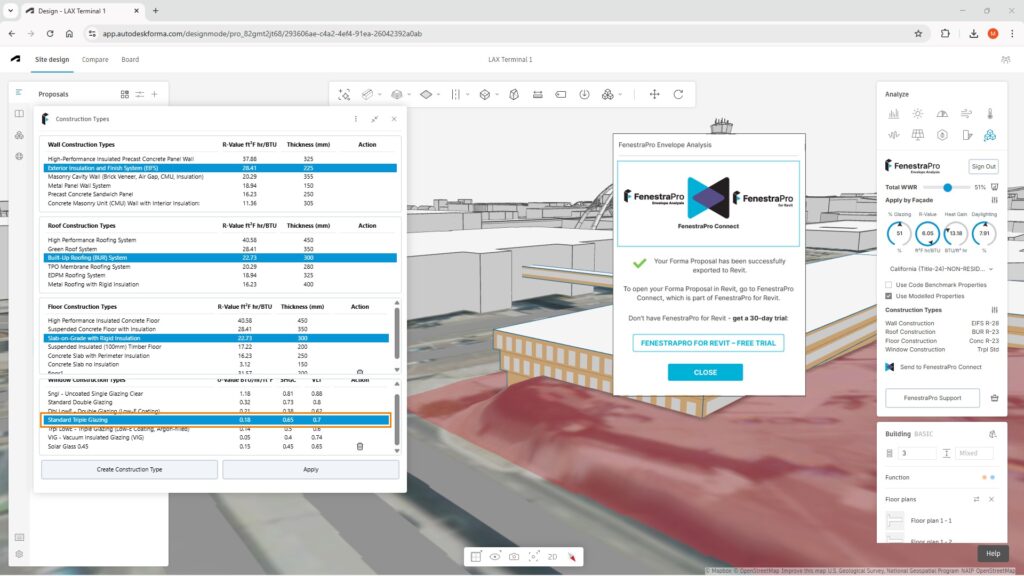
By assigning envelope systems such as roofs, floors, and facades, and selecting appropriate assembly materials, we can observe their impact on energy use without requiring detailed modeling. This approach allows us to optimize design strategies early in the project lifecycle, when information is limited, but decisions are critical.
Envelope analysis in FenestraPro allows for easy adjustment of parameters and exploration of shading strategies. These tools empower designers to make informed decisions to balance aesthetics, performance, and mechanical requirements.
Once the analysis is complete, results can be organized and shared in Forma Board, an interactive workspace for collaboration. This platform supports clear presentation of design options and facilitates stakeholder engagement.
How does having data impact your conversations with clients?
Data validates design decisions quickly and effectively. Clients in the airport sector are highly committed to sustainability, often with targets set for 2030. Clients must maintain their buildings, which means operational and sustainability requirements are equally important. Fast, reliable tools are necessary to ensure proposed designs align with these goals.
The partnership between Forma Site Design and FenestraPro is particularly valuable in early design stages, where major decisions are made. Having data at this point allows stakeholders to understand the implications of their choices, ensuring they get the most value for their investment.
We start with a site plan, analyze options, and present rational solutions, demonstrating to clients how different material combinations affect building performance. So, they can choose options not just for cost or aesthetics, but also for operational efficiency and sustainability.
“Data-backed decisions move discussions beyond opinion, providing evidence for the best solutions.”
What about materials and embodied carbon?
Architects select materials, products, and systems for buildings, but embodied carbon analysis often occurs late in the process. Structure has the most significant impact on upfront carbon, which remains in the building throughout its life. Early-stage analysis in Forma offers projections of embodied carbon based on proposed shapes and volumes.
Traditionally, concrete and steel are standard structural solutions, but now we are able to easily compare different options with clients to reduce carbon impact. For concrete, this might mean reducing volume or altering the mix; for steel, choosing stronger gauge members can reduce overall volume and cost. Mass timber is another alternative, increasingly used in airports for its sustainability benefits.
These major decisions inform the design process: designing concrete structures differ significantly from designing with mass timber structures. This might involve considerations for dismantling and recycling at the end of a building’s life. So, the more information we can have when we’re making these early decisions, the better.
It is notable how sustainability considerations can directly benefit a project by reducing costs, particularly by lowering material volumes such as steel or concrete in the most expensive building systems. Value engineering becomes a strategic driver, positioning sustainability as an integral part of the decision-making process and enabling meaningful dialogue with stakeholders at key milestones. Quick, agile tools are essential to support design choices with data, ensuring that proposed solutions meet aesthetic, environmental, and cost requirements.
How is building performance analysis done traditionally in the early phase?
Traditional analysis required advanced technical skills, often using Rhino with Grasshopper or other energy analysis plugins, or collaboration with specialist teams doing environmental simulations. Sustainability reports were typically additional services, pursued only if clients sought accreditation. At the same time, a lack of data and the rapid pace of projects resulted in limited early analysis. While there was site and weather data, it was not responsive to what we were designing.
“Now, new tools such as Forma Site Design and FenestraPro provide instant data and feedback on building performance when we are making these major, early decisions.”
Using Forma Site Design allows multiple team members to analyze proposals in context in parallel. We can validate those design decisions for our clients, and explain and compare them in a simple, visual way. Designers have preferences for 3D modelling software such as Rhino, Revit, and SketchUp—but Forma Site Design supports integration across platforms, enabling site analysis, immediate feedback, and validation of early design decisions.
How does data support sustainable design as a whole?
Tools that provide immediate feedback help validate decisions and compare solutions, supporting sustainable and responsible outcomes. Data transforms intuition into evidence, allowing architects to apply and test design principles confidently and communicate the benefits of sustainable choices to clients. Data-driven design leads to better, more sustainable buildings that respond to climate challenges.