 Autodesk Media & Entertainment
Story originally published on Autodesk AREA January 12, 2023.
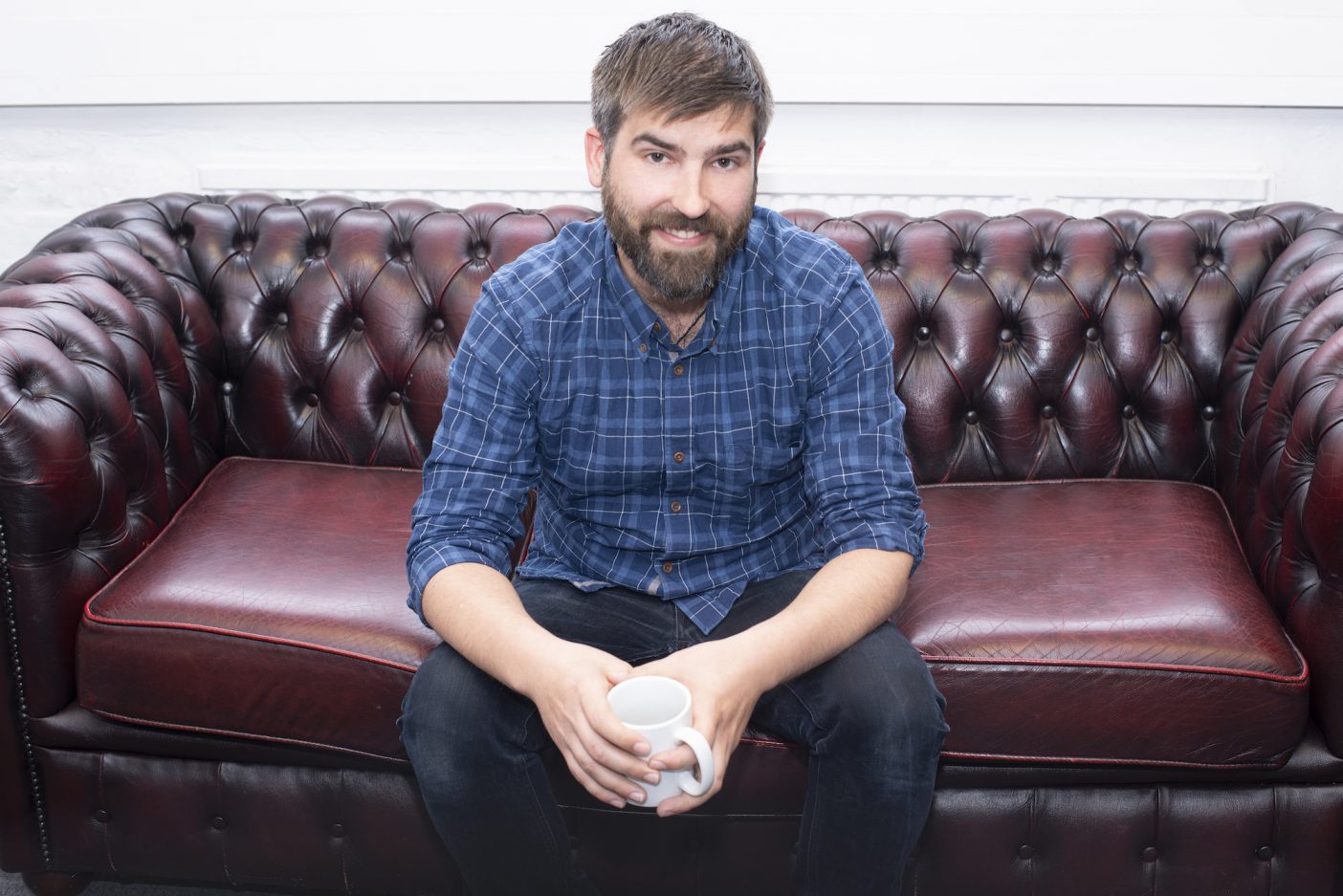
Zeb Chadfield is the founder and CVO of top London-based post-production house, The Finish Line. The company specializes in the high-end finishing, mastering, and delivery of factual and documentary programming for major broadcasters and platforms worldwide. We caught up with Chadfield for a chat from his home in the UK to learn more about The Finish Line’s workflow and how Autodesk Flow Capture (formerly Moxion) has continually proven itself as one of their main post-production solutions.
Hi Zeb, how does The Finish Line approach the business of picture finishing?
ZC: The way we were designed is to work in partnership with the production companies. Some productions require us to do full service, from ingest to delivery and everything in the middle; some just want us to come in and do the picture finishing work and the delivery side of things. High-end pitch finishing and delivery is our primary business. But now, obviously, with everyone working from home over the last couple of years, we’re operating more both as an ingest and machine room system, which runs out of our Camden office. Then we push all the media out to all the offline entities working in different locations. Some work off our infrastructure using remote editing solutions, some work from their home studios, and some work out of production offices.
So there’s a wide variety of people working in different ways, and we are the glue that holds it all together. Our COO Jonathan [Blessley] likes to refer to it as a “Post-production Polyfilla”. it’s about finding the bits that other people can’t do well or can’t do themselves, filling in those gaps and ensuring people can still deliver high-quality products.
How does The Finish Line process typically function in terms of workflow?
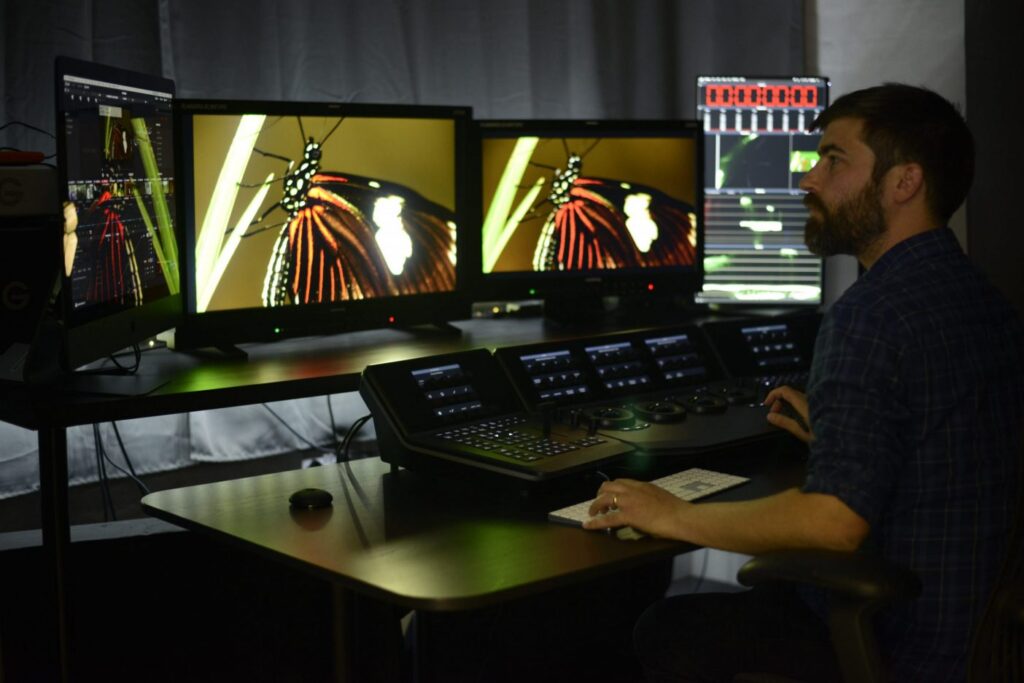
ZC: From our ingest process, all the rushes come into us. We manage all that media, and effectively that’s a spot check QC, applying the appropriate color management, generating the proxies for the offline editors to work from, and the proxies for clients to be able to view remotely. And then, once the cut’s done and the storytelling part is done, the various assets are handed over to us to conform back to the rushes and then provide a consolidation of all the rushes through to picture finishing where we do grade, online, and delivery. For factual work, we treat that part of the process as a single process. The technical and creative aspects, whether the grade or the online editing, are all intertwined when dealing with this kind of content. There are a lot of archives, interviews, drama, and reconstruction. So every project has a mixed bag of cameras, content, and footage. Our approach takes the time we have budgeted for the project and then figures out where to put the most energy to make sure that it shows on screen.
On a really archive-heavy project, the time may be best spent sorting out the frame rates, scaling, and ways to make those images look better from their varying sources. But then the next project might be all rushes and less archive, and then the time is better spent on the grade – there’s a variety there. The whole timeline is live throughout the finishing process so we can get in and tweak or change things right up until the client has reviewed and approved.
Did the pandemic accelerate the uptake of this way of working?
ZC: The pandemic’s probably brought on a bit more of this within other facilities. When I set up the company ten years ago, the infrastructure was built around the fact that the budgets were growing at a different rate than the cost of living, which meant that the way the work was being done was very limited. If your budget only works for one day of finishing work in this old model, my logic was that we needed to change the infrastructure in order to deliver to the standard that I’d always worked to – without exhausting ourselves in the process.
So, the main crux of the business was, ‘What can we get rid of? How much of the facility can go? How many chandeliers should go? The client services, the sushi?’ We asked ourselves, ‘What makes programs and pictures look good?’ and that’s where we’ll put our energy. If there’s ever a question like ‘Should we invest in this? Should we do this? Should we approach this?’ it instead becomes, ‘Will it make the pictures look better?’ If the answer is yes, then we go ahead.
So it’s all about delivering incredible-looking pictures?
ZC: The things that we do, we only do because they will help us deliver better pictures. Since we deal with the media management, we can catch things early on, and flag problems within the production before they go on too long. If you’ve got a camera fault, we can identify it, diagnose it, and make the client or production aware after the first week of shooting.
You don’t often have DITs on documentary shows the same as you would with a drama shoot, so you don’t have someone on location with a big monitor ensuring everything’s perfect. Problems might not be identified until after a week of shooting, if not more. In most facilities, you wouldn’t find out there’s a problem any earlier than the final post. We wanted to bring that process earlier in the chain so that we’d be able to identify and let production know if there’s a problem: ‘This DP isn’t white balancing correctly,’ ‘This person’s using some strange settings,’ ‘This is all in the wrong frame rate’. We want to be able to identify those problems as early as possible. If we can solve the problems early, we can spend more time making things look great rather than trying to fix something that could have been solved if someone had paid attention earlier.
With most of our work, we’re involved from the start. From the quoting stage we’ll usually have a conversation with someone on the production team to wrap our heads around the ins and outs of their production and ensuring that we’re quoting accurately. We want to make sure our quote’s realistic so that the post-production is budgeted appropriately. That means managing our time and our talent’s time correctly because we don’t want anyone to be overworked or exhausted. If you’re doing creative work, you need the energy to do it properly. So being involved from the start helps in a big way.
How has Flow Capture contributed to your picture-first approach?
ZC: I’ve been using Flow Capture for a very long time – literally from the start. When I set up my company, I used a bunch of different asset review tools because it was always intended that we would be distributed and do a lot of remote work. [But] ultimately, the Flow Capture toolset, even in the early days, was just more color accurate. This remains true whenever I’m testing other applications and they still lose out on accuracy.
With Flow Capture, our main goal very early on was [distributing] the media in a way that we knew anyone would be able to play it back on any device. Having that color accuracy is integral from a picture-finishing standpoint. Playlinks and the security side of things like password protection, watermarking, DRM, and everything else is also a fundamental side of it. For years, [our] clients have been reviewing the final file via Flow Capture.
Most producers and directors put a lot of time and energy into these projects. [TFL] might be working on it for three or four days or a couple of weeks, but the people we’re working with have usually worked on it for months, if not years. So more often than not, you’ll find that people won’t trust any other devices in terms of their color accuracy. They want to be in the room, and they want to have that integration in that relationship.
Over time, more and more of our clients became very confident that we knew what we were doing, and they only had to make a few changes. And so, as things went on, people would just review remotely. They might set the style or do the first episode, and then they would back away and leave us to it while still reviewing an accurate representation of the image via Flow Capture.
Pre-pandemic, the main review that we were doing via Flow Capture was the final deliverable, and it was very much just a sign-off to say,’Yes, I’ve watched the program. All the blurring, compliance, and everything else is where it should be. The grade looks as I remember it, text is right, the spelling’s good, sound is good. Sign off. Deliver that. Thank you.’ Then when COVID hit, we thought, ‘Well, since all of our clients are used to using [Flow Capture] for signing off their delivery anyway, [let’s] just work with them on the grade through here as well and online. And then that will be it.’
I think the first month or two of lockdown here in the UK, we were doing large feature films for streaming services, so we set up the director at home with Flow Capture running off an Apple TV, plumbed into a Grade 1 monitor. We were able to upload sections as we worked our way through them and then have feedback come through, make appropriate changes, upload new sections, etc. That asynchronous approach to working has always been really good for us because you could have a client sit there reviewing while they’re not on the clock, and they’re actually saving a substantial amount of money. We can crack down on the picture work while our clients get to sit there and contemplate things rather than worry about, ‘Oh, I’m using all my budget, just watching this program back.’ Now they can watch it 100 times if they want to and provide feedback when they’re ready. So that was quite a good experience.
Another thing was we had was iPad Pros with the app installed that we could ship out to specific clients if they wanted to know that we had an accurate review system that we could arrange for them. We would also provide headphones signed off by our audio partners for their sound quality and tested with Flow Capture to ensure they’re happy with the sound as well. We’d leave each pack for a few days between reviews and have it all disinfected and cleaned out before being sent off for the next client/project.
It sounds like adding Flow Capture into the process has also been popular with yourclients?
ZC: I keep expecting more sort of pushback [on this way of working], but ultimately it works. Everyone’s happy. But that’s the way that we’ve always approached everything. We will only put things forward if we confidently know it will work perfectly every time and because we’ve been long-time Flow Capture users, we don’t really have any concerns. We knew the platform would fit our goals, and we learned how to generate files that would look accurate across devices. With all of that kind of under control, there was no need to rethink the wheel at that point.
The viewing quality and experience with a lot of live-review software can vary depending on a bunch of factors in the middle. But when you’re doing the asynchronous review route for the finishing side of things, we can guarantee that our uploaded file will appear the way it’s going to look to the viewer. If the file has to sit there, buffer and cache a little bit more, so be it.
But when you’re working live, if someone’s internet gets a bit choppy, their experience degrades. The live side of things works really well when you’re doing style setting on captioning and credits and graphics and timing with speed changes and stuff like that. But for asynchronous, you want to make sure they’re actually reviewing the program in a color-accurate way. As much as we love Flow Capture, I’m not going to use it just for the sake of it, so we’re constantly testing different applications and approaches and using whatever’s best. [But] ultimately, with all the hardware solutions and everything else out there, the Flow Capture approach always wins out.
What Flow Capture features keep you coming back?
Playlinks are the main thing. Regardless of how technically savvy or not they are, ultimately, all production staff want something to be as simple as possible. But when dealing with content security, things can get more complex. So you have to find a natural balance between the strength of your security versus the client’s user experience and simplicity. Getting that right can be very, very difficult. But with the Playlinks, we’ve struck the right balance. Now before production starts, we will get someone from the production with authority to fill out a Playlink waiver, effectively saying these are the security settings that our production requires us to use. And then beyond that point, we would adhere to those settings which tell us who we can send things to, what security, what encryption, what password, and how it will all work. It puts us in a good position to know what’s required for that product and be able to deflect back to a member of the production team if they need to change anything specifically.
It’s just a very user-friendly approach. No one needs an account. No one needs anything too robust to accept a Playlink; just punch in a password and play it. Any time the file isn’t downloadable, it gets watermarked in the player with encryption, DRM, and everything all in place. So most of the security is quite transparent. The client doesn’t necessarily have to see any of it happening for it to happen. So that makes things easier.
What does your future with Flow Capture look like?
ZC: I’m always testing all the functionality in there. I’m pretty excited about it. From what I can see, from where Flow Capture’s going, I’m pretty keen to move everything into there. As I said, we’ll always use whatever the best system is. And that is Flow Capture.