 Jeanne Tan
Forma Site Design, available in the AEC Collection or as a standalone subscription, offers powerful AI-powered tools for architects and designers in pre-design and schematic design phases.
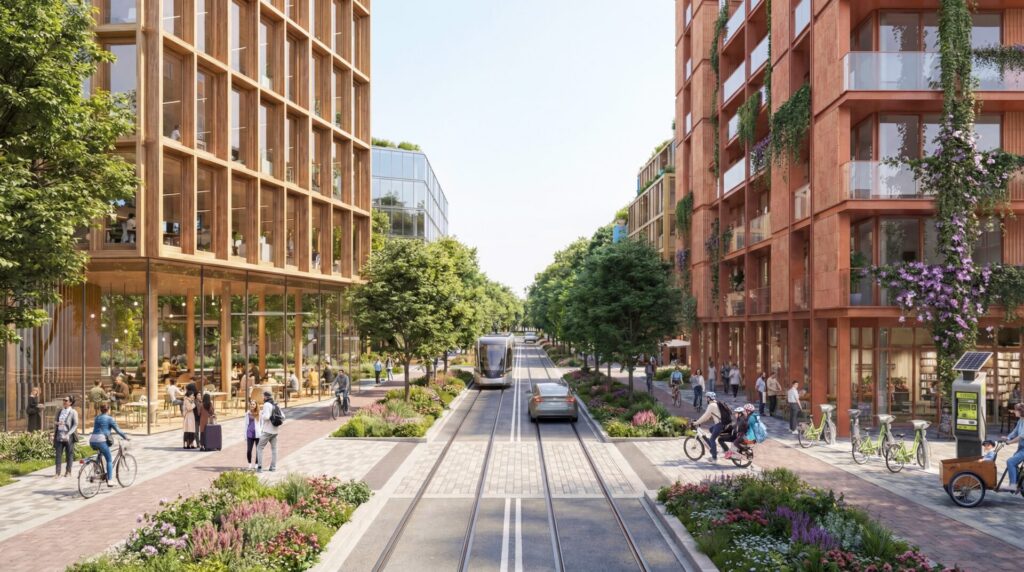
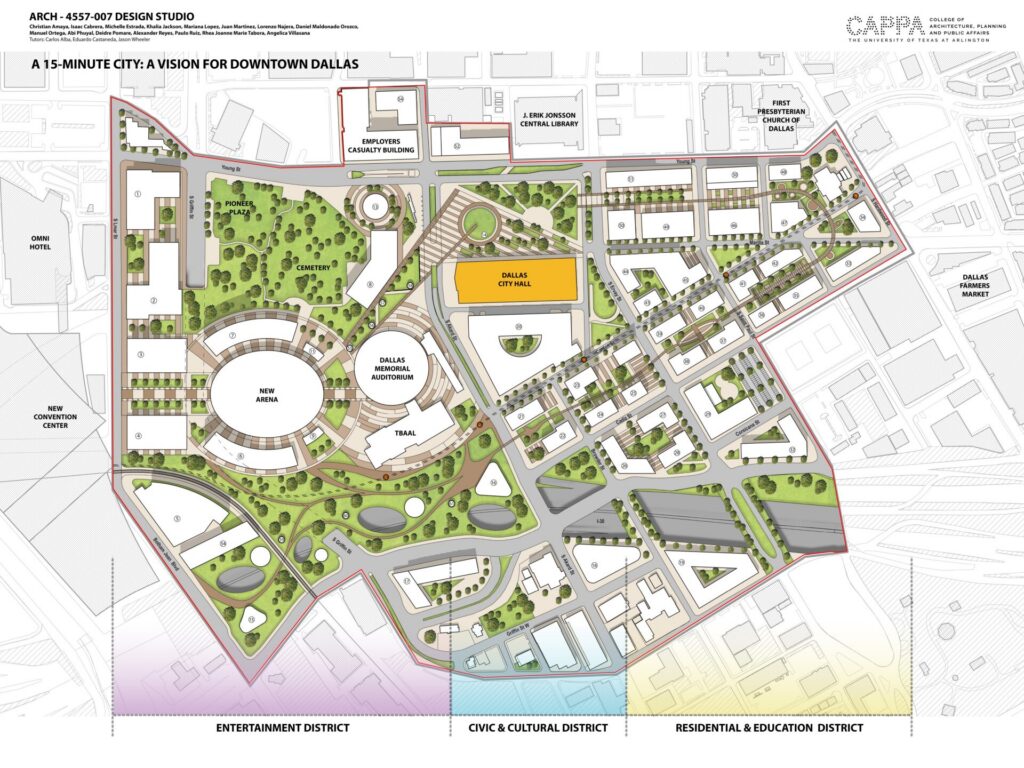
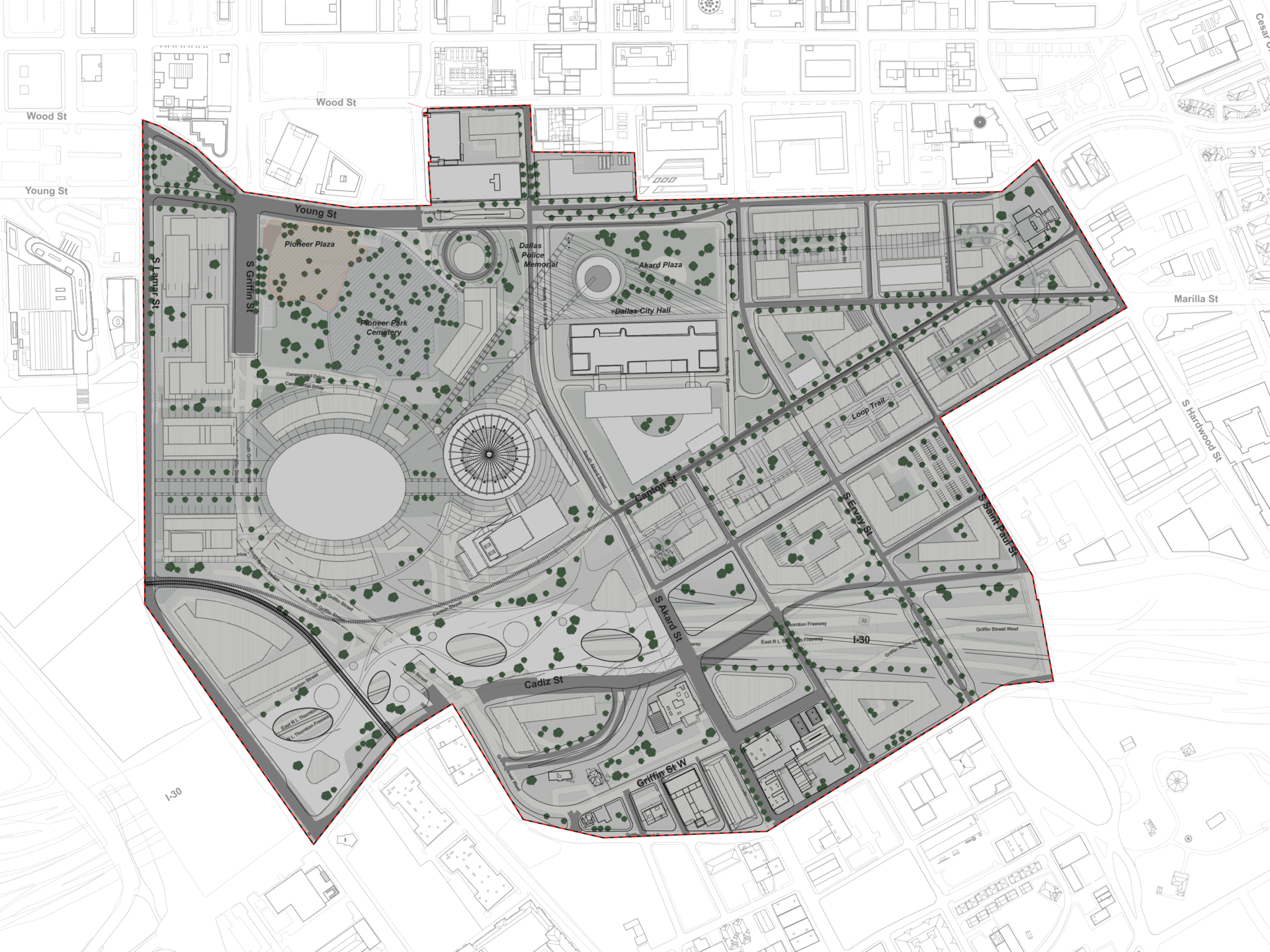
What happens when cars make way for pedestrians as part of a 15-minute city? How do environmental conditions impact people’s wellbeing? With these questions and more in mind, students from the College of Architecture, Planning, and Urban Affairs at the University of Texas at Arlington (UTA) presented a bold vision for the revitalization of South Downtown Dallas.
As part of the studio, the students adopted Arcadis’ data-driven approach for designing resilient communities integrating Autodesk Forma Site Design and ArcGIS – read the part one of the story here.
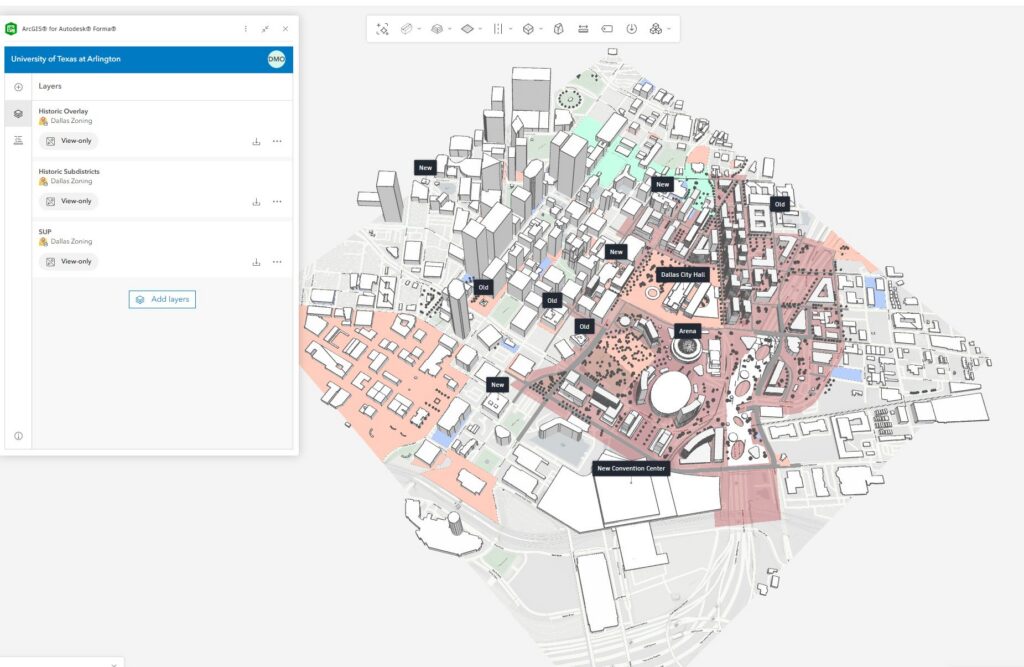
Starting with a comprehensive site analysis in Forma Site Design, the students investigated different environmental and spatial factors on this complex site. During the design process, the students continuously tested their designs to improve performance. Eduardo Castañeda, Associate Principal at Arcadis, who co-led the design studio together with Carlos Alba, and Jason Wheeler, explains: “Forma Site Design was used extensively for site analysis. It helped us understand that many design problems exist in everyday environments but are often overlooked. By studying factors such as noise, sun hours, microclimate, and wind, we were able to clearly see the impact of past design decisions.
With Forma Site Design’s fast and reliable insights, this made it possible to test new proposals quickly and produce clear visual feedback. Our students could review results together and make immediate design changes. In contrast, traditional site analysis methods often require long periods of data management and post-processing before useful visuals can be created. Using Forma Site Design helped us make data-driven decisions earlier and focus more on creative problem solving.”
Here’s how the students used Forma Site Design first for site
analysis (left images) to and then to test performance on their new masterplan (right images).
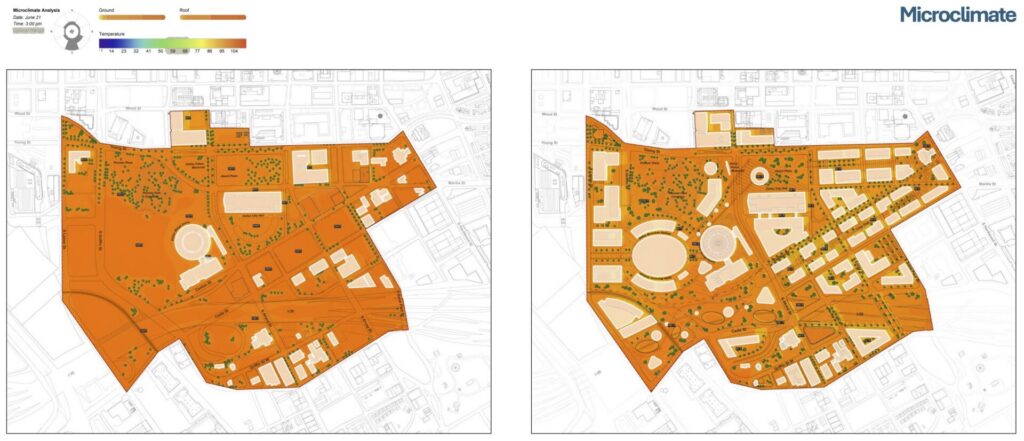
MICROCLIMATE
Site analysis: Heat islands were identified across the site, with the highest temperatures of 103°F found on exposed concrete areas.
Proposal: By introducing shading strategies and integrating new blue and green infrastructure, this creates a cooling effect that lowers “feels-like” temperatures by up to 10°F in former hardscapes. This data-driven approach brings thermal conditions down from 103°F to approximately 92°F, consistently outperforming the standard June high temperatures for the Dallas area.
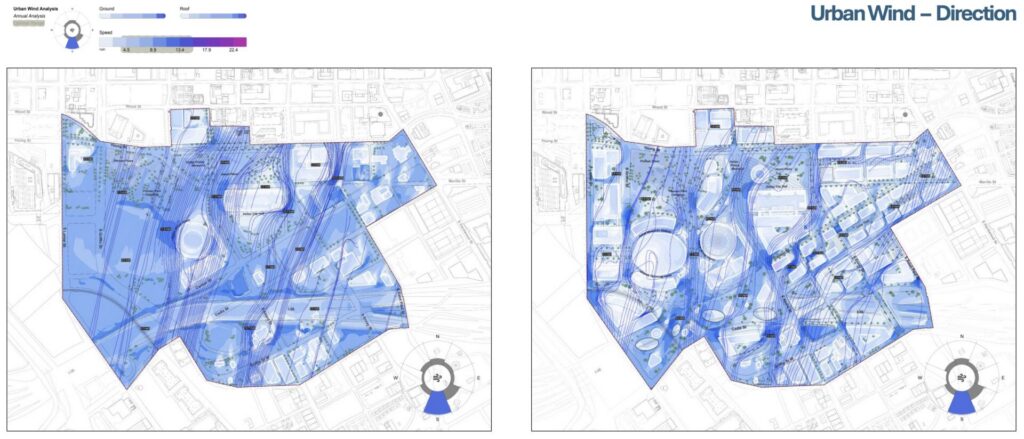
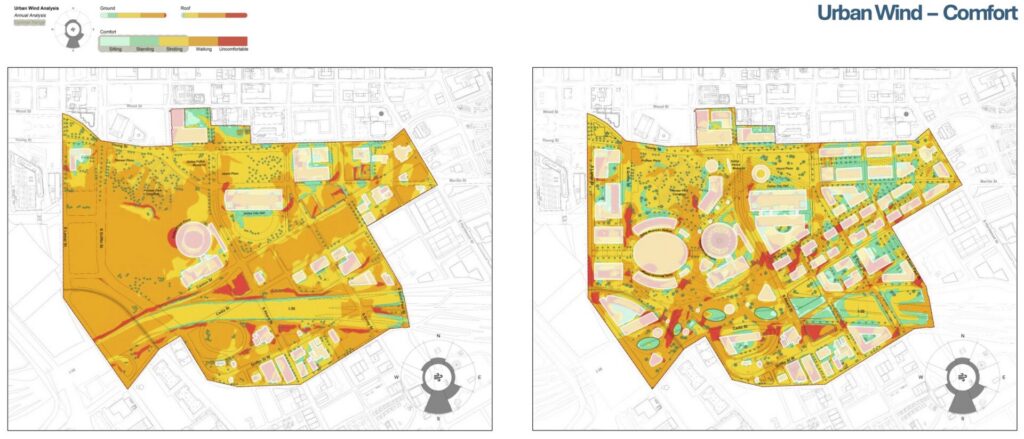
WIND DIRECTION AND WIND COMFORT
Site analysis: The team studied the impact of existing urban forms on wind. Open areas leave City Hall exposed to uninterrupted southern wind flows. Turbulent wind tunnel conditions were caused by sharp corner acceleration and the Venturi Effect.
Proposal: Diverse building forms were placed to disrupt southern wind flows and neutralize the wind-tunnel effects caused by the existing rigid forms. Shields key plazas and paths. Consequently, the core public plazas and green pockets maintain stable conditions for stationary activities, such as sitting and standing, that were previously impossible.
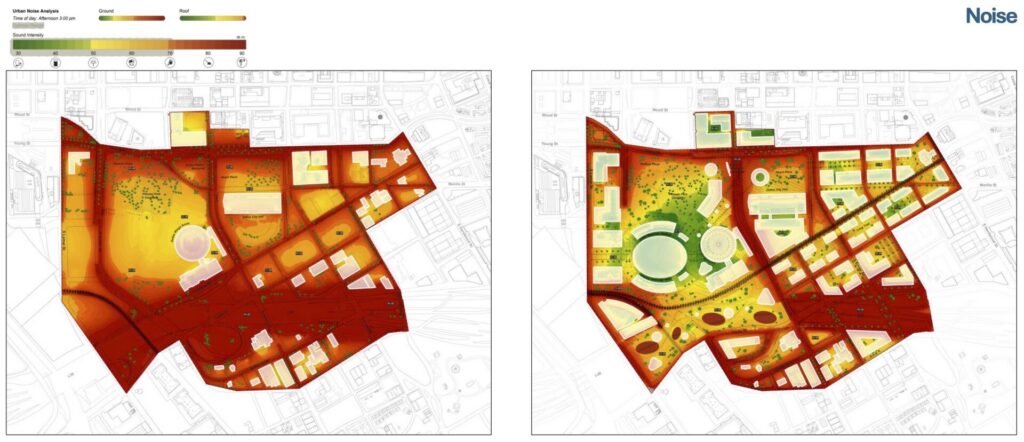
NOISE
Site analysis: Heavy vehicle traffic from the I-30 and adjacent roads is primary source of noise.
Proposal: A park deck spanning over the I-30 and targeted roadway modifications serve as a robust sound barrier against high-decibel highway traffic. This design shift yields a noticeably quieter environment, successfully encouraging pedestrians to explore and engage with the site without the constant disruption of vehicular congestion.
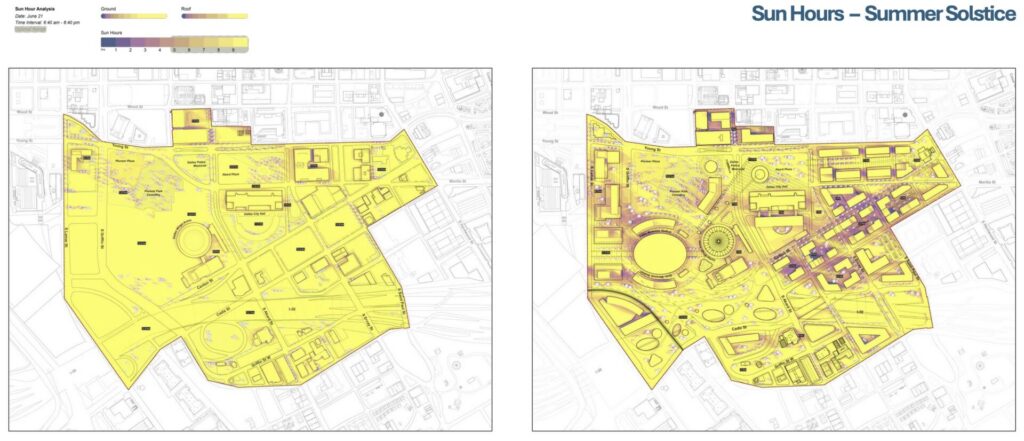
SUN
Site analysis: Most of the site receives more than 12 hours of sun during high summer, with limited shade in alleyways. Existing site lacks shaded pockets for pedestrians.
Proposal: By strategically positioning new building massing and the stadium, the masterplan effectively introduces protective shading to what was previously an overexposed landscape and hardscape. These interventions significantly mitigate heat gain, fostering a network of comfortable outdoor “oases” even during the peak intensity of the summer solstice.
Read about the experiences from some of the students below.
Daniel Alejandro Maldonado Orozco:
“Being able to see feedback for the entire site at once helped us understand how different parts of the site performed simultaneously.”
Working in a data-driven way made the design process more accurate, reliable, and efficient. In traditional workflows, many early-stage decisions are based on assumptions or experience. While that knowledge is valuable, it does not always reveal hidden problems on a specific site. With Forma, we were able to access important site data within minutes, which allowed us to test ideas and adjust designs much earlier in the process.
Being able to see feedback for the entire site at once instead of spending long periods studying and refining each area separately meant we could understand how different parts of the site performed simultaneously. This helped us avoid wasting time and allowed us to develop more complete solutions.
Overall, having access to clear data gave us stronger confidence in our design proposals. It supported our decisions and helped ensure that our solutions responded directly to real site conditions.
Alexander Reyes:
“I developed a deeper appreciation for site analysis as a design tool rather than a set of constraints.”
By quickly learning how the analysis works in Forma Site Design, I was able to generate an immense number of site analyses. It gave us a lot of information to work with, which we could not have gathered as quicklyly previously.
Another aspect I valued was comparing Forma Site Design’s data-driven analysis with visiting the site in person. Gathering statistics from Forma Site Design and then experiencing the space directly allowed me to better understand environmental conditions and spatial qualities identified from the analysis.
Additionally, I developed a deeper appreciation for site analysis as a design tool rather than a set of constraints. Contextual and environmental factors became drivers that informed and strengthened the conceptual design, allowing the site to actively contribute to the design narrative.
Overall, using Forma provided a stronger, data-driven understanding of the site and how its conditions are experienced.
Christian Amaya:
“I learned how environmental conditions affect people’s comfort.”
In this studio, I learned how environmental conditions affect people’s comfort and how design decisions can respond to those conditions. When designing human-centered urban environments we considered people’s experiences, memories, and sensory perceptions while responding to long-term challenges such as climate change, population growth, and technological change.
Lorenzo Najera:
“Site and environmental analysis became central in informing design decisions, reinforcing the importance of understanding context.”
As an architecture student, I enjoy site research, especially understanding environmental conditions and surrounding context. My goal is to create designs that feel harmonious with their setting, and Forma Site Design made this process more engaging. The platform allowed me to quickly visualize how different site conditions interact, making it easier to understand relationships that would otherwise take much longer through traditional methods. This made early design stages more intuitive and connected to real-world environmental factors.
The most important lesson from this studio was learning to organize design decisions around the needs of a place and its people. Site and environmental analysis became central in informing design decisions, reinforcing the importance of understanding context, culture, and community, and translating those insights into spatial solutions.
I also gained a deeper appreciation for the responsibility of an architect: every line drawn has an impact on someone. This studio highlighted how design decisions improve the quality of life for all who interact with the spaces and buildings we design.
All imagery courtesy of the students from the College of Architecture, Planning, and Urban Affairs at the University of Texas at Arlington (UTA).