 Autodesk Media & Entertainment
The increasing use of various artificial intelligence tools across the games industry was the topic of the moment at the Game Developers Conference (GDC) 2025. AI utilization can vary in any stage of development, from conceptualization to producing in-game assets.
However, as it stands, AI tools also raise ethical questions. Consumers and developers alike are concerned about the industry cost of “quick” tools, the input utilized, and whether the output is being used with consumers in mind over efficiency.
At the Autodesk Developer Summit, Rade Stojsavljevic, a developer of over three decades for games of all scales and currently the CEO of Imposter Entertainment, broke down the current state of these affairs in his “Ethical AI for Next-Gen Game Development” session.
Here are the biggest takeaways from this presentation, and a Q&A that followed, that developers looking to integrate AI need to know.
Keeping good intent in AI usage
AI technology users need to know how it works, which is generally through utilizing a large dataset of relevant input to train data. However, various factors will shape the results, namely where the input comes from. Sloppy data training can result in issues such as copyright violations, bias, and self-feeding data that will create inaccurate outputs. Generative AI is a mirror and AI will reflect any bias from society in training data, which people will misuse intentionally or accidentally. Furthermore, societal tastes change and AI needs to be retrained to reflect society’s preferences.
“You can do things accidentally pretty easily with AI tools, and they can spread very quickly,” Stojsavljevic said. “Then, what happens when you train a bot on 2025 data five years from now? Something changes…The AI needs to be retrained. How are you going to do that?”
In utilizing AI in game development, devs need to consider what the outcome will be of tapping into that technology in each step. In Stojsavljevic’s case, the team primarily utilized AI in either early concepts that wouldn’t be in the final product or in labor-heavy steps, such as converting a 2D model to 3D or in generic texture map generation. Hiring artists to create final character designs and work on 3D models ensures that the products are fully owned by the team.
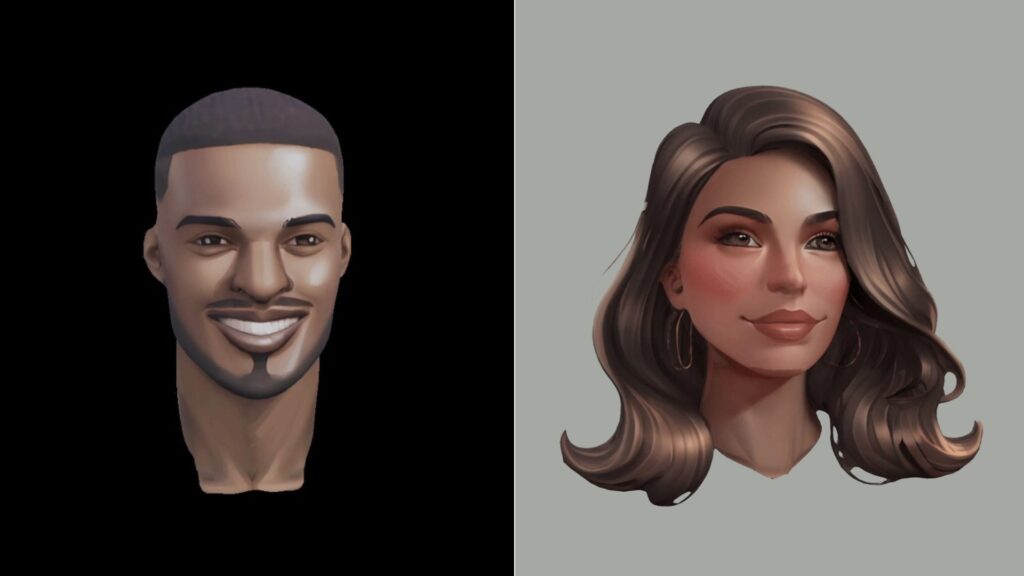
He also notes in the open Q&A that recruiters have learned to tell whether candidates for art roles are using AI. Since it’s more difficult to discern AI-generated art apart from handcrafted pieces at a glance, interview techniques have pivoted, angling more towards the deconstruction and critique of these pieces to unpack candidates’ fluency with art fundamentals.
Generative AI is a mirror and AI will reflect any bias from society through training data.
Transparency will be important as vigilance rises
Consumers will become more vigilant to AI’s use along the way, and developers and studios using AI need to consider disclosing such use in their final products accordingly.
As a result of bad-faith users and poor utilization of copyrighted works, there’s the potential that organizations, platforms, and governments will start requiring labels on AI-generated work.
Gamers especially are smart, Stojsavljevic notes, about assessing the value of a product, and those who notice that a human was pulled away from the process will begin to question the product’s quality. Stojsavljevic does not believe customers will pay a premium price for AI generated content that cost little to make. Especially as games grow more expensive, studios need to exercise caution about where and how AI, especially generative AI, is utilized.
Gamers who notice that a human was pulled away from the process will begin to question the product’s quality.
Stojsavljevic is especially careful what tools his own designers can utilize and in which steps during the development process these tools can be utilized. Imposter Entertainment wants to avoid patent and copyright “trolls” who can parse out AI assets’ regurgitated input, and so he and his studio ensure only open-source software and libraries are utilized by artists and other developers in any generation.
AI tools still have limited capabilities for now
Because of the limitations of technology and what companies are allowed to input for training, as quickly as the field is growing, AI still has its limits. Now, it does its work best in procedural contexts, such as placing fire escapes on buildings of certain heights or in removing logos from old footage. It’s also good for quickly progressing through iterations of certain assets, which cuts down on time and costs of labor. Because of this, AI will enable new types of games not previously possible due to production cost and speed. It can enable faster iteration and iteration leads to better quality.
On the other hand, Stojsavljevic explains that AI can still never replace certain human elements. AI will not turn a non-artist into the next Michelangelo. Generative AI only does as much as a prompter will tell it to do, and without someone who understands how to convey an image, both verbally and in execution, a creative team will only go so far with its results.
“There is no way for an AI to understand that intent from your designers and build that into your art or your product,” Stojsavljevic said. “That requires a human who has a pretty high degree of skill and understands creativity and can do that for you.”
With regards to general AI technology, current video generation tools aren’t good at generating original content and instead rely on and draw too heavily from already-existing shots, making this technology not necessarily a useful foundation for a creative company. While a lot of AI videography seems impressive at first glance, without the human touch to handle small details, details and cohesion can fall apart.
Stojsavljevic recalls when the games business transitioned from 2D to 3D. He heard from artists that “3D art has no soul” and “people who work in 3D are more programmers than artists”, but if you’ve ever watched a Pixar film, you know that that’s just not the case.
With training in art fundamentals and a true discerning human eye behind them, plus a studio’s desire to stick close to a creative style and completely own the style and assets, art directors and artists of all styles will always remain in need.
Discover how you can create without limits with AI in Autodesk Design & Make software.