 Autodesk Media & Entertainment
After a remarkable run of ten Saw movies over the span of 20 years, Twisted Pictures is writing a new chapter in its book of horror and suspense thrillers. Trust, starring Sophie Turner of Game of Thrones (Sansa Stark) and X-Men (Jean Gray) fame, weaves a tale of betrayal and survival for a scandalized Hollywood starlet.
Like other Twisted Pictures theatrical releases, Trust was self-funded by the independent production company. Without a lavish Hollywood budget, its producers sought any opportunity to streamline operations. Veteran visual effects pro Kevin O’Neill even pulled double-duty as both the film’s Senior Visual Effects Supervisor and the Post-Production Supervisor. He also found an efficient workflow for reviewing dailies with a diverse and distributed group of remote collaborators using Autodesk Flow Capture.
Fulfilling his childhood dream of working in visual effects for the movie business, O’Neill has been innovating in the field since the 1980s, contributing to films such as Blade, Francis Ford Coppola’s Bram Stoker’s Dracula, and dozens more—and he’s not slowing down.
O’Neill sees a way forward in the industry by managing ever-larger VFX projects with cloud-based asset-management and review tools.
Twisted Pictures’ superpower: Creative risk

Over a two-decade span, Twisted Pictures has built its foundation on its willingness to risk everything to bet on its own success. The production company’s founders made the bold decision to bankroll the original Saw film in 2004 with their own money. That high-stakes gamble paid off big-time. Saw grossed more than $100 million at the box office, and the franchise to date has cashed in excess of $1 billion in box office and retail sales.
“They’re brave souls for putting money where their mouth is,” says O’Neill. “These guys are willing to risk their own money toward a project they have creative faith in. I think that that has guided them.”
That spirit of creative faith and calculated risk-taking continues with Twisted Pictures’ willingness to adopt a new technology like Autodesk Flow Capture based on a colleague’s recommendation.
Building on momentum: From Saw to Trust

After Twisted Pictures wrapped up Saw X in Mexico, O’Neill says they turned right around and used that same production team to build a pre-production environment around Trust, their next film.
It was a relief to not have to hunt for a new production team, but “we were having discussions about how we were going to deal with getting dailies to everybody up here in the States and our post-production finishing house in Canada,” O’Neill says.
That’s when members of the production team’s post house in Mexico recommended that O’Neill try Flow Capture for the movie. They also set up the shell for it to be their dailies production pipeline for Trust.
Solving creative challenges with Flow Capture

O’Neill quickly found that using Flow Capture for digital dailies and review immediately helped with conveying his visual effects ideas to the right people at the right time. One particularly challenging VFX sequence had no predesign, and O’Neill had to move it down the line of approvals one step at a time.
“It’s a very grounded-in-reality movie,” O’Neill says of Trust, “but there’s a hallucination scene that involved pretty complex visual effects that I had to art-direct out of thin air and then get it in front of everybody in a way that isn’t shocking. It’s one of the hardest things to get people to say ‘yes’ and not scare them away when you’re showing something in progress. I used Flow Capture Rooms to get the right people to see the right element at the right time.”
Once the shot was approved, O’Neill could then add the artists working on the shot to the Flow Capture Room to review it. With Flow Capture, O’Neill had the control he wanted over the timing, context, and visibility of creative approvals.
After Twisted Pictures delivered the project to Republic Pictures, a division of Paramount Pictures, O’Neill went back to Flow Capture to review material with the original score composer. “I could bring up the Trust project in Flow Capture, scoop back to where the last shots were delivered to the post house and get a quick call over to the composer,” he says.
This kind of flexibility in remote footage review—even after delivering the project to the distributor—is part of the reason O’Neill could act as both VFX Supervisor and Post Supervisor for Trust without a large support team. “If I was to sit in a room until we delivered the very last thing,” he says, “they’d be paying me for a lot of downtime where I didn’t have anything to do.”
He likens Flow Capture to the “glue” that holds everyone on the creative team together, so that even when they’re not all under one roof, he can rely on the “very strong backbone” of the software’s tracking and archiving.
Security and scalability

Flow Capture’s strength extends to its advanced access control and intellectual property (IP) security features—including DRM; forensic and burnt-in watermarking; and secure viewing, sharing, and editing—on which O’Neill also relied. It was easy for him to give or take away individuals’ access to footage, and he says his producers and executives trusted Flow Capture’s access control and security.
“I could let somebody look at something in a window that was an hour long or a day long,” he says, “and not have to sweat it out or bring everybody down to a screen somewhere in Hollywood, which nobody likes to do.”
O’Neill and Twisted Pictures not only had to ensure IP security across multiple studios and international teams, but also had to hand off everything to Republic Pictures in compatibility with its own studio-grade encryption and security. With Flow Capture, O’Neill could consolidate everything under Twisted Pictures’ security protocols through its post house in Canada, then it was easy to move everything over to Republic Pictures because Flow Capture integrated with the studio’s security protocols.
“When you get the approval of the major studios to use … Flow Capture, it’s not something I have to go convince anybody else on,” O’Neill says. “And having everybody in the same system lends itself extremely well to security.”
Looking ahead: The future of filmmaking

Prior to Trust, O’Neill had served as Visual Effects Coordinator for the Netflix series FUBAR, where the team used Autodesk Flow Production Tracking to manage visual effects facilities and contributors, who were spread out from India to Canada and across the United States.
Then, while working with Flow Capture on Trust and loving how well it handled distribution, viewing, and commentary, he realized that combining Flow Production Tracking with Flow Capture into one integrated toolset will be the way he works for at least the next two Twisted Pictures movies.
“I can keep this one linear environment with Flow Capture and Flow Production Tracking,” O’Neill says. “I don’t have to go jumping into many different environments, which has always been frustrating. This is how I see my functionality in the future of filmmaking. Using this toolset.”
Trusting the process
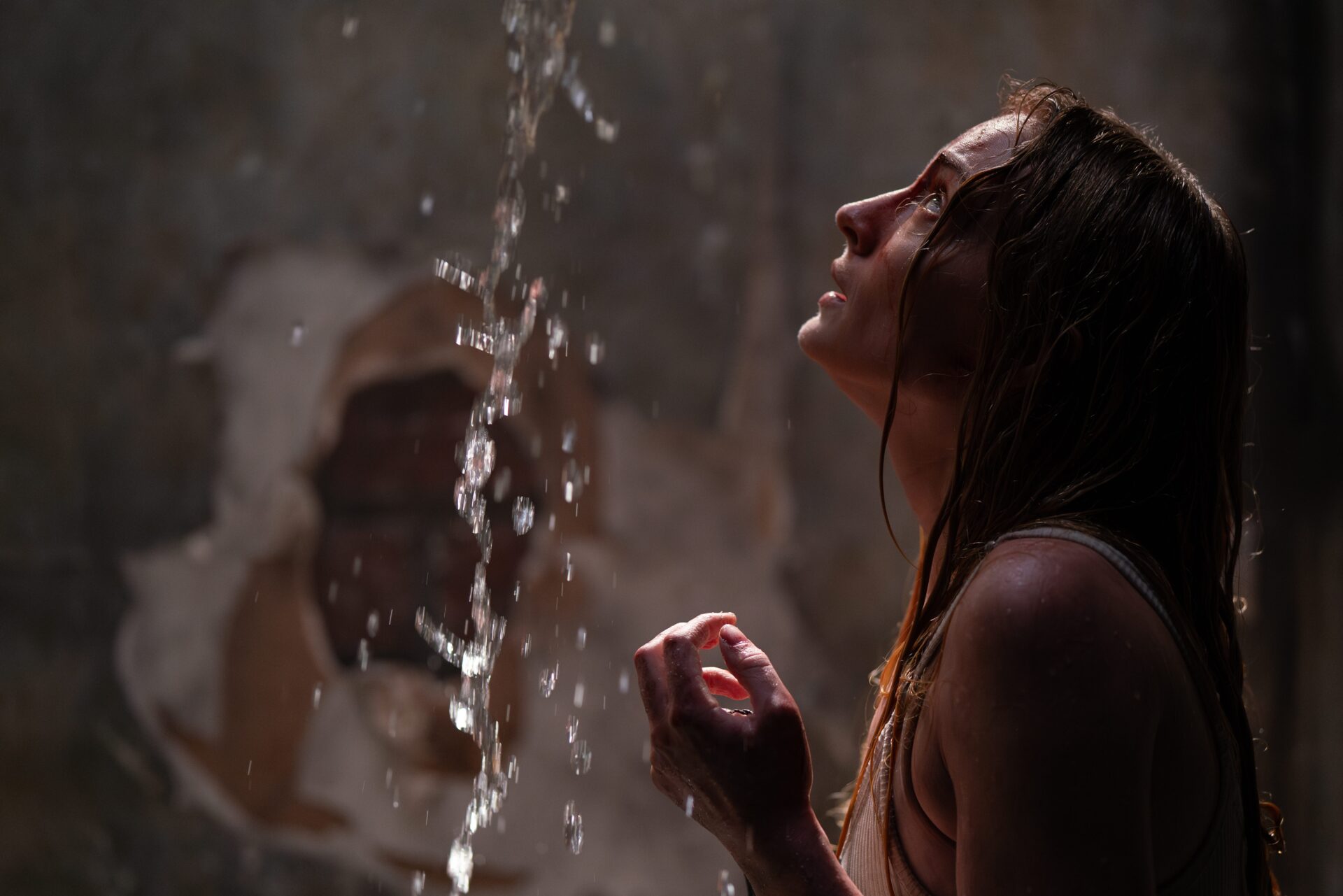
Twisted Pictures’ Trust is a testament to what independent filmmaking can achieve with the right tools and vision. Throughout its complex production pipeline, Flow Capture’s cloud-based review tools helped Twisted Pictures produce and deliver Trust with flexible access control and rock-solid security, all in a platform that never stymies creativity.
For O’Neill, the experience cemented a new standard: using Flow Capture together with Flow Production tracking as one linear toolset. As AI-generated assets and expansive VFX libraries become more common, he sees these tools as essential—not just for today’s productions, but for training the next generation of filmmakers.
“This is going to be a toolset that goes into classrooms, producing the next generation of filmmakers,” O’Neill says. “These tools for managing [assets] are going to become more and more important.”