 Blake Avery
 Brandy Ryan
After introducing NavPack Design and exploring how its predictive and generative AI models are trained, we hit a relevant question: what does this actually change in day-to-day automotive design?
The answer comes down to a shift that’s gaining momentum across the industry: AI-driven physics-based insights becoming more accessible to designers, not just simulation experts. As a result, physics-driven decision-making is moving earlier in the workflow and directly into the creative phase of design.
“Left-shifting” is the term to describe this transition. NavPack Design’s “left shift” enables teams to validate ideas sooner, explore a wider design space, and reduce the costly downstream cycle of redesign and late-stage corrections.
With the rise of integrated, designer-friendly AI tools, simulation no longer needs to live exclusively at the end of the process. Instead, designers can visualize physical behavior in real time, directly inside their creative environments.
Closing the loop between designers and simulation experts
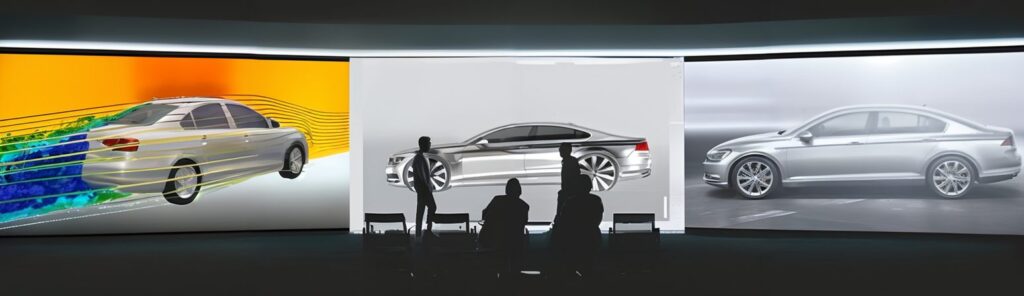
Advanced simulations like CFD (Computational Fluid Dynamics) and FEA (Finite Element Analysis) have historically required deep expertise and compute resources, which limited how often and how early they could be applied. While essential for accuracy, that specialization slows down iterative workflows and restricts how many concepts can be explored. Designers frequently have to wait for expert-driven results.
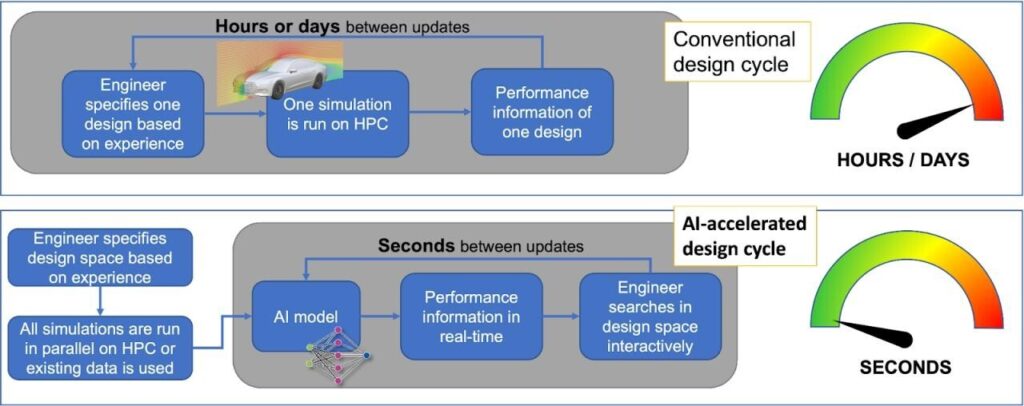
AI-based surrogate models, like those at the core of NavPack Design, change this dynamic. These models are trained on high-fidelity simulation data and can predict aerodynamic, structural, or thermal behavior in seconds rather than hours.
This shift offers three immediate advantages:
- Designers get fast, intuitive access to physics predictions, enabling them to experiment freely and catch issues early.
- Simulation experts focus on higher-value work, refining models and ensuring accuracy instead of running repetitive checks.
- Designers and Engineers can work together in the same tool and make informed decisions within a meeting instead of going back and forth in lengthy iterations.
The result is a significantly tighter feedback loop where all roles contribute at the moment their expertise is most impactful.
By left-shifting physics-based insights, designers gain the context they need to explore more boldly, refine surfaces earlier, and hand off a better solution to the downstream stakeholders.
Why left-shifting matters for automotive teams
For automotive OEMs, even small design decisions have major implications on aerodynamics, thermal behavior, efficiency, and manufacturability. Moving physics-based insights earlier into the process creates immediate advantages:
1. Better Upfront Decisions
When designers can see predictive aerodynamic or structural insights as they iterate, they make more confident design choices and avoid costly late-stage corrections.
2. Shorter Development Cycles AI-accelerated prediction dramatically reduces evaluation time. Spotting issues early compresses the timeline between concept, validation, and refinement. Tasks that once required hours or days can now be evaluated in real time.
Democratizing Simulation Through AI and Integrated Workflows
But true democratization requires more than just speed. The full value emerges when simulation is:
1. Integrated into design tools
User-friendly tools—such as NavPack Design integrations–bring simulation directly into existing design environments. Designers no longer need to export, translate, or wait for external validation. Instead, they can work more fluidly, experimenting with form and performance simultaneously.
AI models embedded inside CAD or visualization environments allow designers to modify geometry and see physics updates instantly—without leaving their workflow.
2. Intuitive and visual
Interpretable visual overlays and integrated physics visualizations help designers and engineers understand behavior at a glance, promoting a shared language across disciplines.
3. Supported by designer-focused education
The more designers understand the impact of the decisions they make, the more effectively they can drive performance-informed decisions.
These elements collectively expand simulation’s role—from an expert-only step to a shared creative tool.
Real-world impact on automotive teams
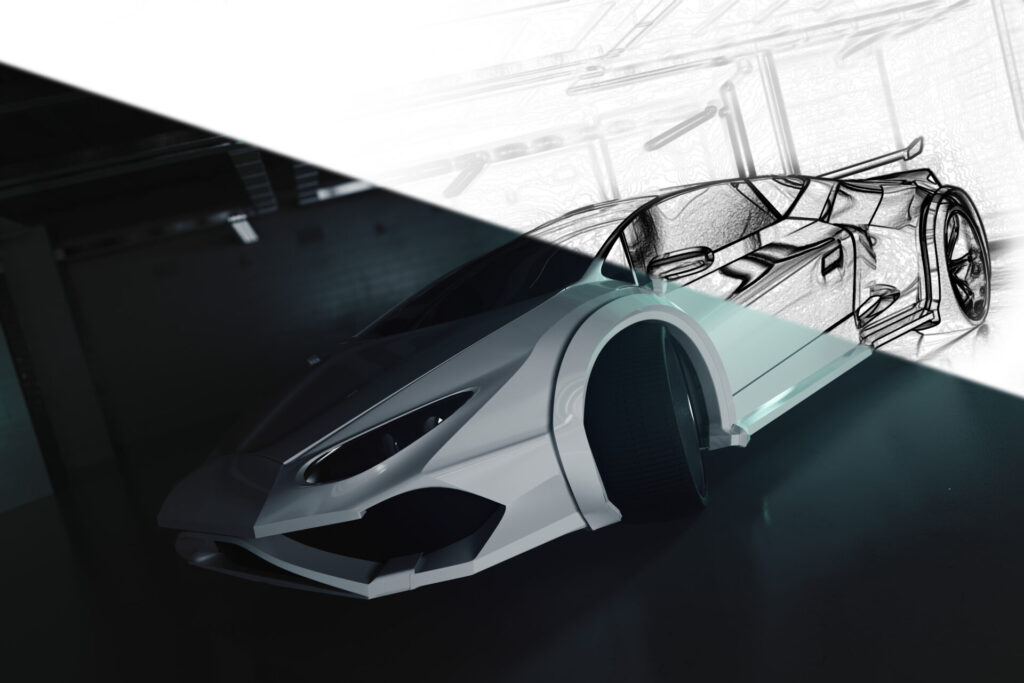
When Matthias Bauer shared NAVASTO’s work with GM Motorsports and Audi in his AIF presentation, we saw that AI-accelerated workflows don’t just streamline processes. They expand what teams can realistically explore within a development cycle.
Real-time predictions let teams:
- Evaluate subtle surface changes during competitive season timelines
- Refine direction earlier with clearer confidence
- Experiment across a broader range of configurations
- Spot unproductive paths before significant time is invested
The shared takeaway from these examples is simple: the combination of predictive AI and high-quality simulation data unlocks speed and clarity at moments when decisions matter most.
Confidence and control inside the creative workflow
We know that trust is central to using AI in design and engineering contexts. NavPack Design’s model confidence indicators and uncertainty visualizations play a key role here, helping designers understand when a prediction is reliable and when additional simulation or engineering review is needed.
These indicators don’t slow the process; they guide it. Designers stay empowered, and engineers stay in the loop exactly where their expertise adds the most value. Over time, as more simulations are added, the AI model continues to evolve, reflecting the organization’s standards and design language more accurately.
A new rhythm for automotive design
Predictive and generative AI, when combined in the same loop, enable a new pace of design:
Explore → Predict → Refine → Repeat, with physics insight available at every turn.
This rhythm enhances existing workflows. Design remains creative, engineering remains rigorous, and both come together earlier, long before the cost of change becomes high.
As AI-powered tools become more accessible inside design environments, the collaboration between design and engineering becomes smoother, the decisions become more informed, and the ideas become more ambitious.
Shaping the future
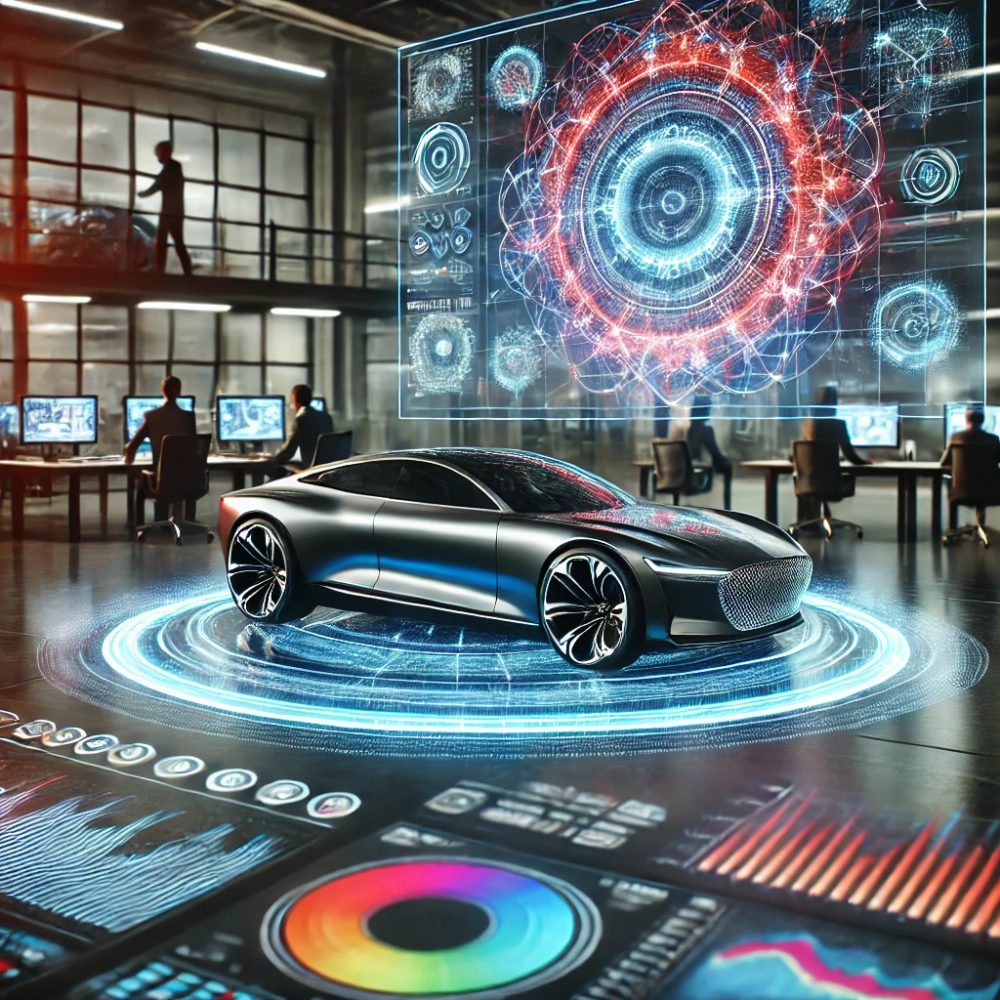
With a clearer understanding of what AI-accelerated design and engineering makes possible—and how these capabilities fit directly into familiar creative tools—automotive teams are beginning to reshape how they explore form, performance, and innovation together.
As physics-based insights becomes fully integrated into creative workflows, automotive designers gain the ability to iterate quickly, validate early, and bring performance and cost-aware designs to life with greater confidence.
The future of automotive design will be shaped by teams that embrace Physics AI as a shared, collaborative tool — one that enhances creativity, accelerates decision-making, and supports more innovative, reliable outcomes
Left-shifting isn’t just a process change. It’s a shift in how designers and engineers think, communicate, and create—and it’s a natural next step in the evolving relationship between design intuition and engineering excellence.
This story was developed using a blend of human expertise and AI tools supporting the research and drafting. Our team shaped, edited, and fact-checked the final content to ensure accuracy and alignment.
Check out our Autodesk Automotive on LinkedIn and visit the Design Studio YouTube channel for product updates, resources, and more.

Sharpen Your Skills
Alias and VRED Learning Editions are free for non-commercial use. Learn more and start your journey today.