 Brandy Ryan

When Coventry University’s Automotive and Transport Design students won Autodesk’s Power of Brand competition, the result stood out for reasons that went beyond a polished final image. Judged on narrative clarity, modeling quality, and brand interpretation, the Coventry team’s concept drawings and renderings demonstrated something deeper: a disciplined design process grounded in intent, craft, and critical thinking.
The win raised a larger question. How does Coventry consistently produce students who not only design compelling work, but can also articulate why it exists, who it’s for, and how it fits into a broader brand and industry context?
To find out, we spoke with Shaun Hutchinson, newly appointed Course Director, and James Ayre, Deputy Course Director. What emerged was a picture of a program that blends more than 50 years of heritage with evolving digital tools — including AI — while staying firmly rooted in design fundamentals.
“The basic gig is: we think of ideas, we draw them, we visualize them, and then we make them.“
Shaun Hutchinson
Listen to the conversation between Autodesk’s Pierre-Paul Andriani (Design Studio Solution Specialist) and Coventry’s Shaun Hutchinson and James Ayre. You can also read the highlights below.
A heritage that produces industry-ready designers
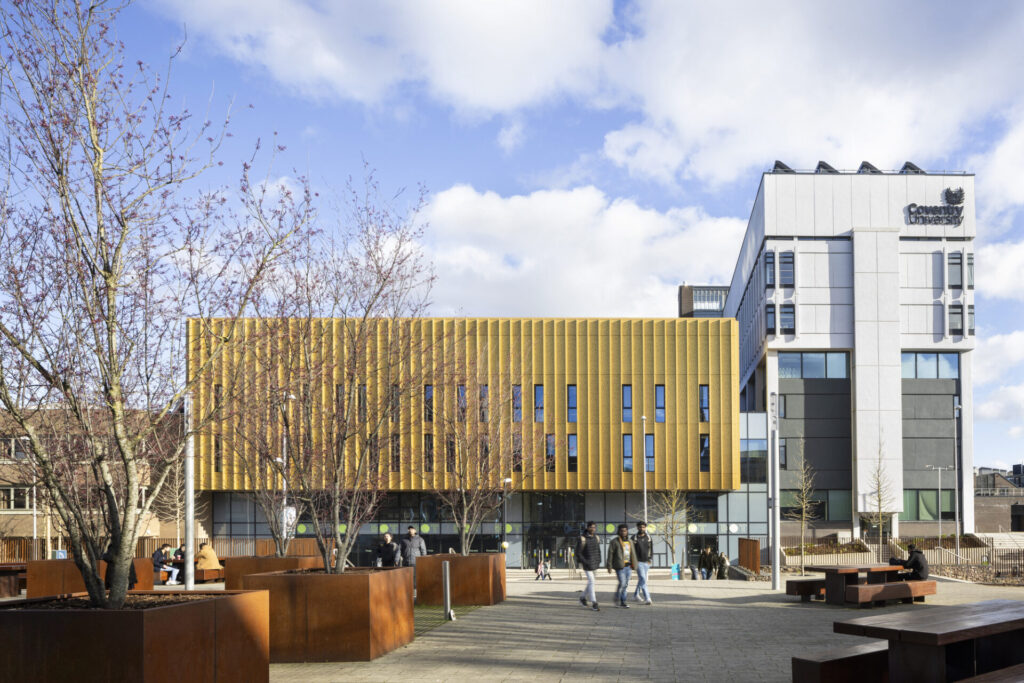
Coventry’s Automotive and Transport Design course has spent decades building close ties with industry. Alumni from the programme now work across OEMs, consultancies, CMF teams, UX groups, and digital modeling studios — and those connections continue to shape how the course evolves.
Location plays a key role. Situated in the Midlands, Coventry sits close to automotive OEMs, suppliers, prototyping shops, model makers, and visualization labs. Students benefit from exposure to real-world workflows early in their education, not as an afterthought.
Just as importantly, Coventry’s heritage acts as a stabilizing force. As new technologies like VR, immersive environments, and AI enter the design process, the program evaluates them through a long-standing understanding of what automotive design fundamentally requires.
“That heritage gives us a big leg up as we move into the future.“
Shaun Hutchinson
Rebalancing the curriculum: A focus on making
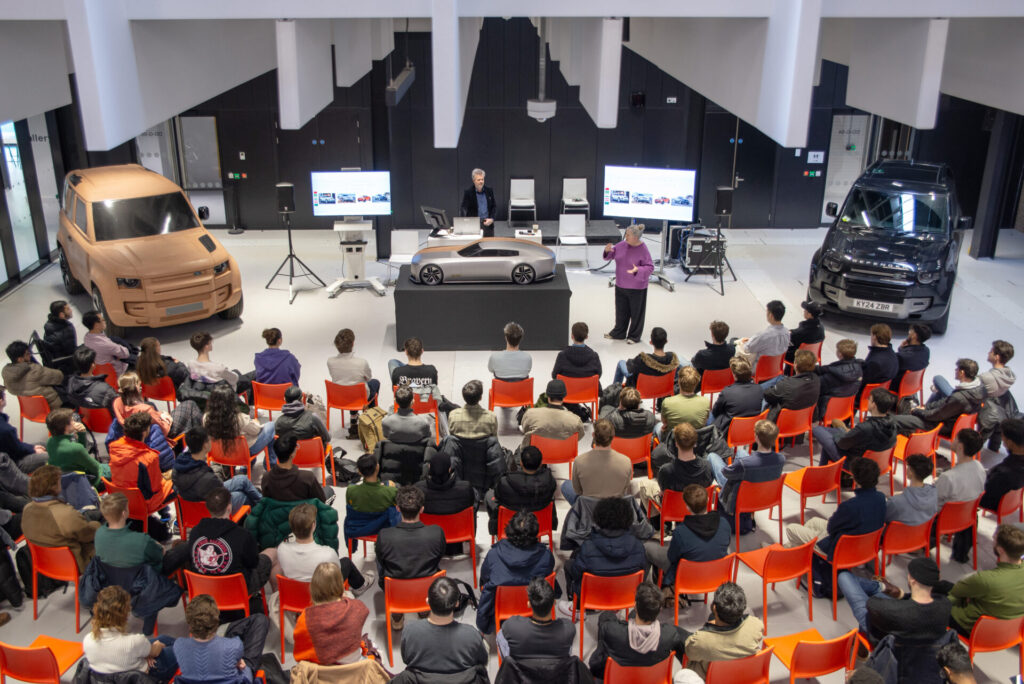
Like many design programmes, Coventry saw students become increasingly digital during and after COVID. While those skills remain essential, industry feedback highlighted a growing gap: graduates confident with screens, but hesitant when it came to physical objects.
So Coventry responded by strategically pulling students back towards physical exploration, reshaping its curriculum around three core pillars:
- Design thinking and narrative
- Visualisation and drawing
- Making and prototyping
Recentering “making” is supported by its serious facilities. Coventry houses one of the largest clay studios in Europe, immersive VR suites, motion capture, scanning and milling tools.
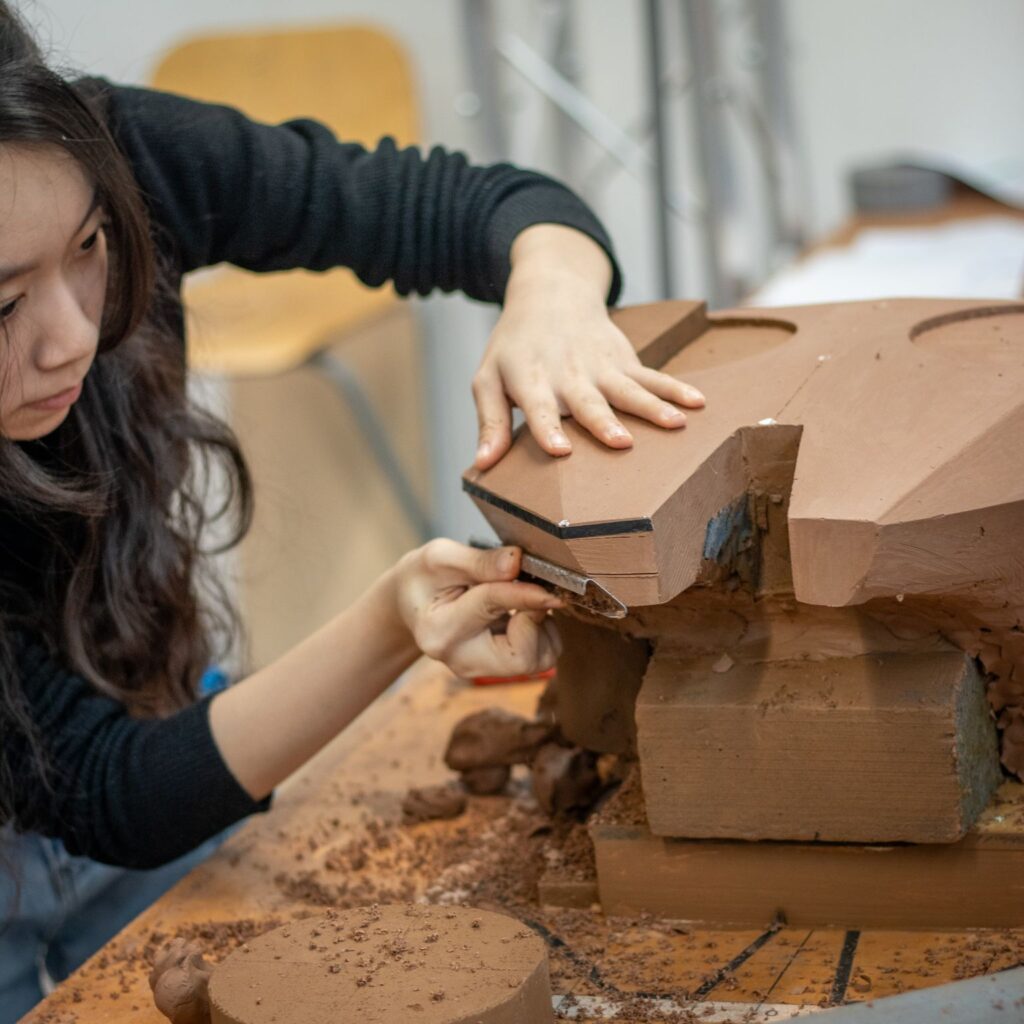
The aim isn’t to reject digital workflows, but to reconnect students with form, scale, and material understanding. That emphasis on physical exploration has become a defining strength — and a key factor in producing competition-ready students who think in three dimensions, not just two.
“We’re trying to embody more of the spirit of making. We’re a physical course … we draw pictures, and we make stuff.“
Shaun Hutchinson
Teaching fundamentals in the age of Instagram and TikTok
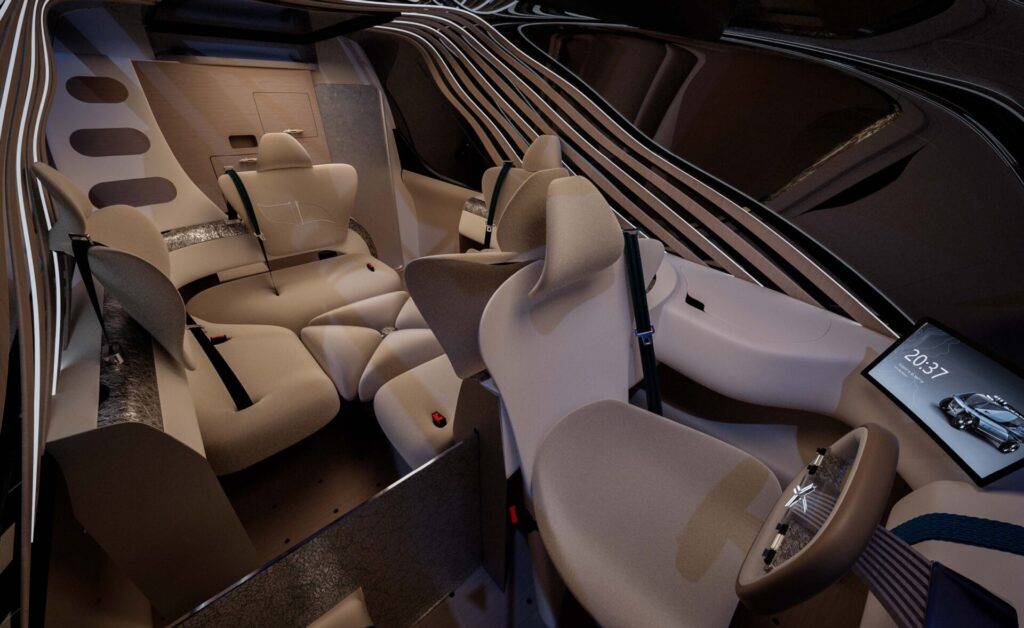
Many first-year students arrive with a skewed perception of design. Social media shows the final 30-second sketch or AI-generated “hero” image, not the years of training, iteration, and critique behind it.
At the same time, diminishing arts education in UK schools means some students arrive with limited drawing or creative foundations.
Coventry addresses this head-on. Year 1 builds a stable foundation, focused on drawing fundamentals, creativity, ideation, and understanding what different design roles actually involve — from exterior and interior to CMF, UX, modelling, and brand.
“We can’t accept a glossy image as a good output anymore — anyone can do that now…. What they see on Instagram looks easy. They don’t see the years of knowledge behind it.”
James Ayre
The goal is to dismantle the idea that a strong render equals a strong design. Students learn to frame problems, build narratives, consider market context, understand proportion and usability, and justify their decisions long before polish enters the picture.
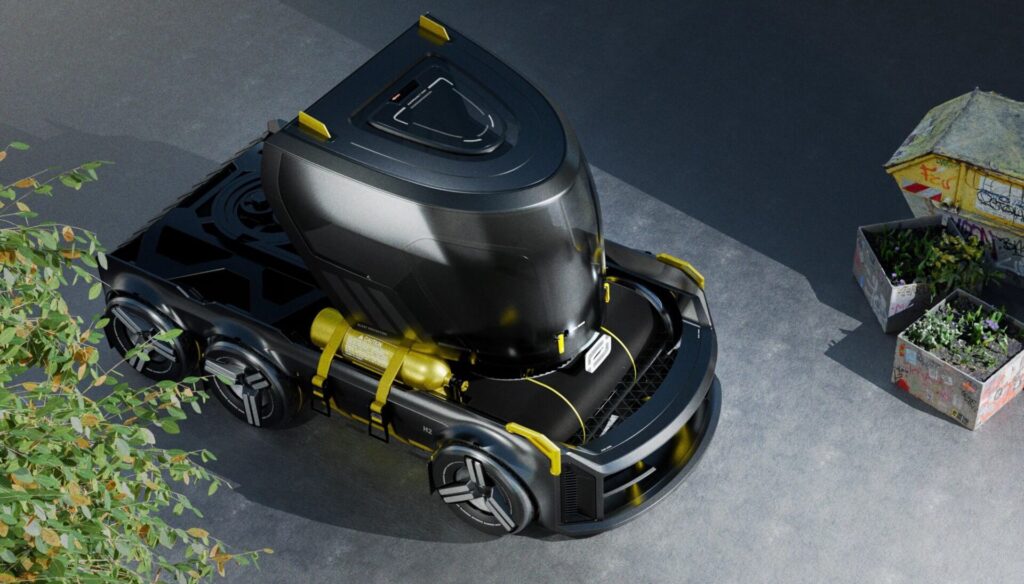
This philosophy directly reflects why Coventry’s competition team succeeded: they anchored their work in intent and story before visualizing it.
AI as an integrated accelerator — not a shortcut

AI is now an unavoidable part of design education, and Coventry is engaging with it pragmatically. The programme partners with emerging AI companies and closely follows industry research pointing to AI integration as a critical future skill.
But the message to students is clear: AI only adds value when guided by human intent.
Students are taught to start with an idea, use AI to rapidly visualize and explore variations, interrogate what the output gets wrong, and refine designs through sketching, modelling, or physical making.
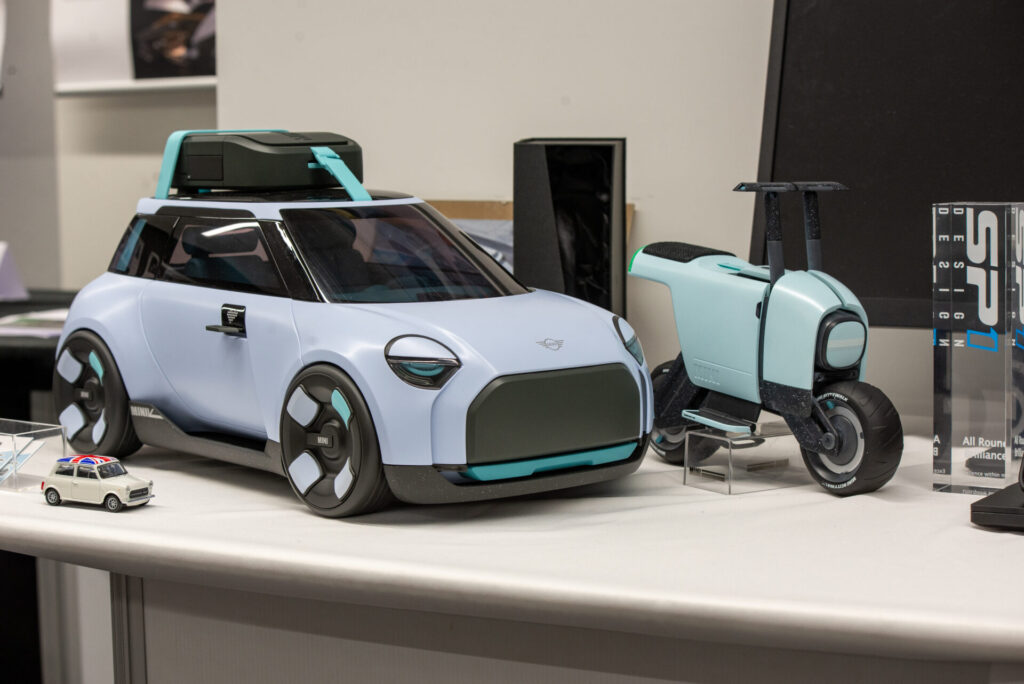
“The initial spark still needs to come from a human… They’re the pilots. They’re the drivers.”
James Ayre
The designer has to retain control. AI accelerates decision-making — it doesn’t replace it.
Broadening the idea of an automotive design career
Many students begin their studies hoping to become the next star exterior designer. While that aspiration remains valid, modern studios rely on a far broader ecosystem of skills.
Coventry actively exposes students to roles across CMF, UX/HMI, brand, NURBS and SubD modelling, VR sketching, visualization, and research. Visiting lecturers, alumni, and industry partners — including Autodesk — help students understand what these roles look like in practice.
A recurring message is simple: students are most successful when they lean into their natural strengths.
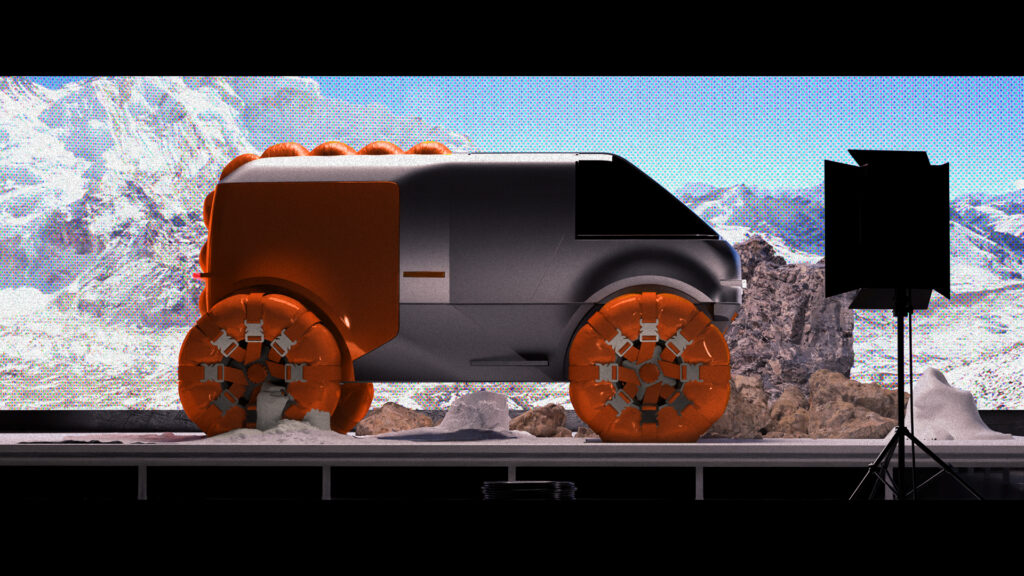
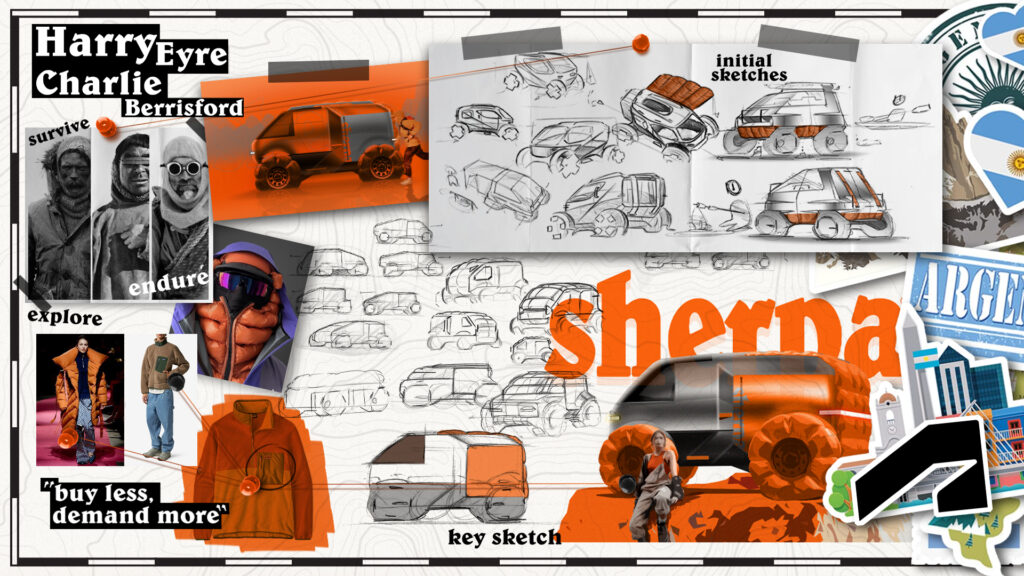
Team Coventry’s competition winners, Harry Eyre and Charlie Berrisford, exemplified this mindset — combining strong modelling skills, brand sensitivity, and relentless iteration rather than chasing a single stereotype.
Harry’s disciplined Alias modelling and brand awareness paired with Charlie’s willingness to challenge ideas and push boundaries. Both demonstrated the work ethic Coventry emphasizes: constant iteration, long hours in the studio, and critical self-reflection.
“It’s three years to change your life … And you have to work hard for it.”
Shaun Hutchinson
A future of making
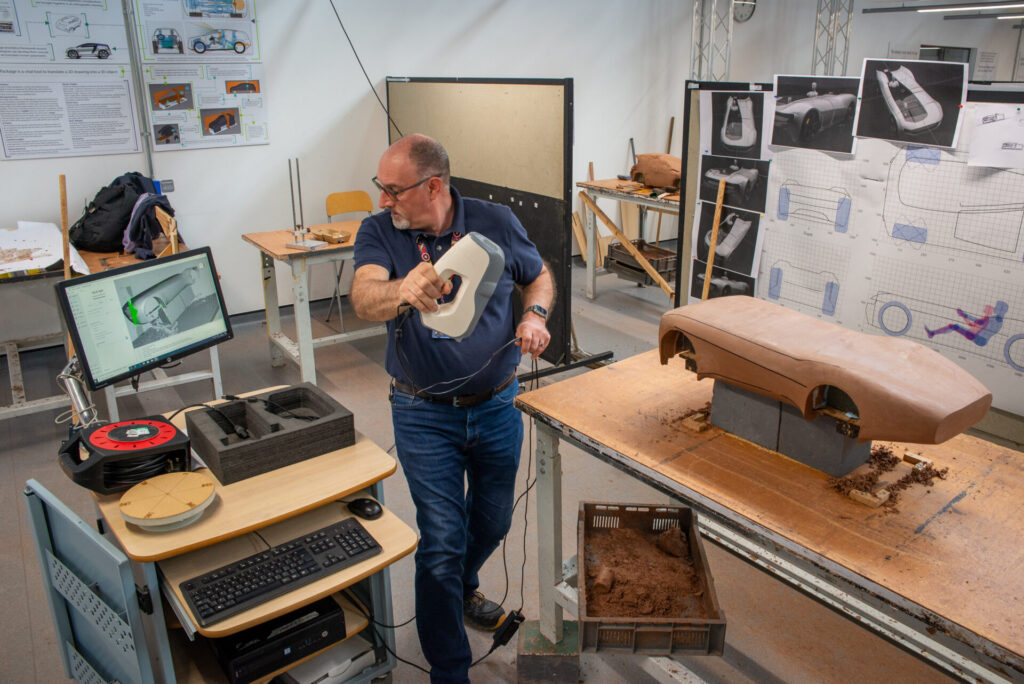
Coventry’s future blends sketching, clay, immersive VR, digital modelling, and responsible AI integration. The programme will continue expanding partnerships and interdisciplinary pathways while preserving its physical, narrative-driven core.
The recent competition win underscores a simple truth: even in an AI-accelerated world, design education still thrives on intent, craft, and critical thinking.
Or, as Shaun puts it, it all comes back to one thing — making stuff.
This story was developed using a blend of human expertise and AI tools supporting the research and drafting. Our team shaped, edited, and fact-checked the final content to ensure accuracy and alignment.
Curious about how the Autodesk Student Design Competition works? You can learn about the competition, hear from the judges, and listen to Coventry’s Winning team, Harry Eyre and Charlie Berrisford.
Check out our Autodesk Automotive on LinkedIn and visit the Design Studio YouTube channel for product updates, resources, and more.

Sharpen Your Skills
Alias and VRED Learning Editions are free for non-commercial use. Learn more and start your journey today.