 Brandy Ryan

For two days in Darmstadt, automotive designers, engineers, industry partners, and emerging talent came together at Autodesk Automotive Innovation Forum 2026 (AIF26) to consider how new technologies are changing the way vehicles are imagined, evaluated, and developed.
The presentations offered one perspective. Just as revealing were the exhibit demonstrations, and the reflections shared afterward: a conversation less about technology in isolation and more about how teams can put it to work, make decisions together, and preserve the creativity that gives design its character.
AIF26 at a glance
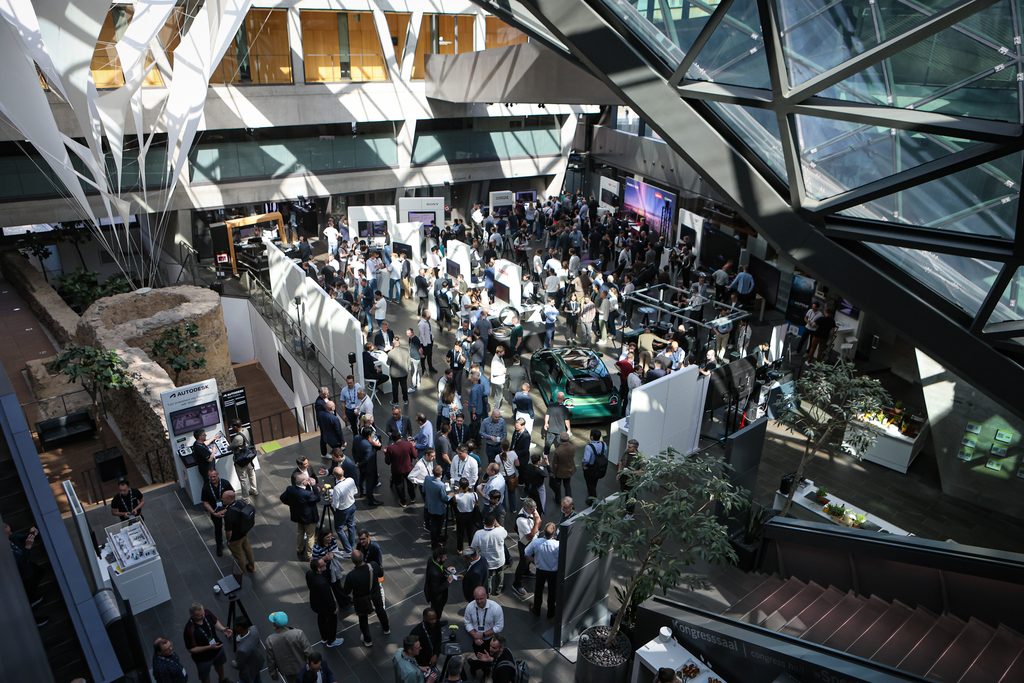
- 491 attendees
- 76 automotive and mobility companies
- 27 sessions:
- 10 Main Stage
- 9 Design & Development
- 8 Digital Factory
- Presenters from 13 companies
From possibility to practicality
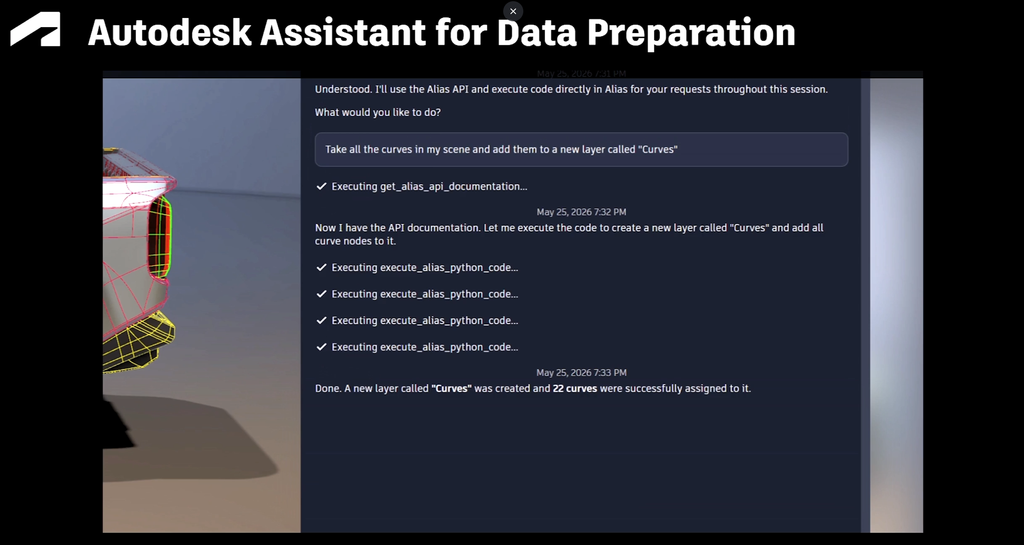
One of the clearest themes emerging from AIF 2026 was a more practical conversation about AI: not only what the technology can do, but where it can make a meaningful difference in the daily work of designers and engineers.
In a LinkedIn reflection, MUNIQ Design GmbH captured this shift: “AI is moving from promise to practical value.” The team pointed to AI becoming more deeply embedded in design, visualization, and engineering workflows, helping teams make decisions earlier and explore ideas more efficiently. Equally important was their observation that as answers become easier to generate, knowing which questions to ask becomes increasingly valuable.
That balance between technical acceleration and human judgment appeared throughout the wider commentary—and in the projects discussed onstage.
In its ten takeaways from AIF 2026, Design Week explored how automotive workflows are evolving beyond traditional, sequential processes. Engineering constraints are moving earlier into concept development, AI-assisted simulation is making technical feedback more accessible, and mixed reality is creating new opportunities to evaluate physical and digital experiences together. These developments point toward closer collaboration between disciplines, while preserving the creative expertise that shapes design decisions.
For Linkage Design, which participated as an exhibitor and collaborator, the broader takeaway was that acceleration alone isn’t enough. In its AIF recap, the team emphasized the continued importance of creative direction, visualization, and storytelling in helping organizations communicate and validate design intent.
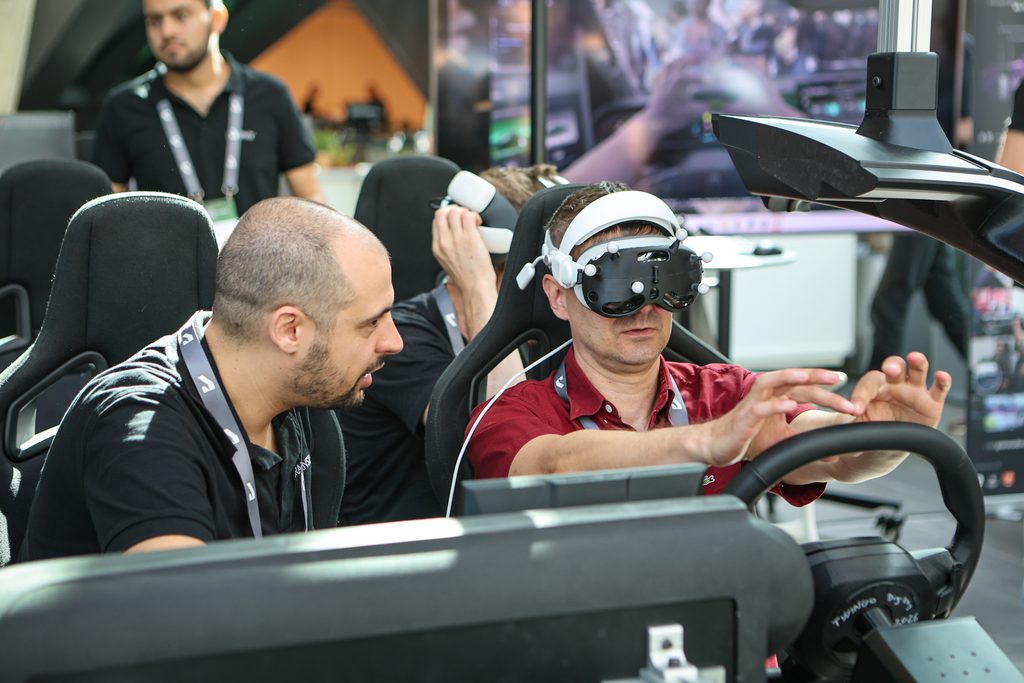
In his post-event reflection, attendee David Coveney described the frustration of decisions passing back and forth between siloed design and engineering teams. He also wrote about trying Granstudio’s DigiPHY experience, which places physical vehicle elements in a virtual environment so that features such as door openings and control locations can be examined together. Having tried it himself, he called the experience “incredible.” His assessment offers a firsthand perspective on the potential of more connected design reviews.
Taken together, these perspectives suggest that the real opportunity is broader than speed. Earlier feedback and closer collaboration could help designers and engineers make more informed choices while leaving room for creative direction and craftsmanship.
Ideas worth revisiting: AIF26 presentations
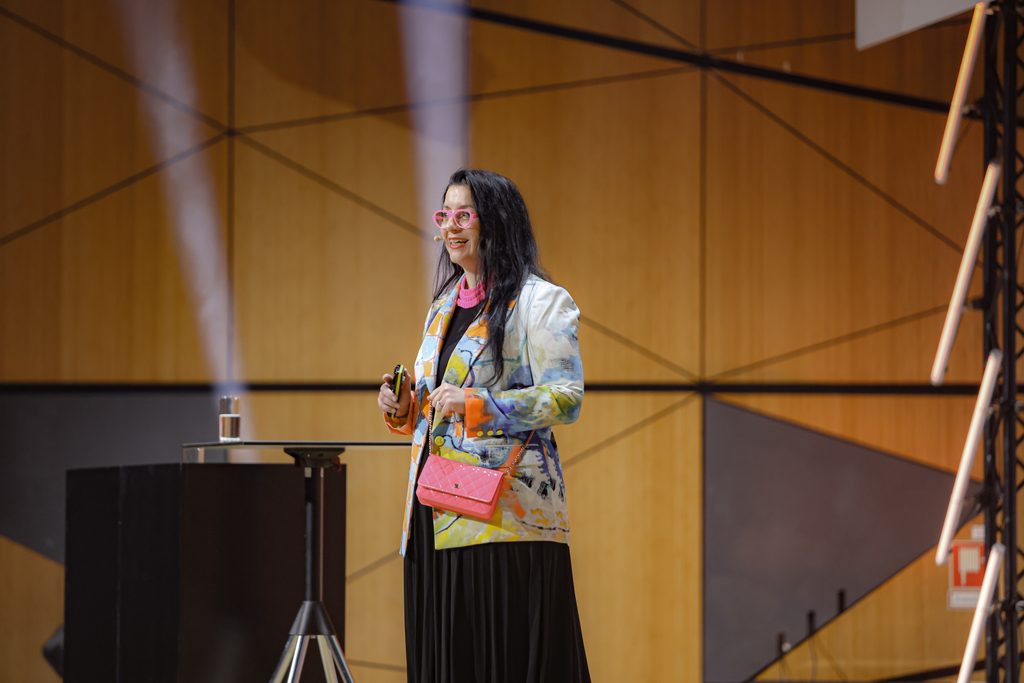
Main Stage Presentations
Roger Atkins (Electric Vehicles Outlook): Opening
Daniela Becker (Autodesk): “Welcome to Automotive Innovation Forum 2026”
Lars Thomsen (Future Matters): “From Human Resources to Human Capacity – How AI Helps People Think Better, Create More and Build Next Level Companies”
Panel – Roger Atkins, Martin Groschwald (Konzepthauz Consulting), Harald Schlarb (HSI Unternehmensberatung): “The Cost of Late Decisions”
Asif Moghal (Autodesk): Mobility & Transportation Keynote
Matthias Bauer (Autodesk): “Bridging Design and Engineering: Two Real-World User Examples”
Pierre-Paul Andriani & Victor Perez (Autodesk): “Autodesk Student Design Competition: The Original and the Remix”
Panel – Martin Groschwald, Amy Frascella (Design Consultant), Joshua Reer (Automotive Designer): “Digital CMF: Shaping the Future of Design”
Design & Development Presentations
Marek Trawny, Jakob Lohse, Timo Gmeiner, Brandon Tasker, Lukas Fath (Autodesk): “Design Keynote – Accelerating the Studio with Confidence”
Florent Diudonne, Stephane Maiore, Jacques Labouret (Renault), Wouter Struijk, Antonio Mignano (Granstudio): “Twingo meets DigiPHY: Renault Design & Granstudio Collaborative Story”
Jack Allenet & Ben Cordes (Bentley): “Bentley EXP 15 – The Digital Design Story”
Ewen Macrury (Norton Motorcycles): “Virtual World, Real Decisions”
Yongseong Kim (Hyundai) & Minki Hong (Autodesk): “Beyond the standard toolbox: Developing customized tools for Alias”
Enric Aramburu (IDIADA): “Accelerated Bonnet Design Optimization Using ML-Driven Head Impact Simulation”
Noa Samarelli (Ford Motor Company) & Jeffrey Smith (Autodesk): “Ford Raptor Generative Design Suspension – Design and Engineering working together”
Greg Barbone, Patrick Mours, Nico Marniok (NVIDIA) & Michael Nikelsky (Autodesk): “Supercharging Rendering Performance in Autodesk VRED”
Barry Kimball (Autodesk): Design Deep Dive
Pascal Seifert (Autodesk): Visualisation Deep Dive
From main stage to exhibition floor
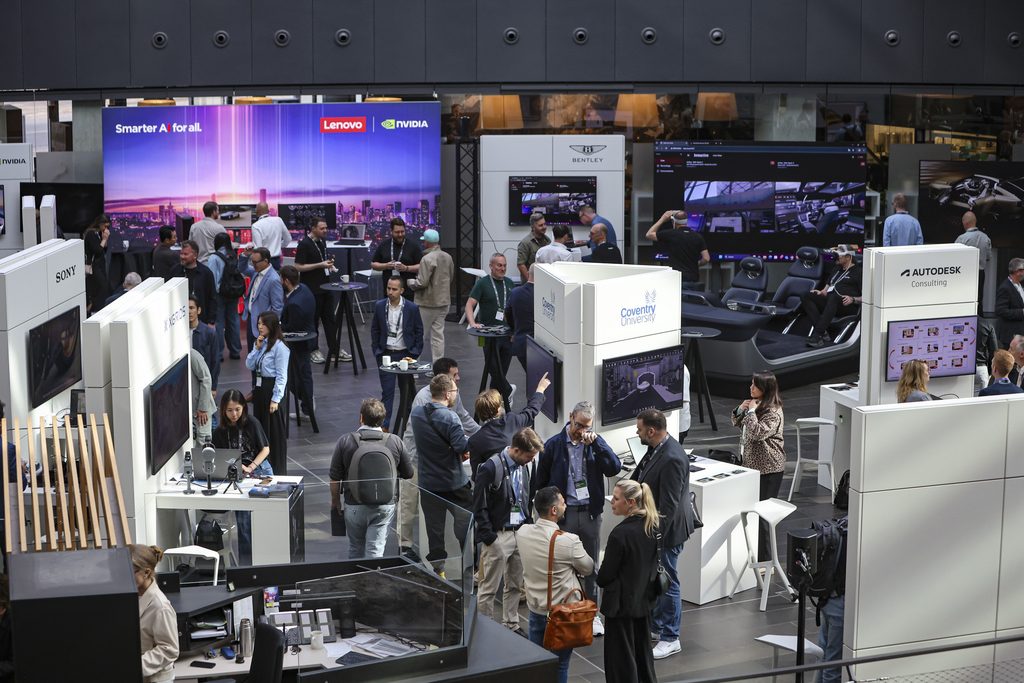
AIF’s exhibition floor gave the ideas discussed onstage a more tangible setting. In his walk-through of the event, host Roger Atkins highlighted installations involving Renault and Granstudio as well as Bentley and spoke about seeing people try the experiences for themselves. It was a chance to consider how immersive reviews, visualization, and connected workflows might translate into day-to-day studio practice. Autodesk Consulting and Autodesk Factory Design were also present to talk with customers about solutions.
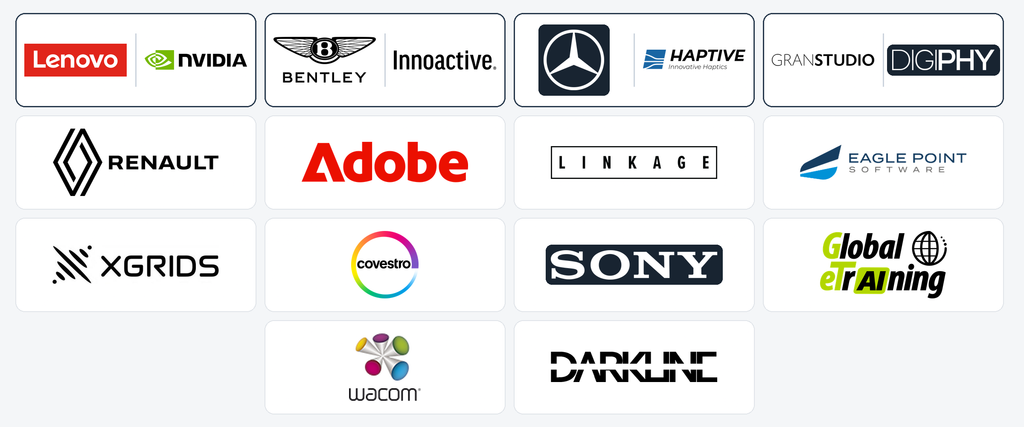
Exhibitors included Lenovo/Nvidia, Bentley/Innoactive, Mercedes Benz /Haptive, Renault, Granstudio/DigiPHY, Adobe, Linkage Design, Eagle Point, XGrids, Covestro, Sony, Global eTraining, Wacom, Darkline.
Beyond the presentations: coming together at AIF26
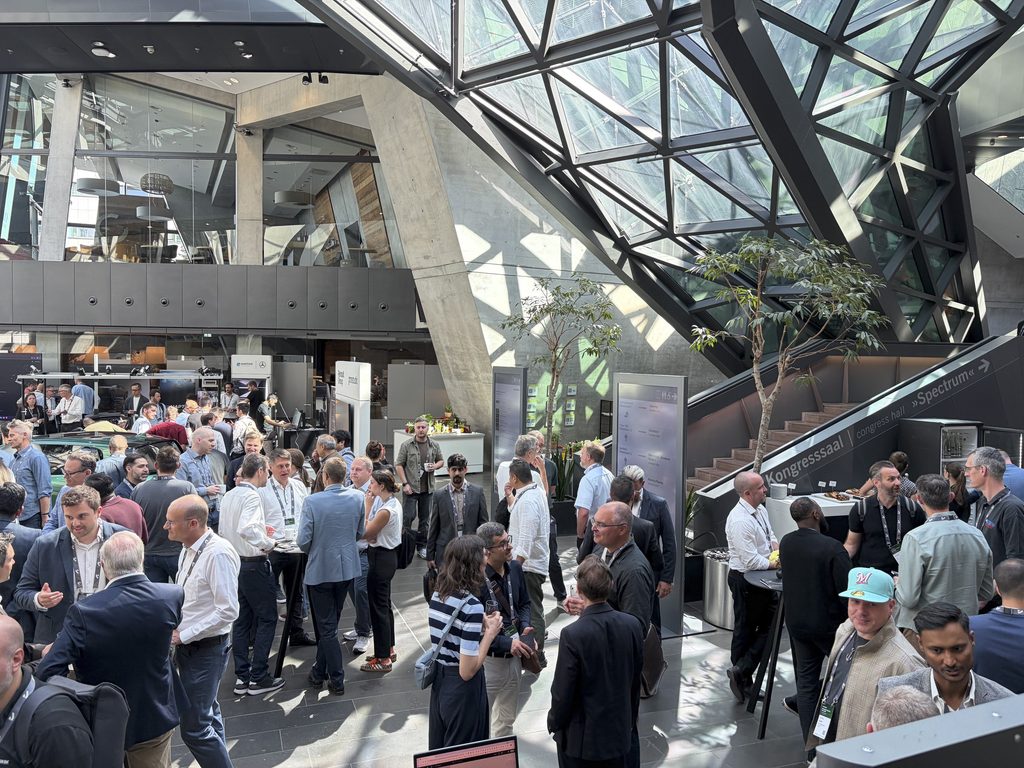
The value of AIF extended beyond the sessions and demonstrations. Participants also highlighted something less easy to capture on a presentation slide: the opportunity to exchange ideas across the automotive design community.
In his AIF reflection, host Roger Atkins pointed out what makes the in-person experience difficult to replace. While recordings allow people to revisit presentations, “much of the action happens in terms of sharing best practice, innovation, and networking.”
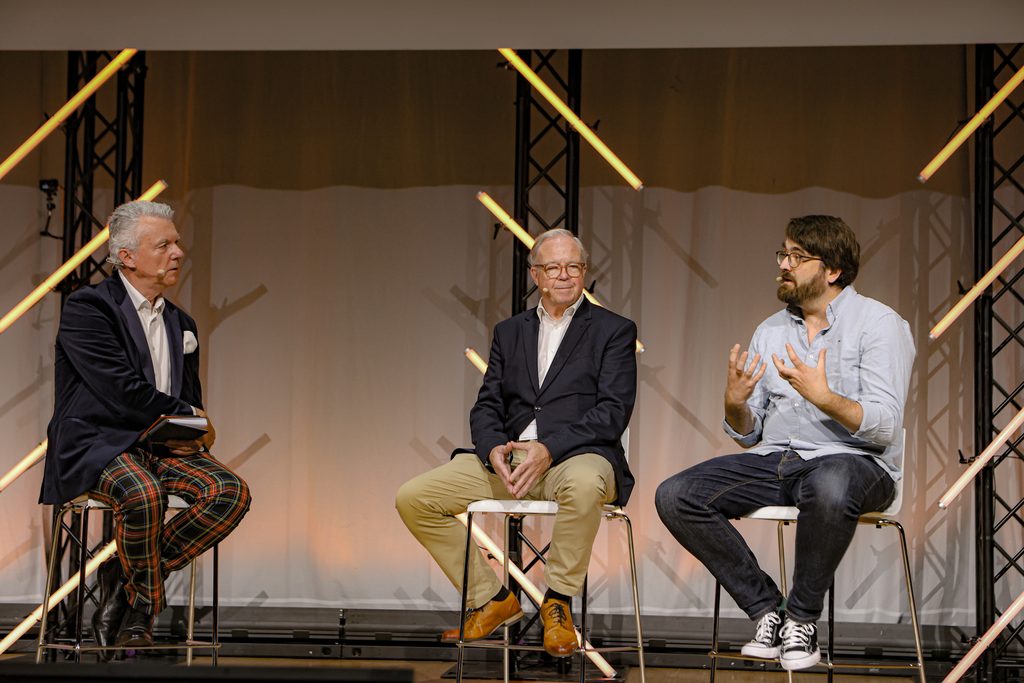
The panel on “The Cost of Late Decisions,” featuring Roger Atkins, Martin Groschwald, and Harald Schlarb, brought organizational questions into the conversation alongside technology. Its premise was especially relevant to design and engineering teams: when decisions arrive late, the implications can extend well beyond any individual tool or discipline.
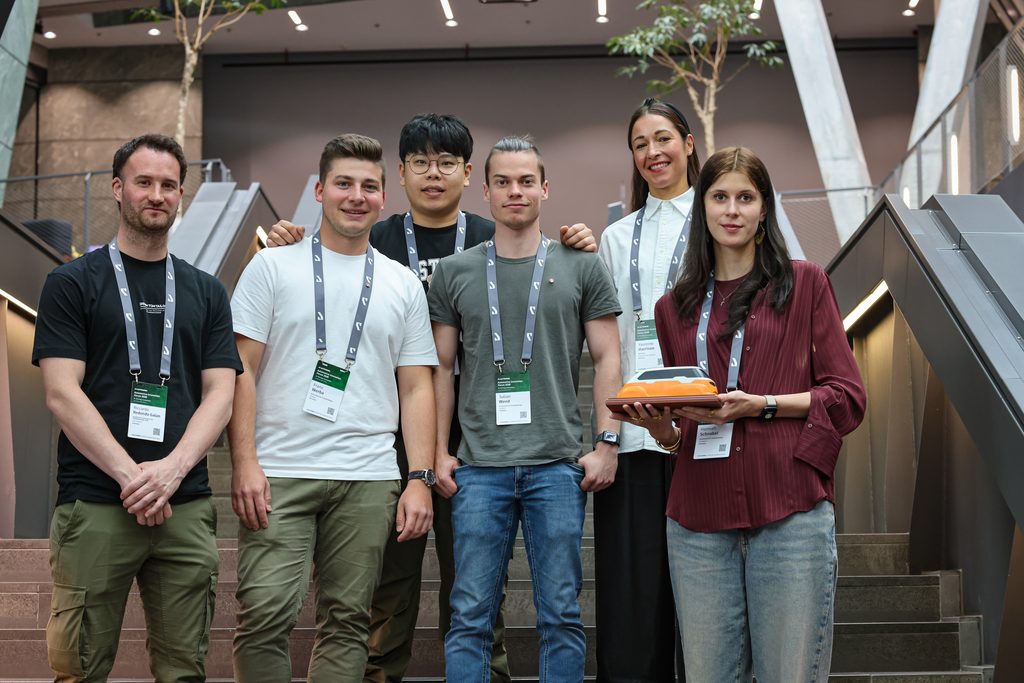
The AIF Student Design Competition provided another perspective on the future of the industry. Design Week highlighted the imagination and storytelling shown by the finalists, while Roger Atkins emphasized the aspirations of the students taking part. The winning Surface Squad team from the Staatliche Fachschule für Produktdesign Selb reimagined the Fiat Multipla 600 through a Pop Art lens—a reminder that technical skill, originality, and the ability to communicate a compelling idea all matter.
Looking back, the connections between technology and human expertise were visible in concrete ways: physical and virtual vehicle elements brought together for design review, candid questions about the timing of decisions, and students giving familiar automotive forms unexpected new identities.
What remains after AIF 2026 is not one prediction about the future of automotive design, but a set of useful questions about how teams will work: what to connect, what to test earlier, and where human judgment and collaboration make the difference.
AIF27
Stay tuned for details about AIF 2027. We’re excited to share what’s next.
This story was developed using a blend of human expertise and AI tools supporting the research and drafting. Our team shaped, edited, and fact-checked the final content to ensure accuracy and alignment.
Stay connected with the Automotive Design team – browse our videos on our Autodesk Design Studio YouTube channel and get the latest from our Autodesk Automotive LinkedIn page.