 Autodesk Media & Entertainment
Friday Sundae Studio is an independent game development company based in Bristol, England, founded by husband-and-wife duo Rachel and Anil Glendinning. They are currently working on their debut title, There Are No Ghosts at the Grand, which was featured at GamesCom. We sat down with co-founder and creative director Anil Glendinning, writer and director of the game, for a conversation about how they got here and where they’re headed.
Tell us about your company. How did Friday Sundae come to be?
Friday Sundae is only about five years old. Initially it was started up with my wife and myself, just the two of us helping companies like the Cartoon Network and the BBC make games for children.
There wasn’t really a company near to us doing something like that, not in Bristol. There’s a lot of animation here, because it’s the home of Aardman Animation. There’s a lot of media, but not a lot of games companies, so we made our own. There Are No Ghosts at the Grand is the first game we’ve ever made ourselves.
Tell us about the game.
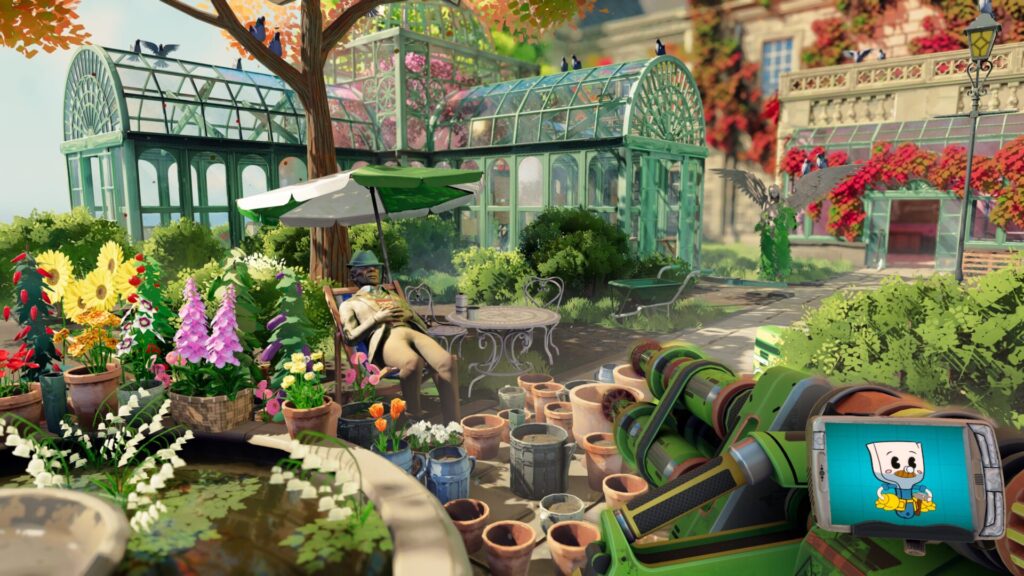
In the game, you play a young American man who has inherited a dilapidated British seaside hotel, and your job is to renovate it. As you go about decorating and renovating the hotel using a set of exaggerated power tools in first-person perspective, you discover that there are secrets, lies, and maybe even supernatural elements hiding under the surface of the hotel—and the surrounding town as well.
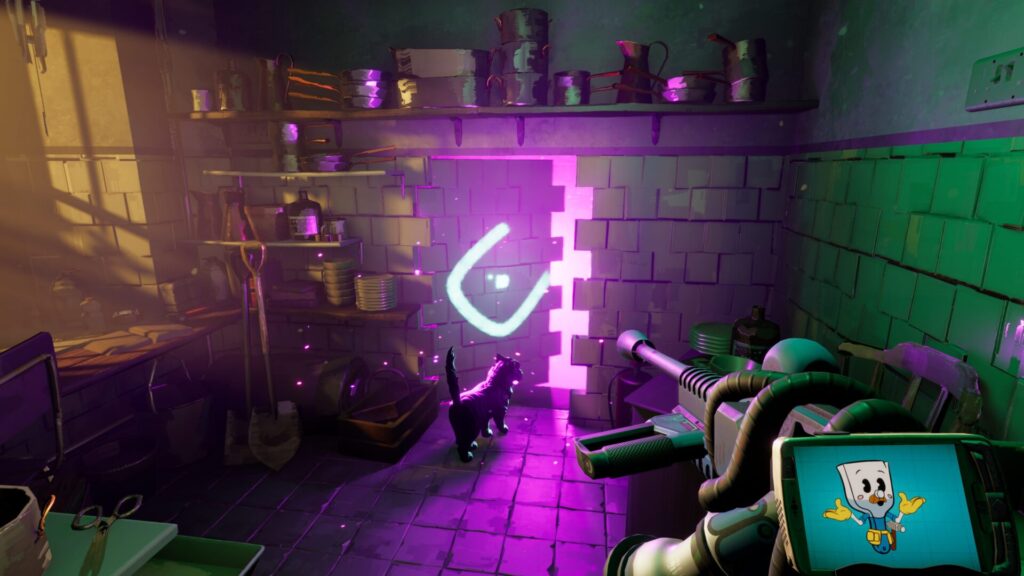
It’s a game that is very story-driven, a story that takes lots of twists and turns. What starts off as a simple premise of renovating “a definitely-not-haunted hotel” turns into something very surreal, bizarre, occasionally funny, and often heartwarming.
There are a lot of comments online about the music. What role does music play in this game?
The game is a musical. So, the characters each have their own theme song. We didn’t start off to create a musical, but the music that we were listening to whilst developing it, music from the late 80s, early 90s—reggae, punk, a lot of stuff like the Clash, The Specials—it added to the surreal nature of the game.
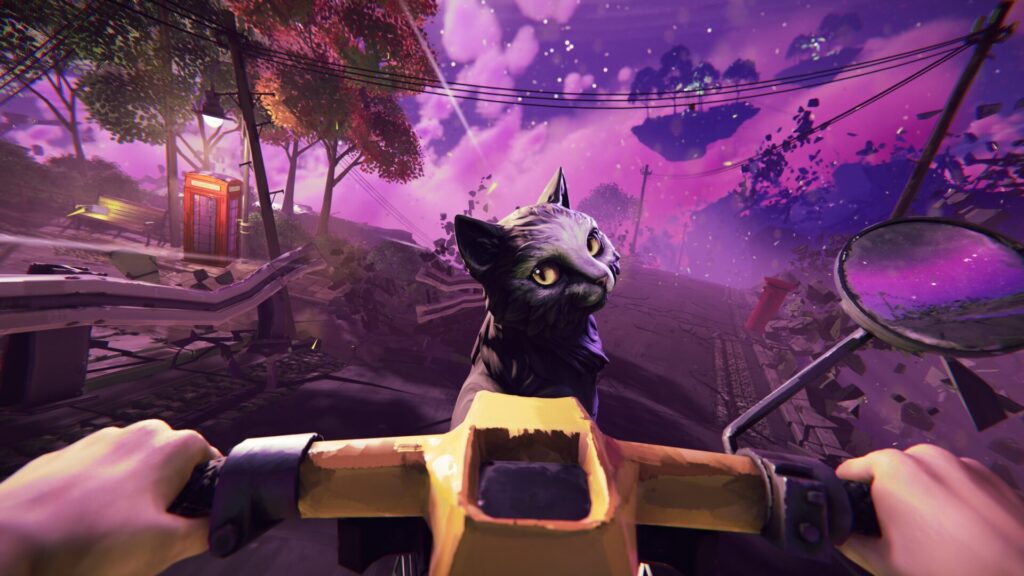
So the characters sing, and you can sing back in verse, making dialogue choices in song, and altering the story in that way. And there’ll be musical sections when you are doing activities within the game, such as driving the boat, renovating the hotel, or searching for clues and mysteries in the town itself.
Tell us about the creative process to make the game.
It’s been a very organic process. We started off with a simple seed: we just wanted to tell a ghost story. Ghost stories are one of the genres which even non-storytellers often go to. It’s something that we can connect with, and it’s something that you can insert yourself into as well.
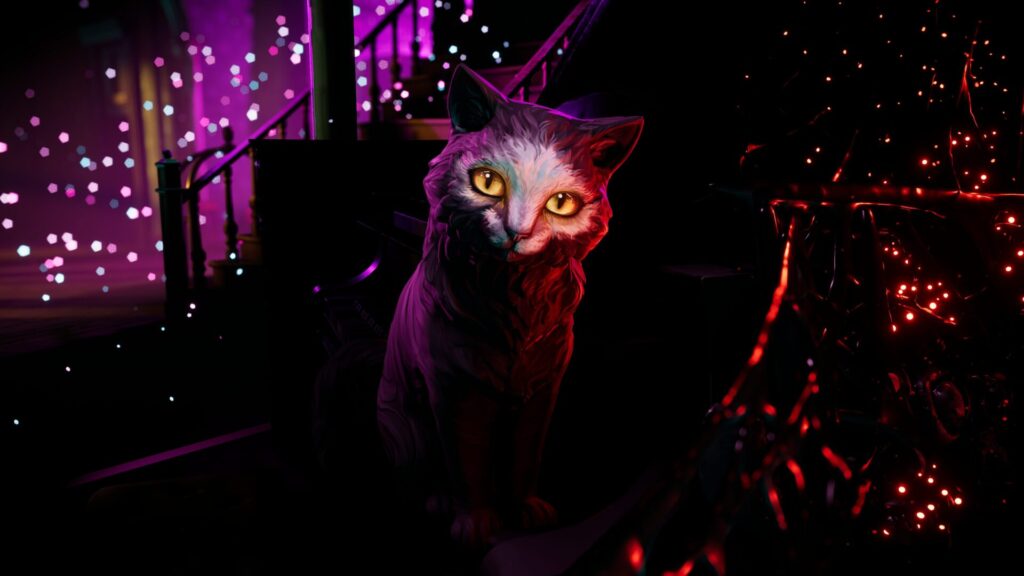
Friday Sundae is a small company. There’s only 10 of us. We have quite a flat structure. The best part of making a game as a small studio is that everyone’s voice matters. We are a very collaborative studio, and so we collect ideas and stories from everyone. It feels like being in a band—like riffing with your friends and coming up with ideas. And that’s why we have something so eclectic, because it comes from a diverse portfolio of experiences and voices, and that’s a lot of fun.
The flip side of that is the hardest part: making games, even some of the simple ones, is difficult. Wrangling tools to make the unique thing that you want to make is always challenging.
Creating software for a wide variety of hardware configurations on a PC is challenging as well. Adding smaller PCs such as handhelds into the mix has an impact on the type of shaders, the type of memory usage you need. And doing all of that as part of a very small team is challenging, because there are no shortcuts. You just have to test and iterate.
Why is it called There Are No Ghosts at the Grand?
There were a couple of things that we wanted to say right off the bat. Number one: you can’t trust the game. It’s lying to you right in the title.
You can’t even trust the player character, Chris David. He is an unreliable narrator. You play him, but you don’t really know him, you don’t know what he’s doing, you don’t really know what he’s saying, and he does things off-camera and deliberately hides that from you.
The characters in the game are also not telling you the truth. So lies and misdirection and twists are central to the game, and we wanted to put that directly into the title itself. So, are there no ghosts of the Grand? Maybe, maybe not?
What was the process for developing and pitching the game?
We took a gamble and built a demo of something that was a bit strange: a musical renovation game set in the UK. But we showed it around to people, and it started to gain some traction.
One of our early partners was Microsoft, who really seemed to love this strange little product from this unknown team from the UK. And it was their support—inviting us to be part of Game Pass, inviting us to be part of their summer showcase, and most recently inviting us to Gamescom—which has really allowed the team to continue building the game and bringing it to an audience.
Why was Maya the right tool for this project?
Maya is really the industry-leading tool for animation, so all our artists, whilst in university, trained using Maya.
They’ve also now discovered how scriptable it is. So we’re able to develop custom scripts that can automate certain tasks that fit our particular needs. For example, we automate our export process—we export directly into Unity with the settings we need. And we typically need our meshes to be set up in a certain way to work with the game mechanics, so we utilize scripts in Maya to make that process quicker too.
Maya allows us to be creative, it allows us to be agile, and it doesn’t force us to adopt any one pipeline. It adapts to our pipeline, and I think that’s one of its big strengths.
Maya’s central to our creative process. When we’re developing an environment, the blockout is done within Maya. And we explore the environment within Maya itself using first-person controls, so we can get a sense of lighting and space. We used Maya like a game engine itself, exploring the world, the environment.
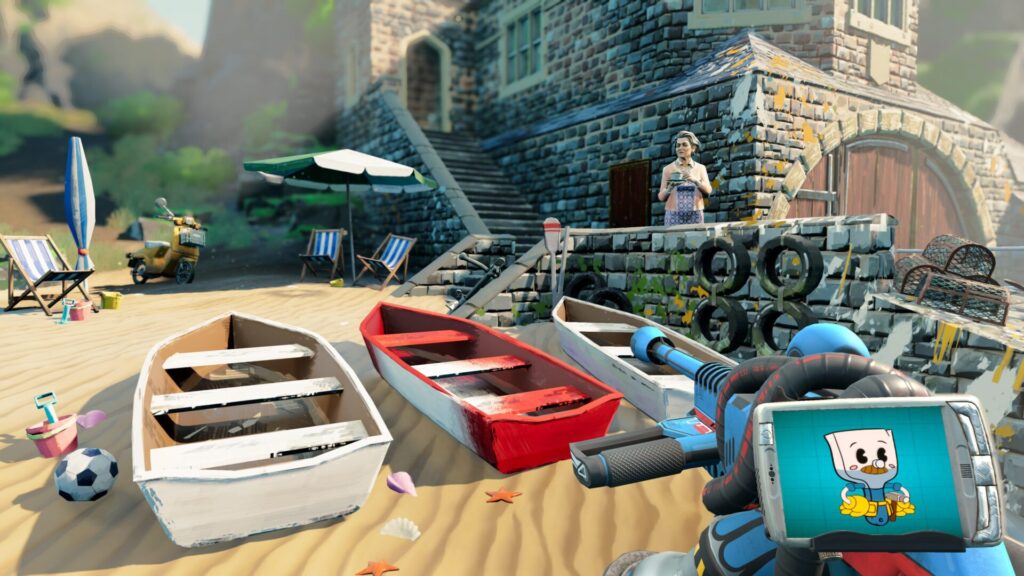
When it comes to creating characters, they’re all rigged within Maya. They’re sculpted in an external sculpting program, but then they’re brought into Maya to do the retopologizing. And then they are rigged, weight-painted, and prepared for animation—all within Maya itself.
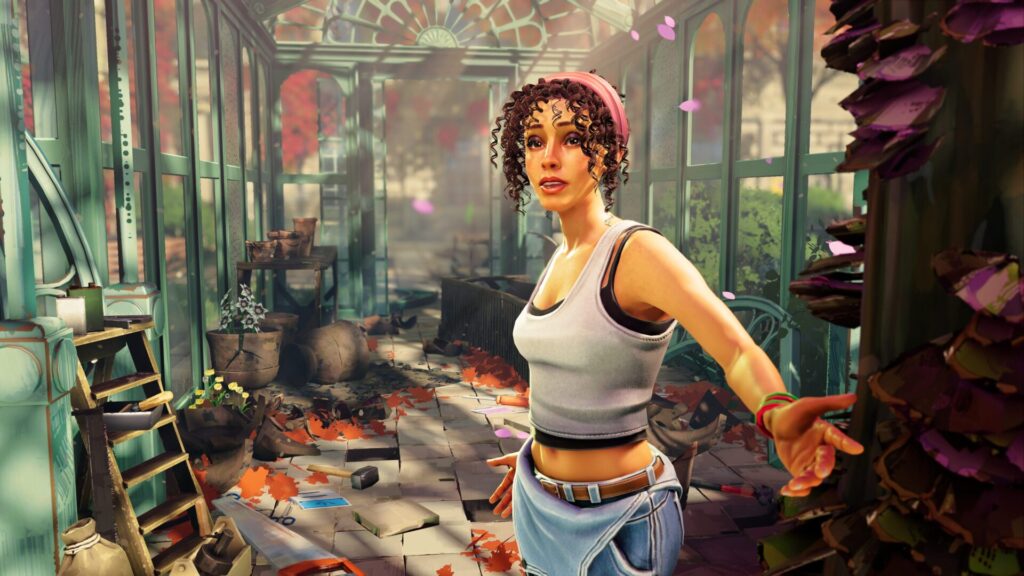
We also use Maya to map the skeletons onto motion-capture animation. So it’s able to take all that data, we’re able to map it, and then preview the animation within Maya itself.
We’re then able to bake all of that stuff down and export it to Unity, and it just works. And that is so valuable for a small team—having that consistency and that confidence in the tool: that it will just work.
Maya’s very robust, and it’s very flexible. It’s quite forgiving of the data that you put into it—and the data that you get out of it. Maya allows creative people to be creative, and takes some of the annoying technical stuff out of it—it helps you with that process.
Microsoft invited you to be part of their booth at GamesCom. What was that like?
Gamescom feels like one of the few really in-person events where people can play the game and speak directly to the developers and the creatives.
We were there for the entire week and we showed the game to nearly a thousand people. It was really exciting to see them laugh at the jokes, dance along to the songs, and scratch their chins at some of the puzzles.
One thing that we didn’t expect, however, was seeing families play the game together. It’s not a multiplayer game, it’s a single-player game. But seeing siblings swap the controller as they played, having the parents watch over them, really made us see the game being played within a home and family setting. And that made us think about the game a little bit differently. Not only did we decide to make a few less swear words in the game, but also to make a game that worked on several different levels. So there are jokes that the younger children got, but also meaning and messaging that the older players could understand in the subtext of the game as well.
Most games come from studios with large budgets and teams, but your studio overcame that barrier. What needs to change so more people have the opportunity to make games?
Within the UK, there’s support from creative arts councils run by the government that help video game development. And there’s lots of support from universities, creating students that are highly skilled. That stuff helps. It’s one of the reasons why the British games industry is quite healthy, considering the state of the industry. We have Rockstar here, we have Playground Games here, and Frontier Developers.
But the bigger the budgets get, that’s when you start requiring publishers and external investors to start investing in the industry. And that’s led by market forces.
What really makes a strong games industry is a broad, diverse portfolio of games: big, free-to-play AAA games, single-player AAA games, and a healthy independent scene where small, agile teams can experiment with new ideas.
If there’s ever a push towards one type of game or one type of model, it removes some of the competition from the industry and it becomes very difficult to operate.
So the industry needs opportunities to remain a healthy ecosystem. Things like Game Pass help with that. It allows small independent teams a budget and an audience. Digitally distributing through Steam, Epic, or GOG helps smaller, independent developers—and keeps older games alive as well.
When do we get to play the game?
We are still eyeing a late 2026 release date for the game. We’ll be releasing day one on Game Pass, as well as a simultaneous release on Steam as well.
Get started with Maya for game development.
Plus, gain access to essential tools like 3ds Max, 5x Arnold, and Flow Studio for less with the M&E Collection.