 Ananda Arasu
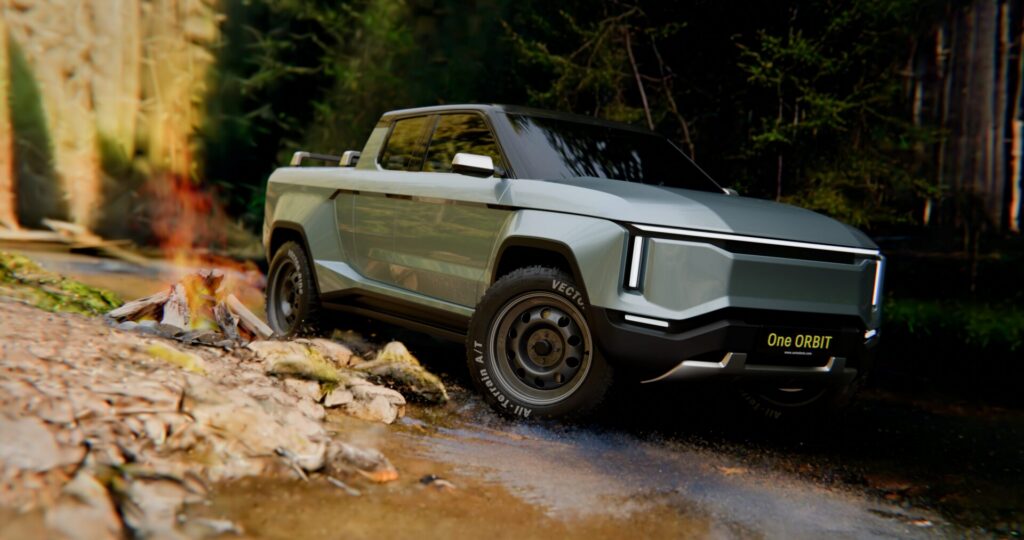
The 2027 releases of Alias and VRED are built around a single idea: the best design decisions happen when the tools get out of the way. That means less time preparing data, less friction between surfacing and review, and less distance between a design intent and the moment it can be evaluated, challenged, and refined. Alias 2027 accelerates the path from concept to quality surface. VRED 2027 takes what you build there and transforms how your team reviews, validates, and collaborates around it. Together, they move faster — and so will you.
From concept to surface, faster
Form explorer (Alias)
Early-stage exploration is where design momentum lives — and Form Explorer is built to protect it. Convert 2D reference images into clean, proportionally stable 3D meshes in minutes, giving your team a consistent starting form that everyone can react to. What used to take days of volume blocking and cleanup now takes minutes, compressing the gap between a sketch and your first 3D review and letting teams explore more directions before committing to one.
Mesh to SubD (Alias)
Working from scanned data or imported meshes has always involved cleanup before you can get to real modeling. The new Regions option in the Retopology Tool changes that, dramatically accelerating the process of approximating meshes with a Subdivision body, producing cleaner, more predictable geometry in less time. Spend more of your session modeling and less of it preparing to model.
Surface quality you can trust earlier
Enhanced diagnostics (Alias)
Surface quality issues caught late cost time. Enhanced Diagnostics brings advanced shading, angle analysis, and higher-precision deviation tools together to give you earlier, clearer insight into how your surfaces are performing, while you’re still in a position to do something about it. Identify and resolve issues sooner, with greater confidence, and deliver better quality surfaces downstream.
Paint Tools (Alias)
Paint is back — and it’s better than it was. Alias 2027 re-introduces Canvas and Markup paint layer support, letting you build up multiple paint and text layers directly on a canvas and organize them through the new Paint Layer Lister. The Transform Layer tool returns for precise control over scaling, rotating, and repositioning canvas content, PSD import and export connects Alias directly to Photoshop, and multi-byte character support keeps text annotations clean across languages. Expressive, iterative, and finally layered the way the rest of your workflow already is.
A seamless pipeline between surfacing and review
Live referencing (Alias and VRED)
Live Referencing is the feature that makes Alias and VRED feel like one connected workflow rather than two separate tools. Materials, annotations, variants, and sections now sync in both directions. From VRED reviews back into Alias, and from Alias updates out to VRED, design intent is kept intact across the pipeline. Less reconciliation, less rework, and decisions that actually reflect the latest state of the model.
View in VR/XR (Alias)
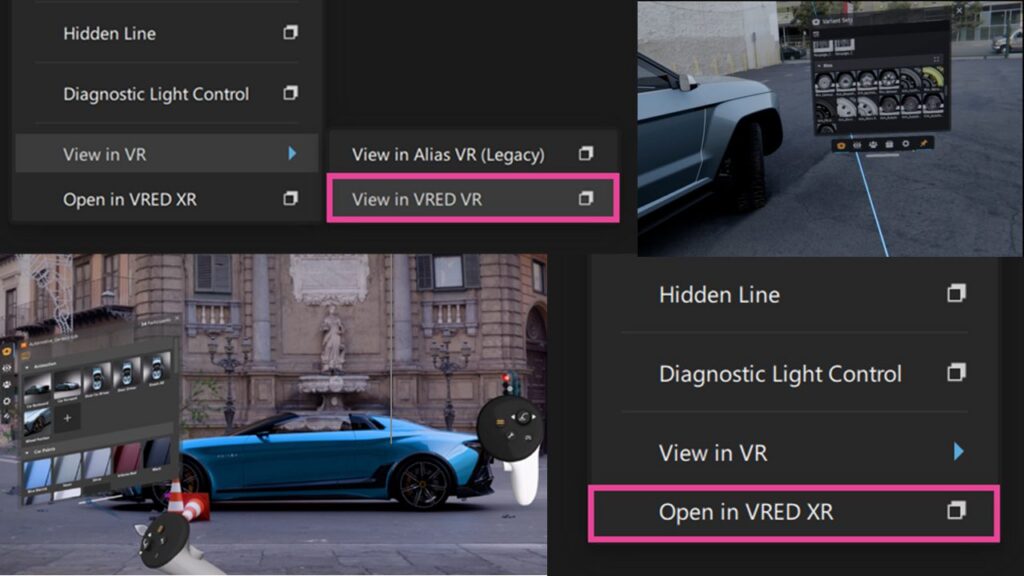
Immersive review shouldn’t require a separate workflow. With new View in VR and View in XR capabilities, you can launch a VRED Presenter VR or full VRED XR session directly from Alias with a single click, no VRED expertise required. The path from model to immersive experience is now as simple as it should be.
Review that goes beyond how it looks
Real-time Physics (VRED)
A digital prototype that shows you just how something looks can only tell you so much. VRED 2027’s dedicated Physics Editor introduces real-time rigid body simulation, giving teams the ability to interact with designs through physically accurate movement and behavior. Validate not just the appearance of a design but how its components move, react, and relate to each other, on the desktop or in XR. Reviews become evidence-based, and issues surface before a physical prototype is ever needed.
Ease of use in XR (VRED)
XR collaboration is only as effective as it is easy to use. A fully redesigned one-handed XR menu reduces friction in live reviews, while personalized avatars make distributed sessions feel more natural and improve engagement across studios. The result is wider adoption of immersive review and more productive sessions when it matters most.
New optimized 3D environments (VRED)
Context shapes how a design reads. Five new 3D library environments: Bridge, Desert, Minimal, Parking Deck, and Villa, are fully optimized for the Vulkan render engine and built with vehicle-centric staging in mind. Predefined camera viewpoints and optimized memory usage mean your team can get to first review faster, with consistent, high-quality context across workstations and display setups.
Gaussian Splat and point cloud support (VRED)
Placing a design in a real-world context has always required converting captured data into full meshes, a time-consuming, memory-intensive step that slows the path to review. VRED 2027 adds support for Gaussian Splats (3DGS) and point clouds (PLY), allowing more lightweight real-world captures to be imported and rendered efficiently using Vulkan and GPU ray tracing. Accurate, immersive context in your reviews, without the conversion overhead.
Design intelligence, built-in
Navasto for Alias
Aerodynamic performance has traditionally been a conversation that happens after design, not during it. Navasto for Alias changes that dynamic. This Autodesk plugin brings AI-powered aerodynamic insight directly into the design environment, enabling real-time airflow and drag evaluation as you work. Designers can make more informed decisions about vehicle efficiency earlier in the process, without waiting for engineering feedback or leaving the tools they already know.
See it all at AIF 2026
If you want to go deeper on any of these features, AIF26 is the place to do it. Join us June 2–3 at the Darmstadtium Science & Congress Center in Darmstadt, Germany, for two days of sessions, deep dives, and hands-on exploration of the latest across the Autodesk automotive design ecosystem. Sessions dedicated to the Alias and VRED 2027 capabilities you’ve just read about will give you the chance to see them in action and explore them with the teams who built them.
Can’t make it to Darmstadt? Recordings of all AIF sessions will be available on the Design Studio Blog and on our YouTube channel shortly after the event.
The Alias and VRED Learning Editions give you free access to Alias AutoStudio and VRED Professional for non-commercial use, so you can start exploring these new capabilities on your own time, at your own pace. Download them today and see what 2027 brings to your workflow.
This story was developed using a blend of human expertise and AI tools supporting the research and drafting. Our team shaped, edited, and fact-checked the final content to ensure accuracy and alignment.
Check out our Autodesk Automotive on LinkedIn and visit the Design Studio YouTube channel for product updates, resources, and more.