 Ananda Arasu
 Brandy Ryan
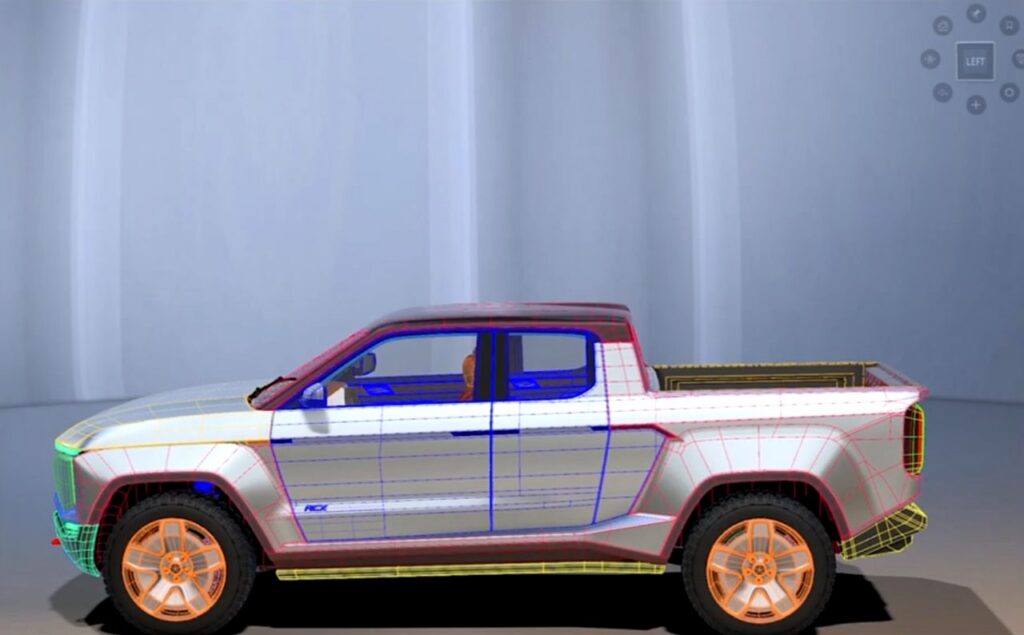
Every keynote has a drumbeat, and this year’s Design Studio Keynote session in Darmstadt had only one: speed. Not speed as a slogan or speed for its own sake, but speed with confidence. Director of Product Management Marek Trawny framed it at the top: while the pressure to compress vehicle development is relentless, the goal is never to go faster at the expense of quality. It is to do both at once: shorten the cycle while keeping the craft intact.
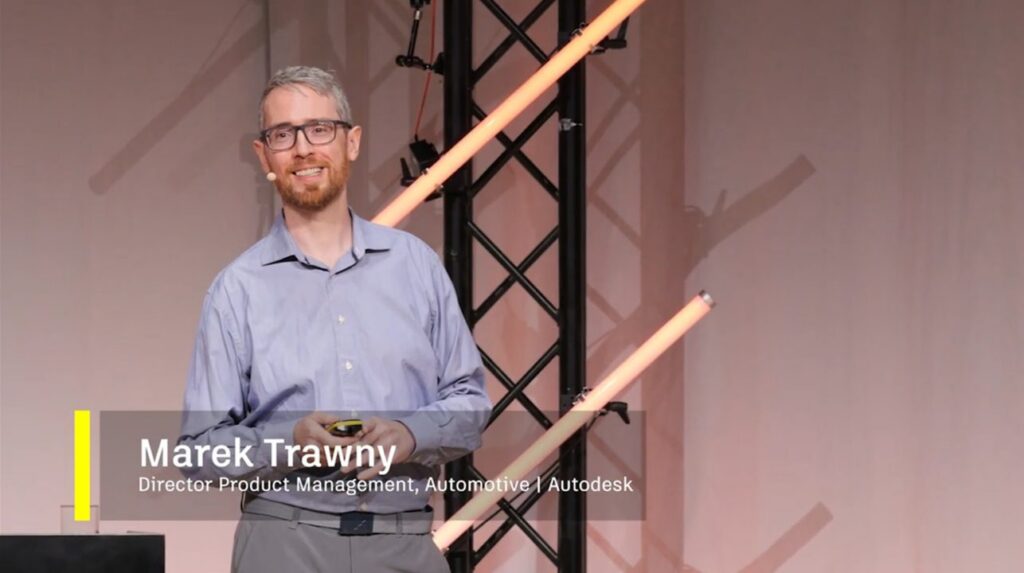
What followed was an overall perspective with multiple paths, one that threads the whole design journey from the first rough sketch to engineering-ready output. And underpinning all of it, a consistent stance on AI – not AI for the sake of it, but AI aimed at the places where it solves a real problem: finding form faster, telling the story sooner, surfacing engineering insight earlier, and taking the repetitive work off your plate.
Here’s how Marek’s team organized their thoughts.
Closing the distance from sketch to geometry
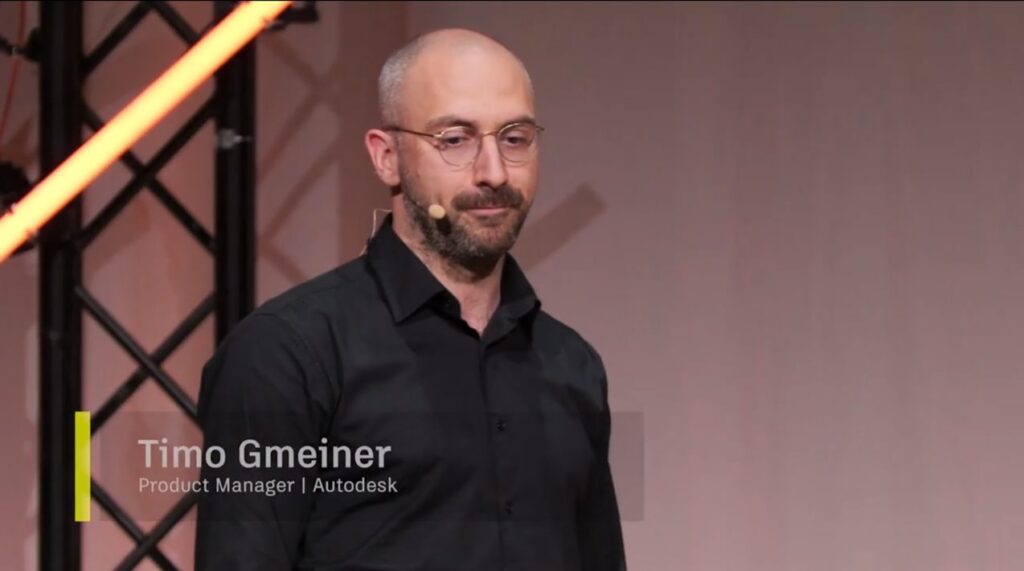
Product Manager Timo Gmeiner opened with the part of the process where momentum is won or lost: the leap from a rough idea to real geometry. His theme was continuity – keeping intent, proportion, and feasibility intact while moving quickly.
The tools tell the story :
- Paint Layers in Alias let designers mark up and brush changes directly on a sketch, turning refinement into an iterative loop.
- Concept Assist, a new AI plugin, turns those marked-up sketches into photoreal images in seconds and generates consistent views from multiple angles.
- That consistency is what unlocks the next step: Form Explorer converts those aligned views into 3D meshes, already prepped for subdivision downstream. Variations that once took months now takes minutes.
- Transformer Rig keeps proportions honest when AI generation introduces drift,
- and a new region selector in Alias Retopo accelerates mesh-to-subdivision work by up to 10x.
Timo’s approach is one to appreciate: AI isn’t replacing designers; it’s compressing the distance between an idea and real geometry. The designer still drives. The gap just got shorter.
Modeling that stays creative – and stays buildable
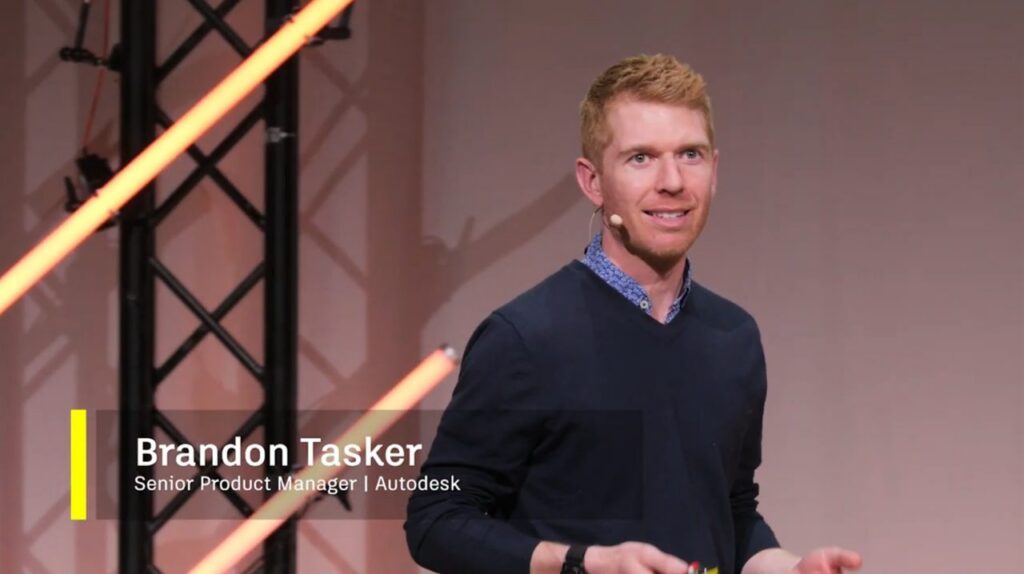
Senior Product Manager Brandon Tasker picked up the thread with what he deems the most valuable thing Alias offers: hybrid modeling. The promise is having it both ways – explore quickly and refine to the highest quality. You know that what you design can actually be built.
How?
- Variable Crease lets a modeler adjust an edge radius non-destructively by sliding a value, work that used to eat an entire afternoon, now done in seconds, with a real NURBS surface as the output, ready for engineering.
- Sub-D Retopo takes scan data or imported geometry and restructures it into a clean production cage without starting over, which still matters as clay is still part of the process.
- And View in VR and XR, new for the 2027 release, with a UI mapped to VRED, brings full-scale immersive review earlier in the day rather than only at the end.
Brandon was candid about the hardest stretch – the last 10% of surface refinement that can swallow 90% of the time. That’s where the research he previewed comes in: Surface Combine, which builds large production-quality NURBS directly on top of live SubD geometry that keeps updating as the design changes, and CV Optimization, using machine learning to resolve continuity problems that were previously slow or flat-out impossible by hand.
The result: stay creative longer, without paying for it at handoff.
Giving away the work nobody wants to do
The biggest news in Brandon’s section, and arguably the keynote, was automation through API access, and the room responded accordingly when it landed. (There was an audible cheer.)
For years the Alias API existed but wasn’t truly accessible. That changes with a new Python API interface for Alias, announced on stage and available in technical preview the very next day.
Brandon talked the audience through a few internal examples: scanning a messy default layer and restructuring it automatically, unifying normals across large component groups, stitching and meshing an entire dataset in about three seconds with every material assignment intact. The data-prep grind, automated. Then the complement: Autodesk Assistant, coming to Alias and VRED, which puts that same power behind natural language. Ask it to move all the curves onto a new layer, or to stitch every shader’s surfaces and generate meshes onto their own layers, and it talks to Alias through the API and does it, no coding required. Paired with Flow Production Tracking for day-to-day data management, the message was simple: hand the repetitive work to the tools and redirect the time you get back to design.
One truth, and a room with no walls
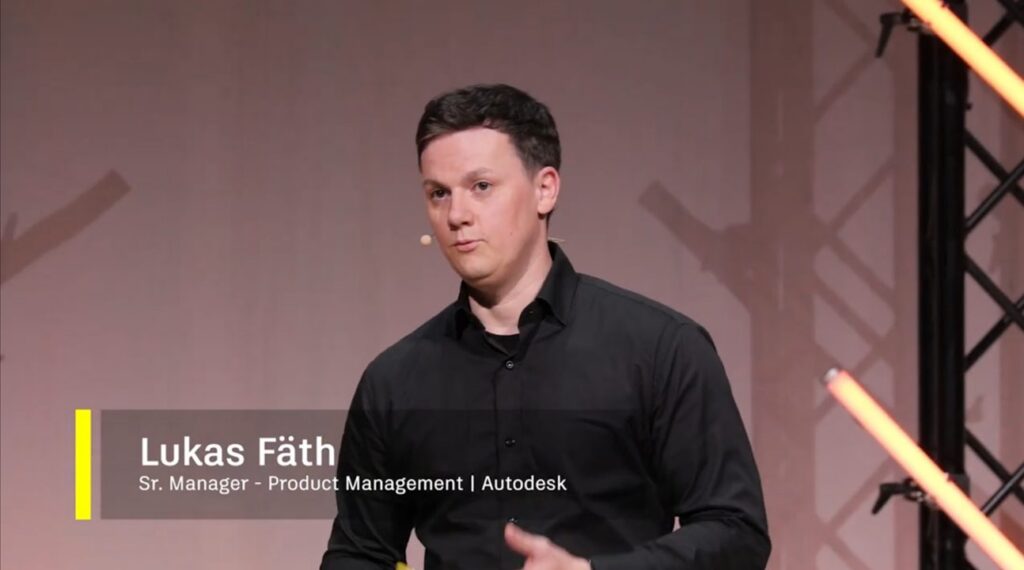
Senior Product Manager Lukas Fäth reframed the conversation around decisions, the thousands of small moments where a project is actually shaped, and the information that drives them.
First, the visuals that win those decisions. An AI-augmented stack – Image Assist for controllable scene generation, Asset Assist to build navigable 3D environments populated with people and props, and Video Assist to turn it all into motion. Together, they produce emotionally compelling imagery in minutes or hours, whereas traditional pipelines required weeks of specialist work, with AI never touching the vehicle’s design. Gaussian splatting, Lukas noted, points toward a near future where you simply put on a headset and step inside the scene.
Second, one source of truth. A continuously updated digital twin that every department works from – mechanical behavior, accurate materials and lighting, OEM-scale variant logic, and engineering data, all converging into a single model that updates everywhere at once. Real-time physics lets teams check how a hood opens or a door swings inside that same prototype, before anything is built.
Third, no walls. Collaborative review where executives join from a Powerwall, a design team joins in VR through the newly supported free Apple Vision Pro app, and others join by phone, tablet, or web – all in the same synchronized scene. When a question comes up mid-review, the designer answers it live, editing the model on the spot rather than logging an action item. The future Lukas sketched is a room with no walls: no travel, no distance, no technology gap, where every voice can act.
Engineering insight, moved upstream
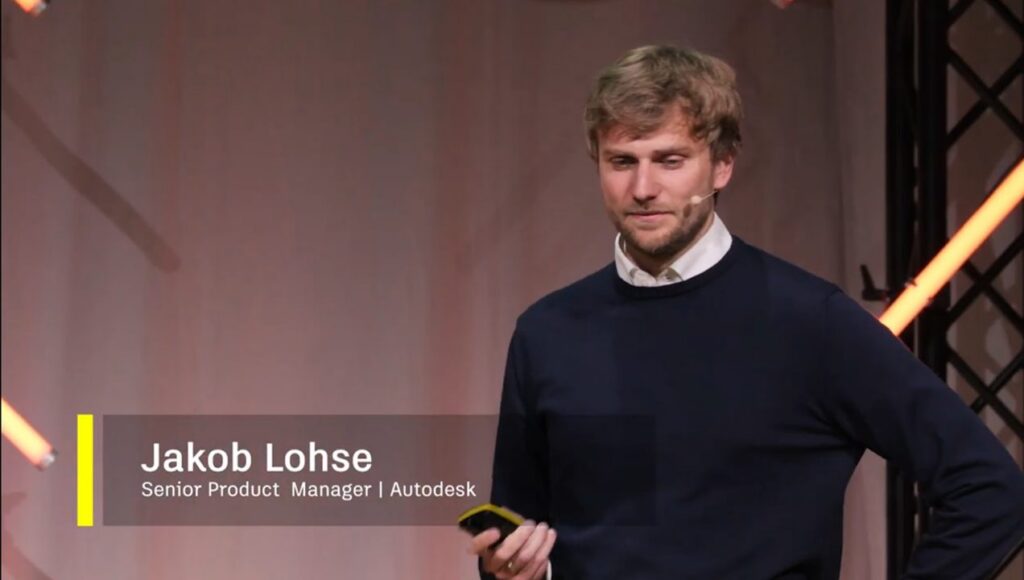
Senior Product Manager Jakob Lohse made the case for collapsing the oldest gap in the studio – the wait to find out whether a design performs. Using predictive AI trained on simulation data, designers can get simulation-like results in seconds, right inside the design environment, via the NavPack design plugin and across NURBS, SubD, or hybrid models.
The honest part was about trust. Every AI can give you a prediction; knowing whether to trust it is, as Jakob put it, the holy grail. So NavPack’s predictions arrive with a trustworthiness check. From there, an AI recommendation system can generate unlimited geometry variations that preserve the original design intent while optimizing performance – reducing drag, for instance – with deformations synced back to the source surface so the model stays clean.
He closed on the most forward-looking idea of the day: Studio Knowledge. A studio’s real asset isn’t the final surface, it’s all the experience and workflow that led there. Capture how you get from initial state to final state across your most important use cases, and you can train models on your own data, baking in your own best practice and pointing toward a genuinely agentic future, where execution is informed by everything your studio already knows.
The part that doesn’t get automated
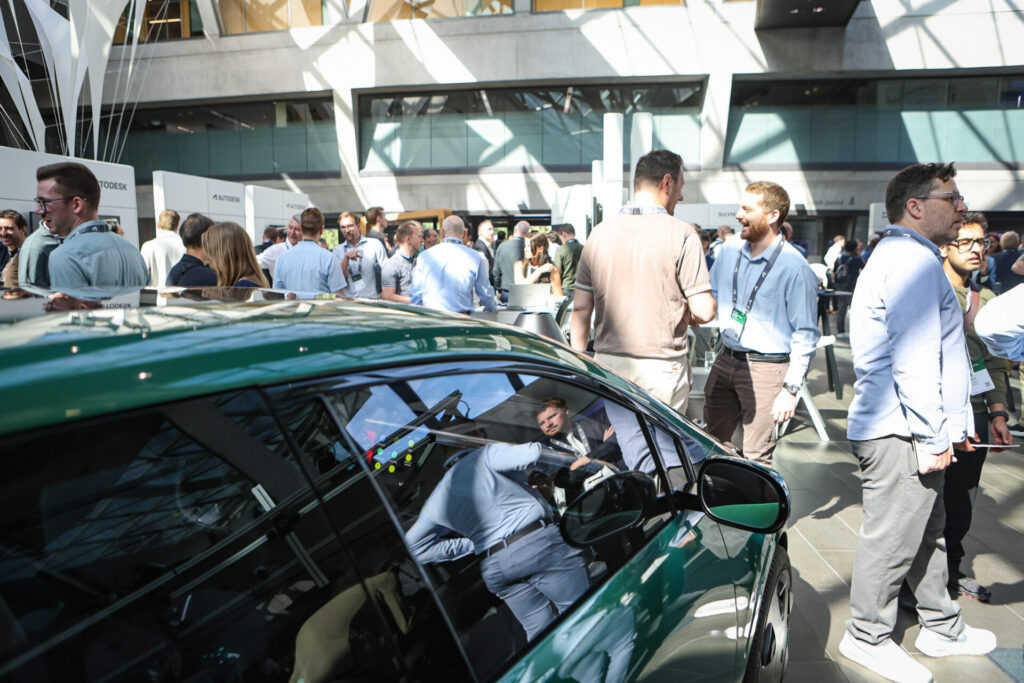
Marek brought the keynote full circle. None of the speed is sustainable, he argued, without the unglamorous foundation beneath it: governance, trusted process, secure data. Speed without trust is risk; speed without process breaks down at scale. The vision isn’t just faster tools – it’s a trusted, governed, secure platform that lets you accelerate with confidence.
And the last word went to the people. AI executes, tools accelerate, the walls come down, but humans bring what only humans can: vision, taste, judgment, and the courage to push an idea through when they believe in it. That isn’t a hedge against the technology. It’s the whole reason for building it.
Watch the full keynote here:
Five presenters, one drumbeat. What the Design Studio PM team showed in Darmstadt wasn’t a set of disconnected features but a connected system with a single purpose: to take the friction, the waiting, and the busywork out of the process – so the studio can move from concept to engineering-ready faster than ever, and spend the time it saves on the work only designers can do.
Watch for more sessions, including keynotes and customer presentations from AIF26 coming soon.
This recap covers forward-looking capabilities, including features in research or development and planned releases. These reflect current plans, are not commitments, and shouldn’t drive purchasing decisions.
This story was developed using a blend of human expertise and AI tools supporting the research and drafting. Our team shaped, edited, and fact-checked the final content to ensure accuracy and alignment.