 Brandy Ryan
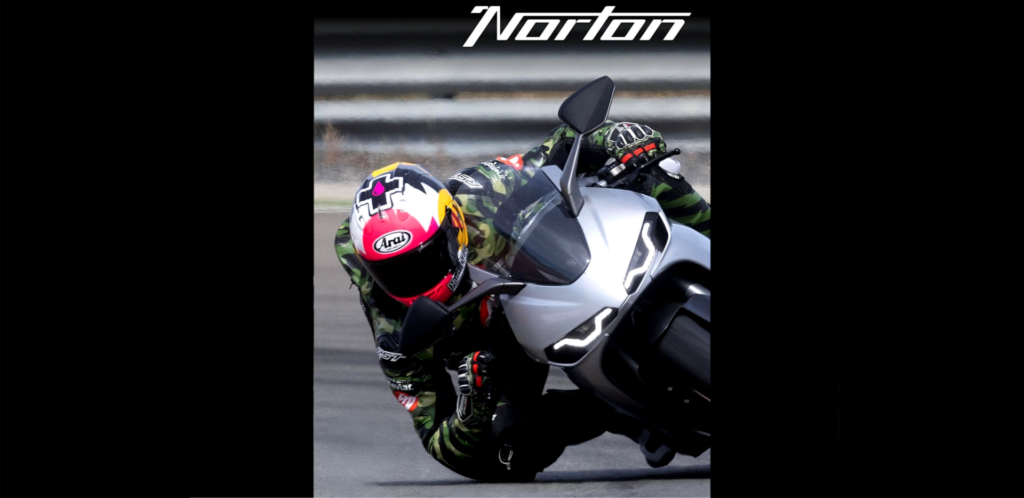
At AIF 2026, Norton Motorcycles’ Ewen Macrury shared the story of the new Manx R: how a globally distributed team connected concept design, engineering, surfacing, visualization, and manufacturing knowledge to develop this exciting new design.

Ewen Macrury
Surfacing and Visualization Manager, Norton Motorcycles
A motorcycle leaning more than 40 degrees presents a design condition that would be unthinkable for a car. For Norton Motorcycles, that lean is part of the product’s normal operating environment, one of many physical realities that shaped the development of the Manx R.
The full presentation, available below, traces the bike’s journey from concept through visualization. Throughout that process, Ewen Macrury notes, the objective was not simply to create digital data; it was also to bring the people responsible for design, engineering, production, and visualization into a faster and more closely connected decision-making loop.
Heritage as a reason to move forward
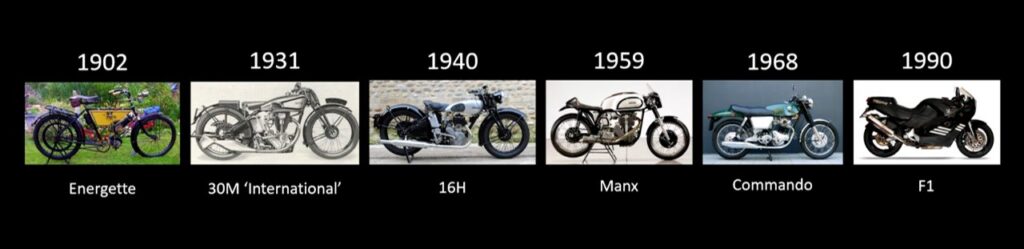
Norton’s 125-year history provided the starting point for the project, but not as a template to reproduce. Across more than a century of motorcycles, the company has repeatedly reconsidered the relationship between performance, weight, manufacturing, and rider experience.
For the Manx R, the team wanted to carry that innovative drive into a contemporary design language. Rather than borrowing familiar shapes from the company’s past, Norton established four principles for the new generation of motorcycles: modernity, integration, technical sculpture, and drama.
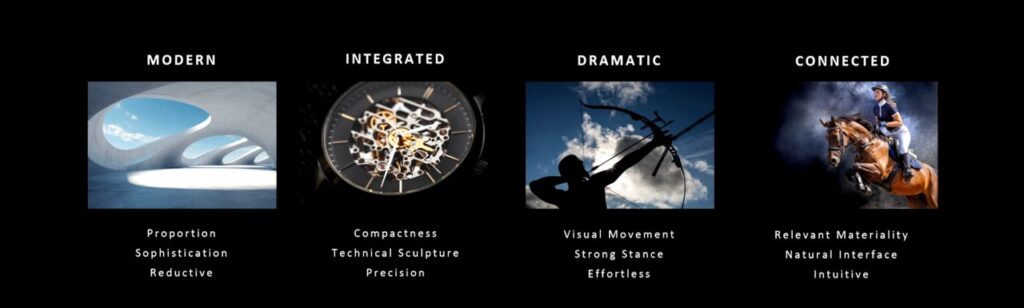
- Modernity called for a reductive silhouette that could remain relevant beyond the immediate product cycle.
- Integration brought exterior designers together with the teams responsible for the engine, chassis, and package.
- Technical sculpture reflected a fundamental difference between cars and motorcycles: much of the engineering remains visible and must contribute to the overall composition.
- Drama gave the bike its stance, movement, and sense of performance.
The result of bringing these four principles together needed to read as one connected design, from the front of the motorcycle to the tail, through every surface, material, and rider touchpoint.
Moving from sketch to digital clay
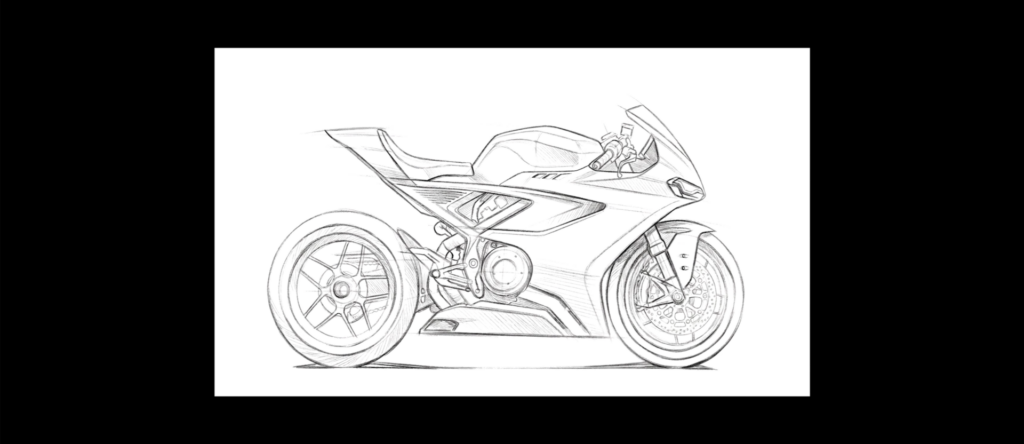
The Manx R began with conventional sketching and rendering. Generative AI tools were introduced during early exploration to help the team reinterpret side-view sketches from additional angles and investigate more variations without manually rebuilding every view.
These tools accelerated exploration, but the next step remained a close interaction between designers and engineering data. Norton brought the package directly into a polygonal modeling environment, allowing the team to push, pull, and refine volumes over the underlying engineering constraints.
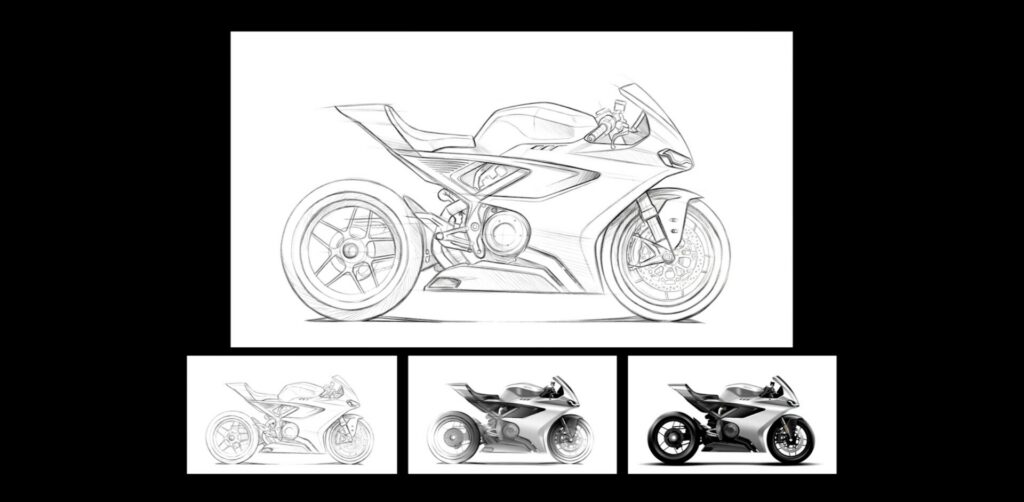
This digital-clay approach eliminated the repeated cycle of scanning, uploading, overlaying, and milling a physical model. Designers could respond directly to new package information, while teams working across the United Kingdom, Italy, and India exchanged feedback during their limited overlapping hours. Work could then continue in one region for another team to pick up the following morning.
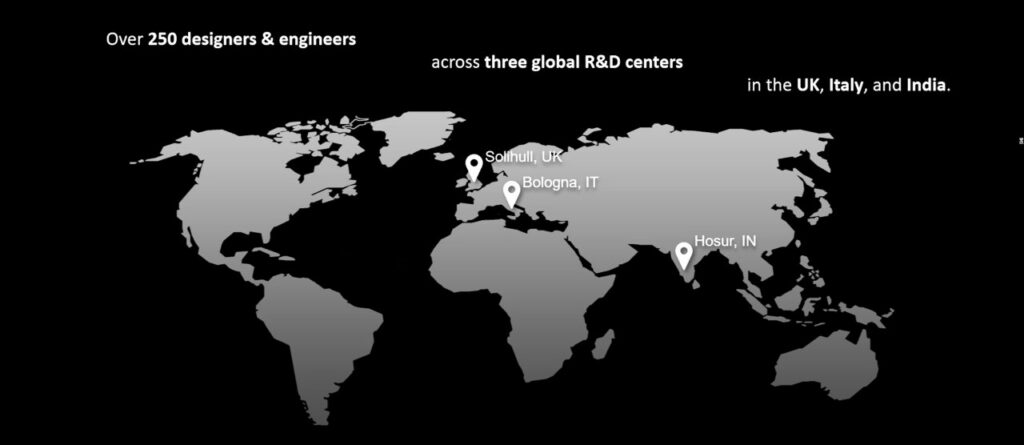
The value of this approach is not simply greater modeling speed. It’s the ability to keep creative and engineering development active within the same daily loop.
Designing around the realities of a motorcycle
As the surfaces developed, engineering analysis became increasingly important. CFD results, ergonomics, packaging, structural requirements, and prototype feedback were brought back into the shared digital dataset.
The constraints were distinctly motorcycle specific:
- Lean angles had to be evaluated against the bodywork.
- The single-sided swingarm needed to manage lateral forces while remaining a deliberate visual element.
- The tail lamp had to retain a clear light signature while also supporting a configuration in which the passenger seat sits directly above it.
“Design intent, like ergonomics, is laid out at the very beginning, and we want to make sure that it is maintained all the way through
to the end of the design.”Ewen Macrury, Norton Motorcycles
Manufacturing expertise entered the process early as well. Norton invited production auditors into the design studio to evaluate surface quality and manufacturability before problems reached the production line. This helped the team preserve the intended highlights and surface transitions, while accounting for how each component would eventually be produced.
Serviceability was another visible part of that intent. Unlike many car components, a motorcycle’s engine, suspension, and fluid-access points remain exposed. Their position and appearance therefore need to work simultaneously as engineering solutions, service items, and elements of the design.
Connecting surfacing, visualization, and review
To support a largely distributed surfacing team, Norton established a referenced workflow around centralized cloud storage and Autodesk Alias. Individual components could be developed and revised separately, then brought together through Alias Reference Manager in a shared wire file.
Designers and visualization specialists no longer need to wait for someone to manually assemble an updated master model. They can refresh their references, review the latest surfaces, and return feedback to the modeling team. Discrete revisions also allow individual components to be restored when an earlier direction needed to be reconsidered.
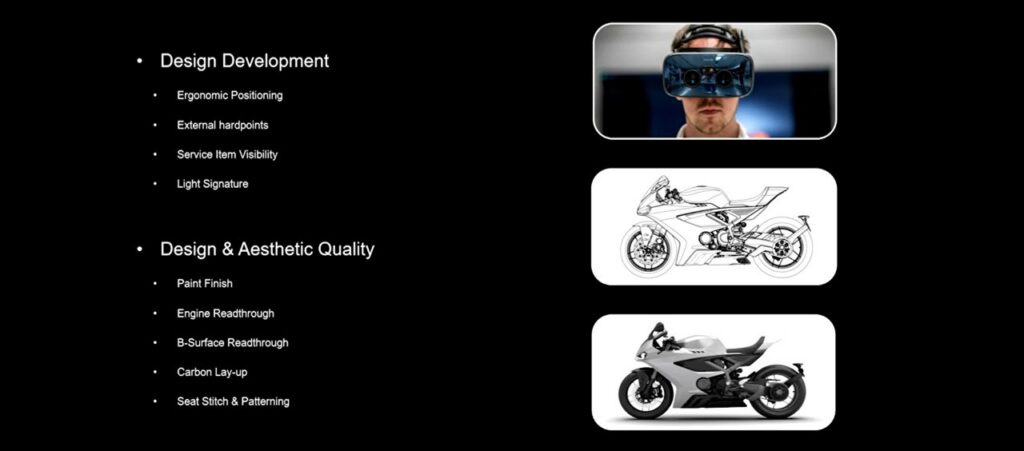
The same principle shaped Norton’s use of VRED virtual reality and mixed reality. The purpose of an immersive review was not the headset itself. It was to give decision-makers enough reliable information to evaluate ergonomics, lean-angle clearances, service access, lighting, materials, and perceived surface quality together.
That level of review becomes the standard and continues into the bike’s digital realization. Numerous details—like paint behavior, carbon-fiber layup, seat stitching, panel visibility, and the relationship between the bodywork and the 1,200 cc V4 engine—all contribute to how the finished motorcycle would be understood. With 206 horsepower in a machine weighing roughly 200 kilograms, the Manx R’s visual representation also needs to communicate its physical character accurately. Norton’s official specifications confirm the engine displacement and maximum power.
A digital process grounded in physical experience
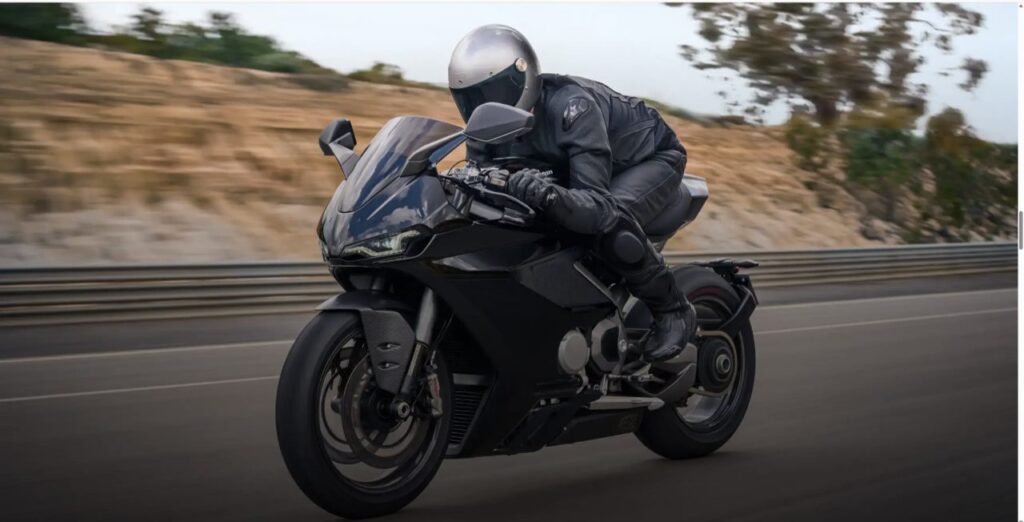
The Manx R demonstrates that a fully digital process does not separate design from physical reality. Its value lies in connecting that reality to the design process earlier, from the rider’s position and the forces passing through the chassis, to the way a highlight moves across a painted panel.
It’s easy to feel tied to history, but Norton’s approach meant that its heritage did not become a constraint on the new motorcycle but rather a reason to keep challenging established methods.
By combining that innovative perspective with connected data, global collaboration, and continuous visualization, Norton developed a process intended to preserve design intent from the first sketch through the finished bike, arriving at the stunning and accurate digital imagery in which many people will first encounter it.
This story was developed using a blend of human expertise and AI tools supporting the research and drafting. Our team shaped, edited, and fact-checked the final content to ensure accuracy and alignment.
Keep an eye on our blog for more session posts, including keynotes and customer presentations from AIF26 coming soon.
Stay connected with the Automotive Design team – browse our videos on our Autodesk Design Studio YouTube channel and get the latest from our Autodesk Automotive LinkedIn page.