 Autodesk Media & Entertainment
What does it take to simulate a crowd of 4,000 fans in a stadium you’ve never seen, using software you’ve never used, while collaborating across a city as sprawling and electric as Lagos, Nigeria? For Felix Obafemi and Team VROOM, the answer was late nights, cross-town road trips to solve technical problems, and an unshakable belief that African stories belong on the global stage.
For Shalom Micky, working on her own from Tanzania while her country was gripped by political unrest and internet blackouts, it took something quieter but just as fierce: the conviction that a boy chasing a football through a dusty village can one day make it to the world’s biggest arena.
Both artists emerged as winners of Mission Atlas, a pan-African 3D creative competition organized by AfroVFX, with Team VROOM taking first place. Supported by Autodesk, the competition challenged artists from across the continent to create short 3D animations using tools from the Media & Entertainment Collection, including Autodesk Maya, Golaem for crowd simulation, and Autodesk Flow Studio for motion capture.
Beyond the technology, the competition offered something even more powerful: a platform for the stories, determination, and creative vision of the artists themselves.
Building a VFX ecosystem across Africa, one artist at a time
The Mission Atlas competition grew out of the work of AfroVFX, an initiative founded to strengthen the visual effects and animation ecosystem across Africa.
Dédy Bilamba, a scriptwriter at Radio Canada, founded AfroVFX during the early days of the COVID pandemic with collaborator and colleague Eric M’Boua, a TV producer. “We started by organizing webinars about VFX because we wanted to help transform the African film and video industry,” Bilamba says.
“Living and working in Montreal—a major hub for VFX and animation—gave us the courage to start something,” he adds. It also gave the founders a unique perspective on the opportunities available in the industry and the gaps that existed elsewhere. Since then, with the help of partners including Foundry, Epic Games, Autodesk, and the Orange Digital Center in Abidjan, AfroVFX has trained more than 50 aspiring artists.
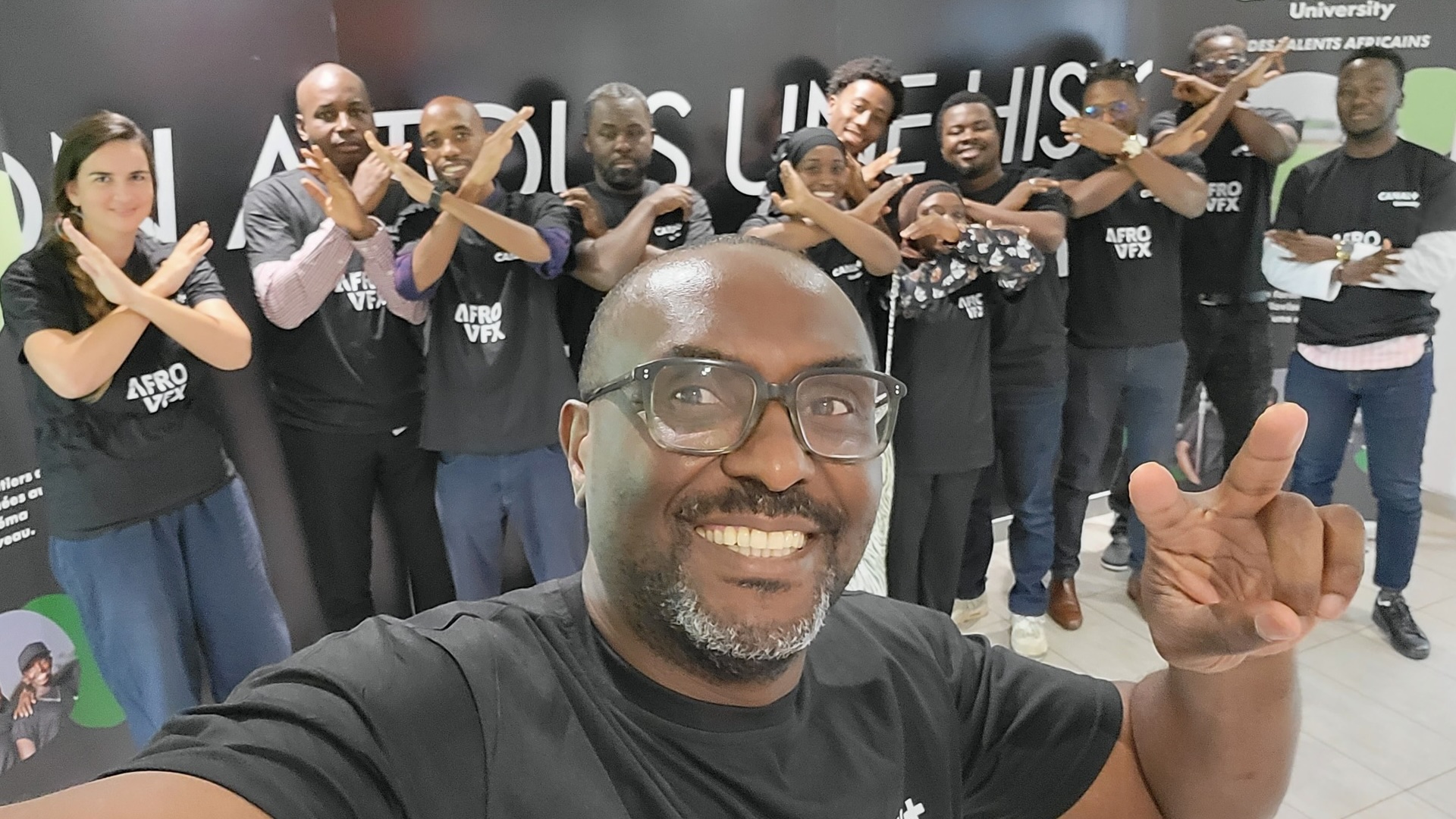
But AfroVFX’s mission extends beyond technical training. The initiative aims to build a supportive network of artists and mentors across the continent while connecting African creators with the global CGI industry.
Andrew Roberts, VFX Supervisor at Industrial Light & Magic and a member of the Mission Atlas jury, sees the initiative as a catalyst for something larger. “It’s creating an ecosystem for storytelling and creative expression across the African continent,” he says.
A competition built around creativity, technical ability—and football
“Mission Atlas was created to bring African artists together around something we all love—football,” Bilamba says. “The goal was to identify, connect, and promote talented artists across the continent while providing real opportunities for them to grow.”
Artists from Zambia, Tanzania, Ethiopia, Côte d’Ivoire, Nigeria, South Africa, Ghana, Congo, and other countries submitted portfolios and storyboards. More than 80 applicants entered the competition. From those, 30 semi-finalists were selected, and ultimately 15 finalists advanced to the final round.
During an intensive online bootcamp, finalists worked to create short animated films using provided assets and professional software tools.
Learning professional pipelines through mentorship
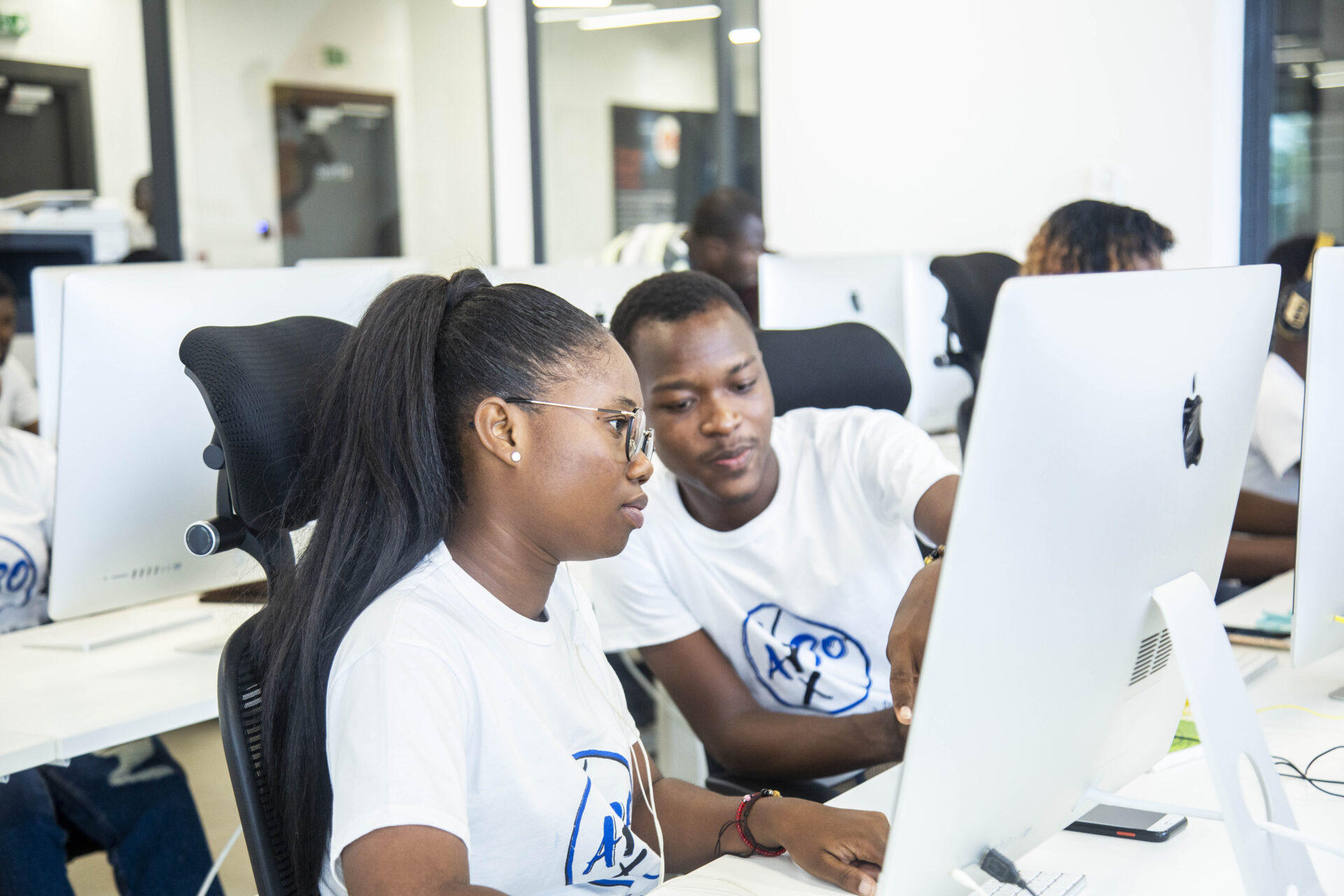
Behind the competition was a mentorship program designed to expose participants to real-world VFX workflows. Artists were guided by industry professionals Kendell Copeland and Trevius Brinson, who helped teach lighting, layout, storytelling, and production pipelines.
Copeland, a layout technical director and 3D generalist currently at Framestore, served as one of the mentors, guiding participants through storyboarding, layout direction, and demo reel development. He was struck by what he saw from the very first session. “Each artist came in with different strengths and learning curves, and it was amazing to watch those skills develop over time. Almost every level of performance was demonstrated here, which gave room for improvement and learning throughout.”
Brinson, a VFX generalist who has worked at DNEG, MR. X, Mill Films, and MPC in lighting and layout, worked closely with participants on lighting and scene development. “As an experienced VFX artist, it was a privilege to share the knowledge I’ve acquired from years in the industry,” he says. “These artists are future colleagues whose talent and creativity left no doubt that they are the next generation of visual effects artists.”
For many participants, this was their first exposure to professional pipelines. “The process was definitely challenging,” Brinson says. “We focused on teaching the fundamentals—building assets, scaling scenes, lighting environments, and structuring animation through layout and storytelling.”
The transformation over the course of the competition was dramatic. “Watching the progression from day one to the final projects was remarkable,” Copeland says. “You could tell every contestant had a passion for 3D.”
A story of dreams: Shalom Micky’s cinematic village
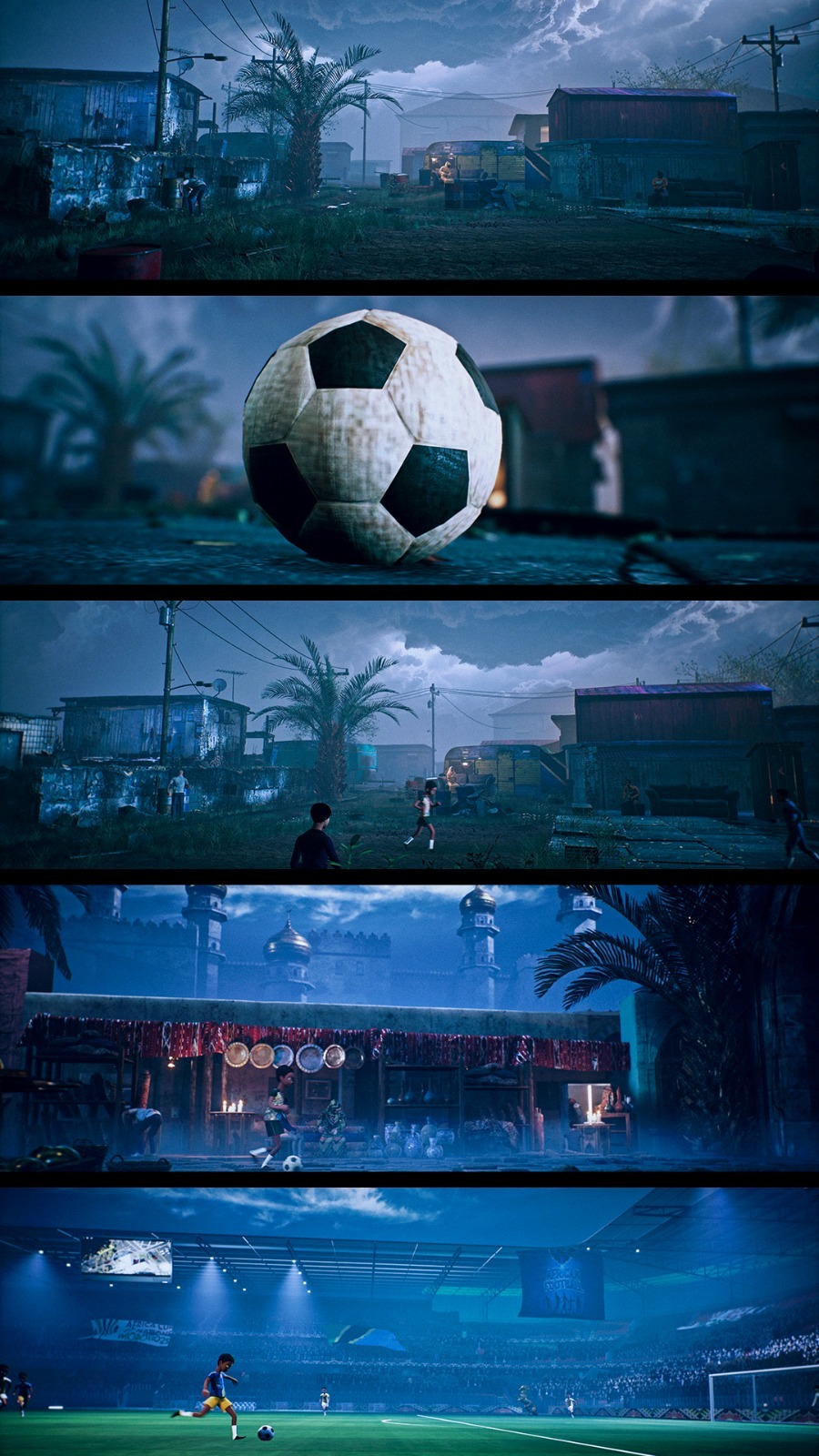
The competition’s second-place winner, Shalom Micky of Tanzania, created a cinematic story about a young boy chasing his football dream.
A television producer at the Tanzania Broadcasting Corporation (TBC) and a 3D artist, Micky created the project on her own. “I handled the concept development, environment setup, lighting, rendering, and final output myself,” she explains.
Micky first discovered 3D animation shortly after graduating from university. “What drew me to 3D was storytelling,” she says. “There’s so much space to do things you can’t do in real life—you can create anything you imagine.”
Her Mission Atlas film was inspired by the journeys of many African football stars. “I wanted to tell a story about African footballers who begin with big dreams in small villages,” Micky says. “Often they grow up in difficult circumstances, but they still aspire to reach the global stage.”
The production process required building environments, integrating assets provided by the AfroVFX team , developing lighting, and refining cinematic composition. “My focus was on creating cinematic realism while maintaining atmosphere and storytelling,” she says. “I wanted to create something that felt global and epic, not limited by geography, but driven by emotion and visual impact.”
But the competition also pushed her beyond her usual tools and workflows. “Balancing the learning curve of new software while meeting strict production deadlines was one of the biggest challenges,” she says.
At times, the obstacles were bigger than the production itself. During the competition, Tanzania experienced significant political unrest and internet restrictions that made communication and access to resources difficult. “There were moments when I wasn’t sure I would finish the project,” Micky says. “But I stayed committed to telling the story.”
The experience reinforced her long-term ambition. “My goal is to create globally recognized animated series and films that stand alongside major international productions,” Micky says. “I want to tell powerful African stories and share them with the world—not as something limited or regional, but as universal narratives that resonate globally.”
Team VROOM: A collaborative victory
The first-place winner of the Mission Atlas competition was Team VROOM from Nigeria, led by Felix Obafemi, founder and creative director of OriAfrique Studios. Team VROOM included collaborators working across disciplines:
- Eneje Michael — Director and motion capture lead
- Monye Valerian — Character artist (MetaHuman creation)
- Ojo Ohiole — Environment and lighting artist
- Oluwaremilekun Shitta — Project manager and narrator
- Joel Innocent — Post-production, sound design, and color
“I’m actually the youngest member of the team,” Obafemi notes. “Many of the others are my mentors and teachers. When I invited them to collaborate, they supported the project wholeheartedly.”
“Our entry was inspired by collective energy—the way football unites communities across Africa,” Obafemi explains. “We didn’t just want to show a match. We wanted to show anticipation, hope, tension, celebration—the emotional journey of a shared experience. Football was the storytelling bridge, but unity was the deeper message.”
The team built an ambitious hybrid pipeline across Maya, Golaem, Autodesk Flow Studio, and Unreal Engine. For Obafemi personally, that meant learning two major tools from scratch under production pressure.
“Before this competition, I had never used Maya or other Autodesk tools. Learning them—especially creating crowd simulations with Golaem—was very challenging,” he says. “At one point I almost gave up because of the complexity. But we kept pushing. I spent weeks learning the software, sometimes working late into the night. At one point, I even traveled several hours across Lagos to meet with a teammate so we could solve technical issues together.”
Golaem, which recently joined Autodesk’s Media & Entertainment Collection, was central to building the atmosphere of the stadium. “I used it inside Maya to simulate thousands of agents with varied behaviors, reactions, and motion patterns,” Obafemi explains. “The biggest challenge was optimization and exporting those simulations into Unreal Engine while maintaining performance and visual consistency. It was demanding—but incredibly rewarding once it worked.”
Autodesk Flow Studio helped shape the project’s emotional core. “We used Flow Studio to process and refine our motion capture data,” Obafemi says. “It allowed us to build believable character performances efficiently and iterate quickly during the animation phase. It became a central part of how we shaped the emotional beats of our story.”
The mentorship sessions, delivered via Zoom, were invaluable in helping the team navigate unfamiliar technical terrain. “The workshops helped clarify workflows in Golaem and provided insight into professional production standards,” Obafemi says. “It wasn’t just about software—it was about understanding pipeline thinking.”
Collaboration held everything together. “There were sleepless nights. There were moments when systems crashed or simulations didn’t behave as expected. But what carried us through was collaboration. People stepped outside their defined roles. We stretched. We adapted. That resilience became part of the story behind the story.”
A glimpse of the future of African VFX
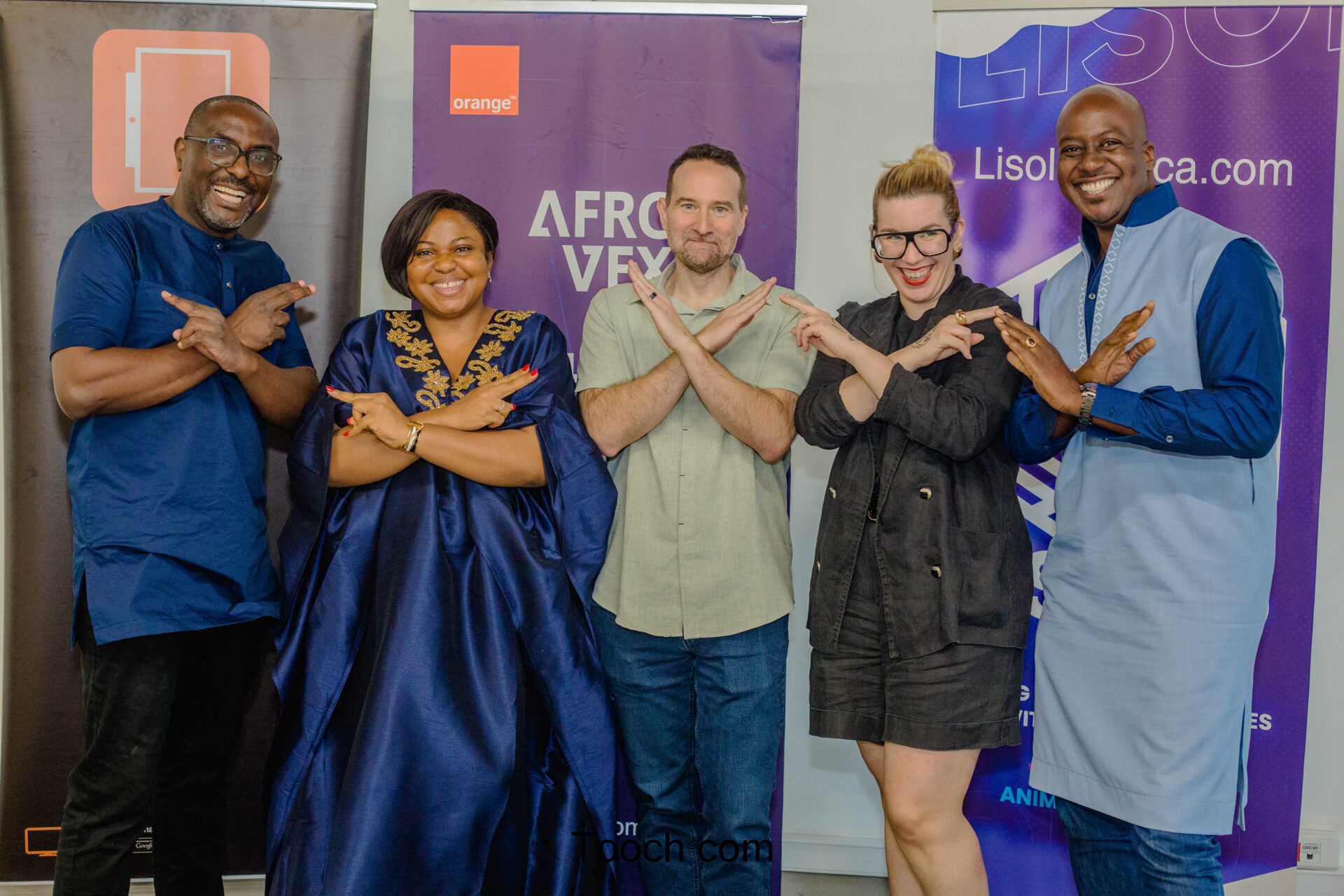
The first place winner received a $500 prize, and both winners receive a one-year Autodesk software license, and an invitation to LISOLO 2026 in Abidjan. LISOLO—meaning “story” in Lingala—is a growing creative event organized by AfroVFX and dedicated to African storytelling across animation, gaming, virtual reality, and visual effects.
Copeland frames Mission Atlas in terms of expanded horizons. “Growing up, I wasn’t exposed to the possibilities of what I do now—it was a struggle to see beyond the normal,” he says. “To break the cycle and do something different gives me a sense of satisfaction.”
Brinson connects the competition to a gap he has long felt in the industry. “For years, I’ve watched Pixar and DreamWorks films, and while they occasionally highlight Africa, they often miss essential cultural elements,” he says. “Mission Atlas allowed me to experience an authentic journey through the eyes of rising African artists.”
For the mentors and organizers, Mission Atlas revealed the extraordinary potential of the artists who participated. “The final projects were true masterpieces,” Brinson says. “Not just because of the technical work, but because of the stories they told.”
Copeland saw the competition as a reminder of how mentorship can change perspectives. “When you show artists what’s possible and guide them through the process, their creativity expands,” he says.
For Micky and Obafemi, the competition was also a step toward building something larger than a single film. Micky hopes to help grow the animation industry in Tanzania. “For a long time, I focused on surviving as an artist,” she says. “But eventually I realized that if the industry I dream of doesn’t exist yet, I have to help build it.”
Obafemi shares a similar vision. “My passion for Africa is unmatched,” he says. “I want to see African creators represented on the global stage.”
Mission Atlas, he believes, proved that it’s possible. “This experience showed us that African artists belong in the global conversation,” Obafemi says. “And this is only the beginning.”