 Victor Perez
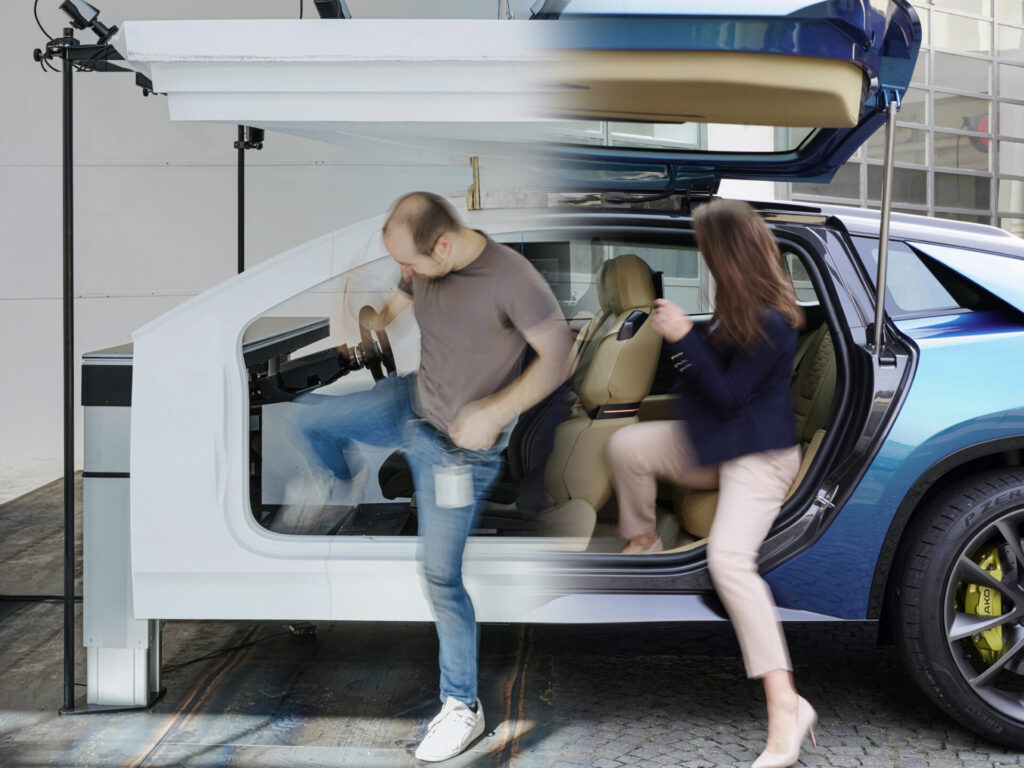
Automotive design decisions are made under constant pressure: packaging evolves, engineering constraints tighten, and teams must align quickly — without losing the original design intent. The process involves high costs and long lead times.
That’s why Granstudio designed DIGIPHY, an ecosystem of next generation mixed-reality design solutions to make those decisions faster, with confidence, and collaboratively. DIGIPHY bridges the gap between physical reality and virtual concepts to enable lean, UX-driven workflows that reduce R&D costs and accelerate time-to-market while elevating design quality.
We connected with Granstudio’s Wouter Struijk to get a deeper understanding of DIGIPHY. Watch the video and scroll down for key highlights.
What DIGIPHY provides
DIGIPHY is a phygital (physical+digital) design system that combines:
- a “single-click” reconfigurable physical platform for true tangible ergonomics
- a phygital ToolKit to make XR prototyping quick and easy
- a seamless Auto-alignment of the physical platform and the digital layer
DIGIPHY creates a unified space in which designers and engineers can explore their designs on all different levels: packaging, CMF, style, UX/UI, HMI, etc.
How to use DIGIPHY’s physical platform and VR simulations
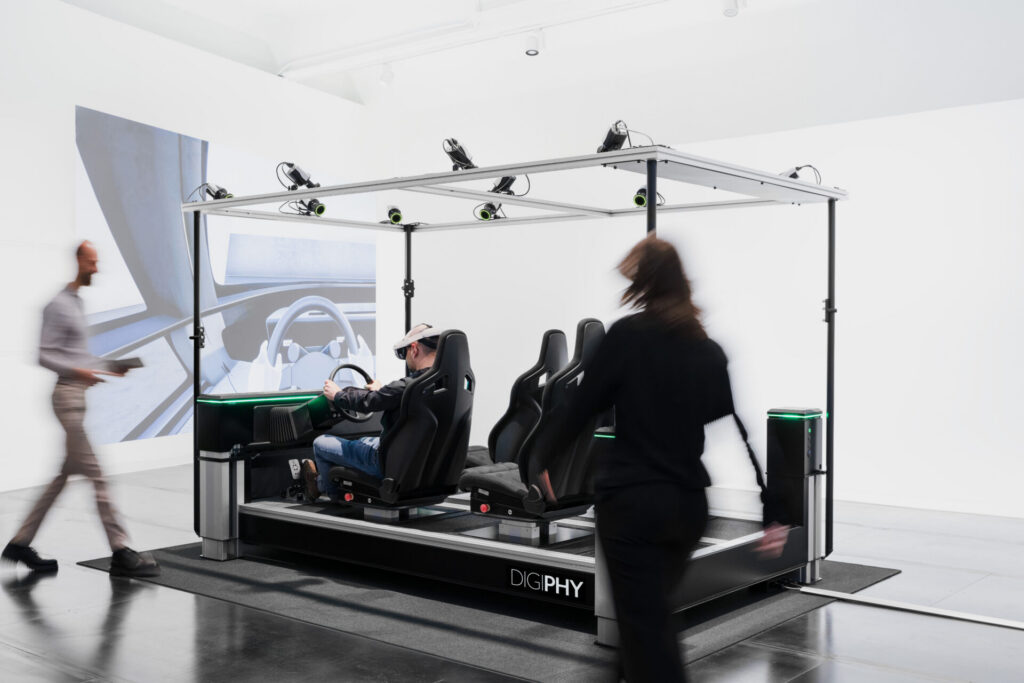
In a typical DIGIPHY session, teams configure the platform for a given package, load the matching interior and exterior virtual models, and run immersive reviews to evaluate welcoming ceremonies, seating position, ingress/egress, styling evaluations, HMI and UX sessions and even Clinic Tests with real users, all with feedback tied to the exact configuration reviewed.
The result is a clear shared reference that can be communicated and presented, supporting the decision-making process.
Where DIGIPHY fits in the design cycle
DIGIPHY fits the complete design development cycle, from early concept to final A-class model, including:
- concept and architecture exploration (including seating layouts, UX roleplay scenarios, HMI screen positioning, key interaction concepts, etc.)
- package convergence between design and engineering (involving physical ergonomics, style, reachability, visibility, ingress/egress, spatial perception, etc.)
- decision gates and stakeholder reviews requiring strong alignment (such as design reviews, design sessions, presentations, clinic tests, etc.)
DIGIPHY’s unique value
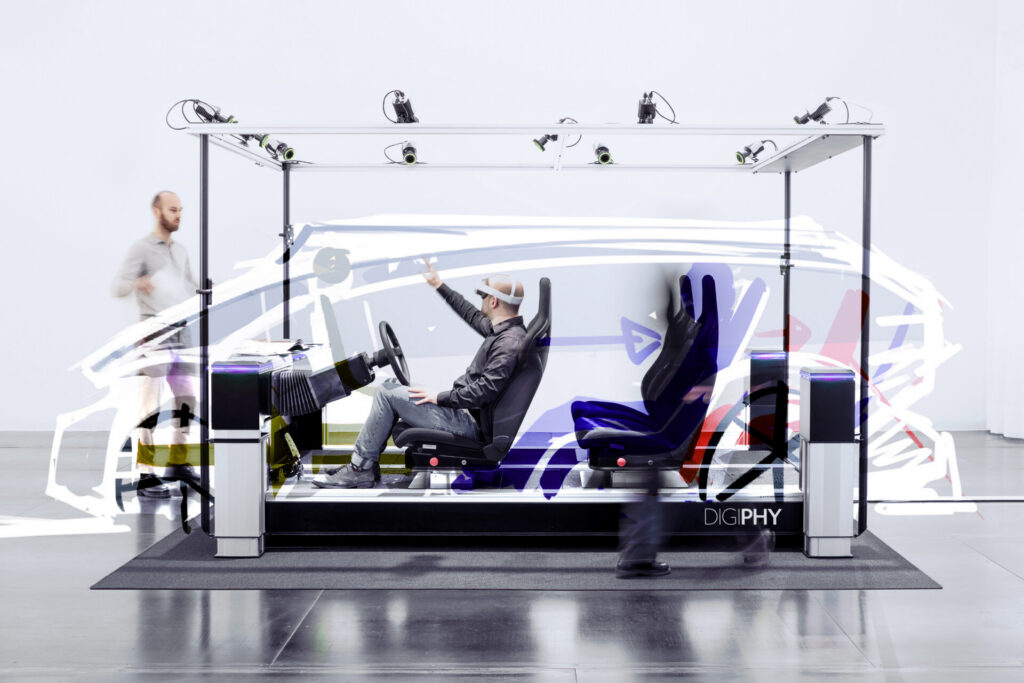
DIGIPHY’skey advantage is phygital fidelity: what you feel physically matches what you see digitally. This drives faster iteration, better cross-functional alignment, and fewer late-stage surprises. DIGIPHY is designed with flexibility in mind: an open platform that can support any design project.
DIGIPHY and Autodesk VRED
The DIGIPHY Plugin developed for Autodesk VRED supports consistent review scenes and a workflow compatible with existing automotive design and visualization pipelines. VRED models are automatically and precisely aligned on the physical platform, and its digital twin is fully synchronized. Using VRED on DIGIPHY makes the digital side credible and decision-ready, enabling high-fidelity interior and exterior visualization where materials, lighting, and space perception come together.
Learn more about DIGIPHY
Granstudio website and LinkedIn.
Stay tuned for more about DIGIPHY in our AIF 2026 content.