 Blake Avery
AI, Speed, and the Human Edge:
Day 1 at Automotive Innovation Forum
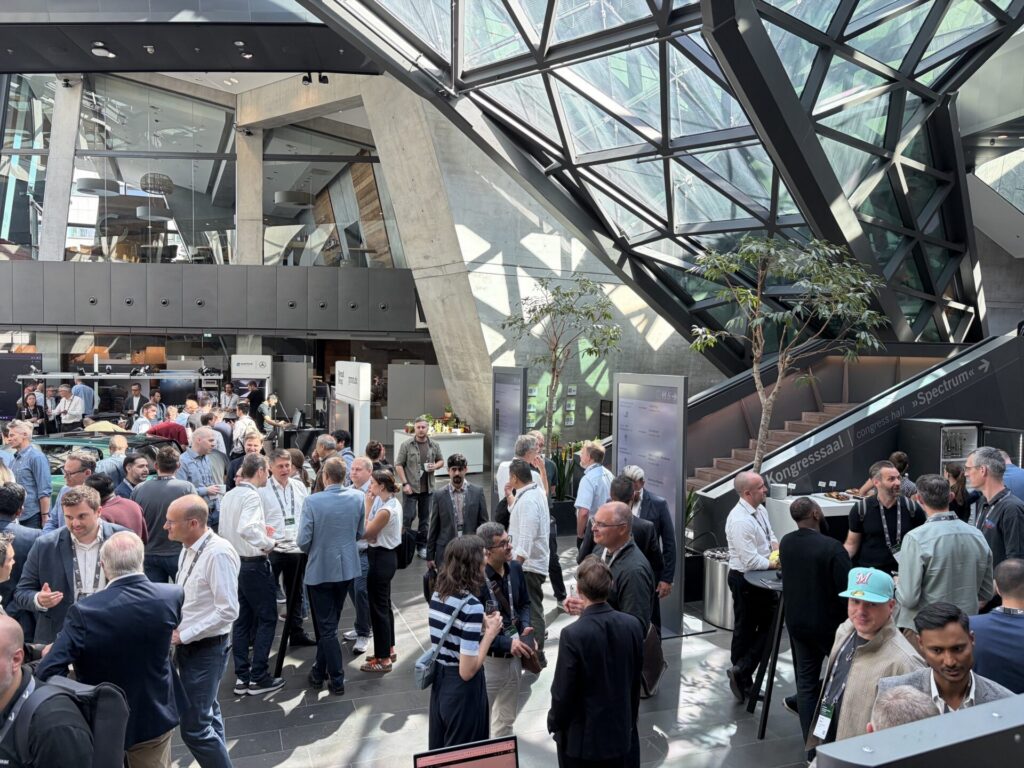
The first day of the Automotive Innovation Forum in Darmstadt made one thing clear: the automotive industry is not waiting for the future to arrive. It is actively designing it.
Across the day’s keynotes, panels, and customer sessions, a consistent message emerged: the industry must move faster. Faster from idea to concept. Faster from design intent to engineering reality. Faster from factory planning to production readiness. And increasingly, artificial intelligence will play a central role in making that acceleration possible.
But the most compelling theme of the day was not AI alone. It was the relationship between AI and people.
Again and again, speakers returned to the idea that technology only matters when it helps humans do higher-value work: asking better questions, making sharper decisions, exercising judgment, and applying creativity where it matters most. AI is not the destination. It is becoming an accelerator for human ingenuity.
From transformation to acceleration
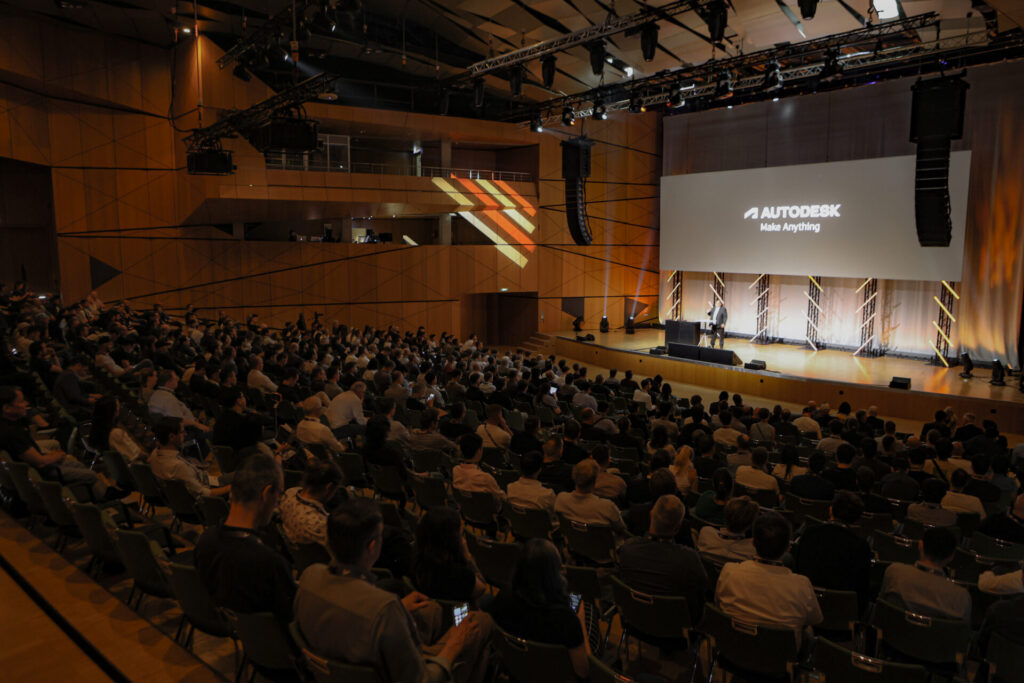
The forum opened by reflecting on two decades of significant change across the mobility and transportation industry. What began as a design-led event has evolved into a broader mobility ecosystem conversation, spanning design, manufacturing, digital factories, infrastructure, energy, software, data, and services. The opening keynote framed AI as the next major frontier, with the potential to help designers explore more possibilities from creative intent to helping factories learn, predict, optimize, and improve in real time.
That theme carried into the panel discussion on the cost of lateness in automotive manufacturing. The message was direct: late decisions are expensive, and not only financially. They affect brand reputation, organizational energy, and the ability to compete. Speed requires more than technology. It requires leadership courage, flatter decision-making, cross-functional alignment, and the ability to put the right people in the right roles.
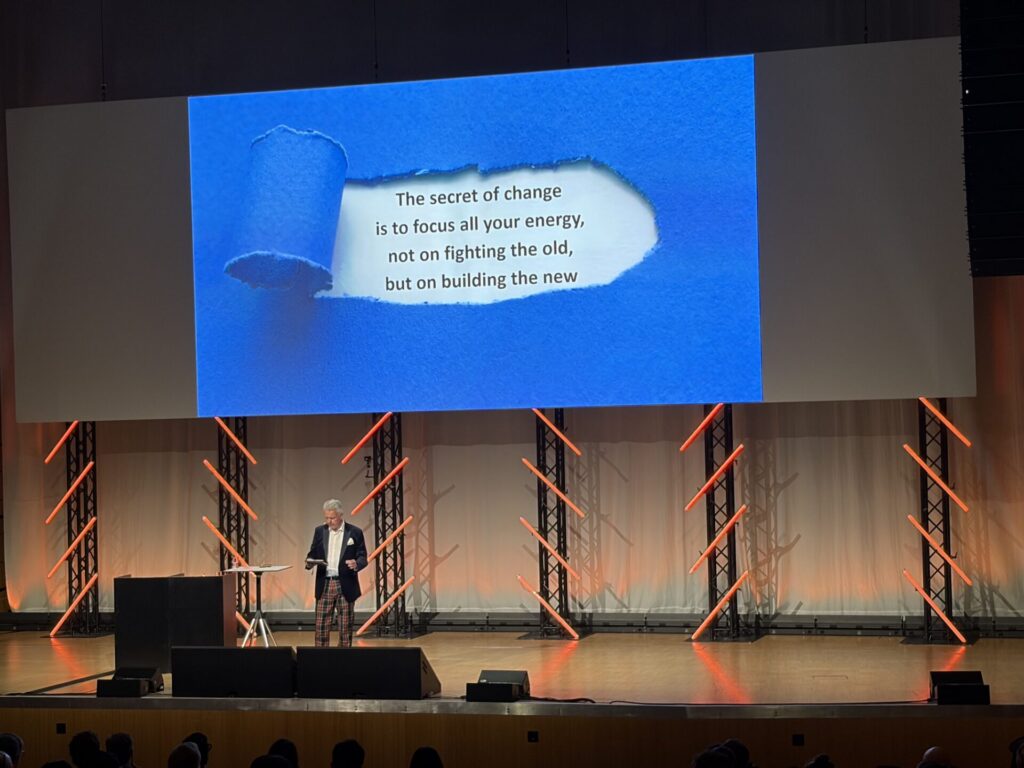
Asif Mogal’s keynote expanded that point into a broader transformation framework. His advice was especially important: do not start with technology; start with people. He described the need to identify “digital superheroes” inside organizations — the early adopters and internal champions who can help others cross the gap from experimentation to scaled adoption. AI, in this view, is most valuable when it removes repetitive work, connects workflows, and gives teams more time to focus on creativity, quality, and business impact.
The human at the center of AI
One of the strongest human-centered messages came from Lars Thomsen’s keynote on AI, embodied intelligence, and the future of work. He argued that the scarcest resource is not computing power, materials, or energy. It is human judgment: the ability to ask the right questions, connect ideas, and make informed decisions.
That framing resonated throughout the day. AI may reduce the cost of answers, but that makes the quality of human questions even more valuable. The opportunity is not simply to automate existing workflows. It is to rethink how people collaborate, how companies make decisions, and how organizations capture and apply collective intelligence.
For automotive leaders, this is an important distinction. Moving faster cannot mean bypassing craft, expertise, or governance. It means giving designers, engineers, manufacturing teams, and decision-makers better ways to explore, evaluate, and act earlier in the process.
Autodesk Design Studio: AI-assisted tools for real workflow acceleration
The Autodesk Design Studio keynote brought this idea to life through concrete examples across the design journey. The session focused on how AI, automation, connected data, and immersive collaboration can compress vehicle development cycles without compromising quality, craft, or control.
See note below regarding forward looking statements.
A key message was that AI is helping reduce the distance between ideation and usable geometry. New concept acceleration capabilities in Alias, including Concept Assist, Form Explorer, Transformer Rig, and accelerated retopology workflows, showed how teams can move from sketch and visual exploration toward editable 3D forms much faster. The point was not to replace designers, but to help them explore more options faster, and bring their intent into downstream workflows sooner.
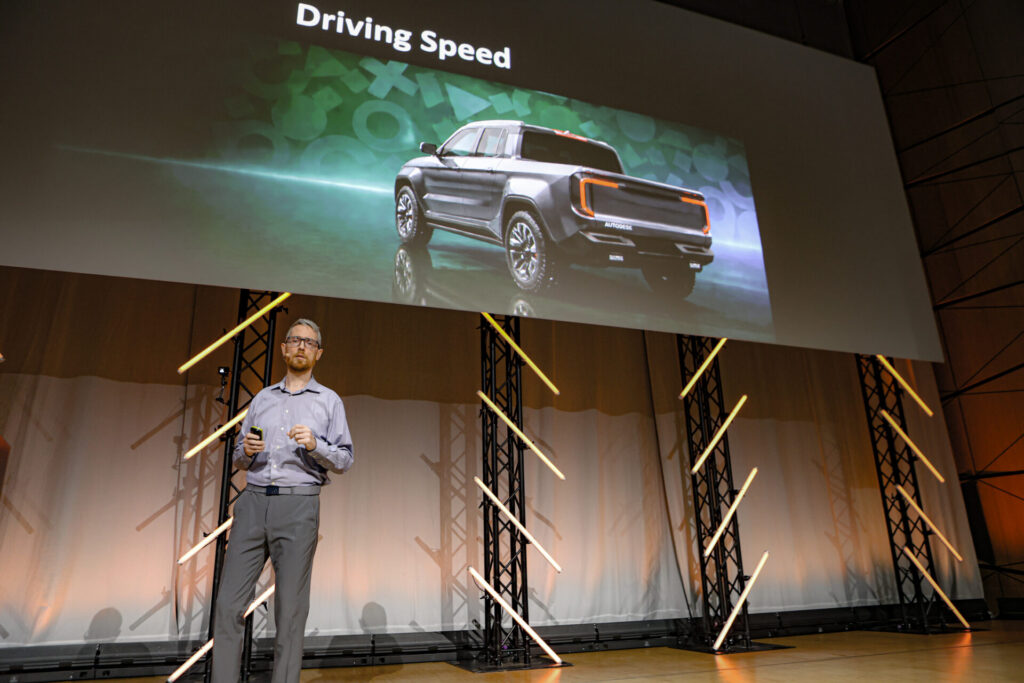
The keynote also highlighted how hybrid modeling and automation can help teams stay creative longer while still producing production-ready data. Capabilities such as Variable Crease, Sub-D Retopologize, Surface Combine research, and CV Optimization research point toward a future where designers can iterate more freely while maintaining the standards required for engineering and manufacturing.
Two announcements stood out as especially important for workflow acceleration: the Python API for Alias and Autodesk Assistant for Alias.
The Python API extends automation capabilities to a broader set of users, enabling teams to automate tasks such as scene organization, normal unification, stitching, meshing, and material preservation. Autodesk Assistant builds on that foundation by allowing users to issue natural language commands for complex scene management and data preparation tasks, without needing to write code directly. Together, they represent a practical automation layer: one that helps teams reduce repetitive work and focus more energy on creative and strategic decisions.
Learn more about how Autodesk Assistant in Alias can support your design work in this announcement.
The Design Studio keynote also connected visualization and collaboration to decision speed. AI-assisted visualization tools can help design and marketing teams create compelling imagery in hours instead of weeks, while digital twin and collaborative review capabilities allow stakeholders to evaluate variants, materials, geometry, annotations, and engineering context in shared immersive environments.
The closing message from the session was especially relevant to the broader day: “Speed without trust is risk. Speed without process breaks down at scale.”
That may be the most important takeaway for automotive transformation. Speed matters, but only when it is supported by trusted data, connected workflows, governance, and human expertise.
Customer proof: faster decisions in practice
The Renault Twingo and DigiPHY session showed how these ideas are already playing out in real development programs. Renault’s team faced an ambitious challenge: deliver a new Twingo in two years while preserving the original vehicle’s DNA and keeping the price under €20,000. To do that, the team had to change how it worked, converging faster with engineering and using more agile, hybrid processes.
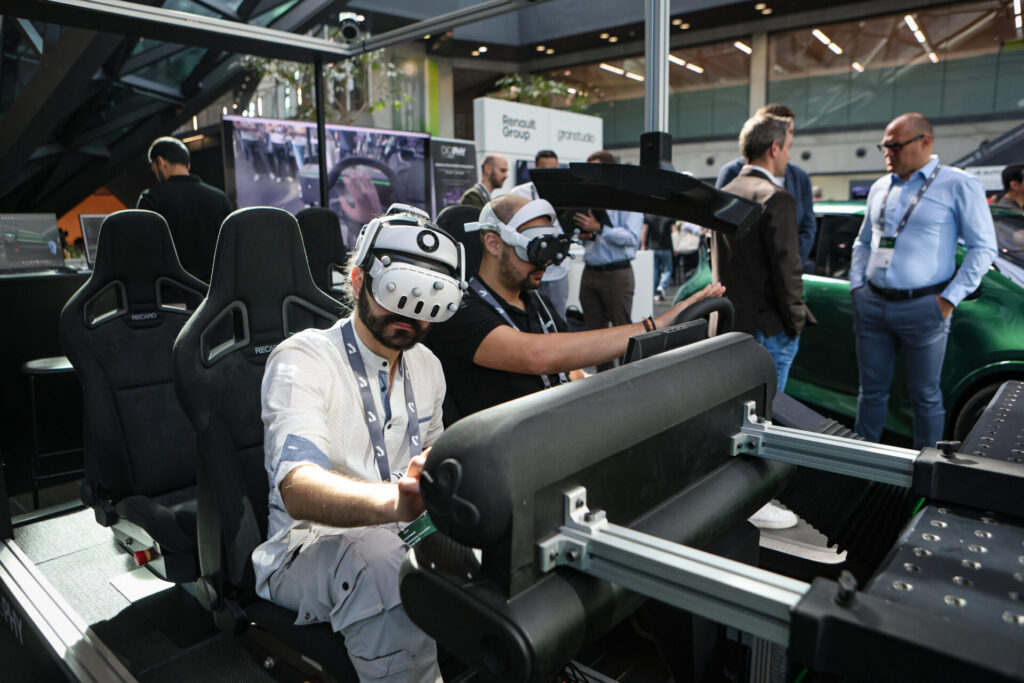
The session’s mixed reality workflow examples showed the value of immersive, automated pipelines. Renault’s evolution from manual VR preparation to automated workflows helped reduce preparation time dramatically, while DigiPHY enabled multidisciplinary teams to evaluate design, ergonomics, HMI, UX, and engineering considerations together in one shared space.
This is where the cost of lateness becomes very tangible. When teams can make better decisions earlier, they reduce downstream rework and create more room for innovation.
Day 1 takeaway:
AI accelerates, people decide
Day 1 of Automotive Innovation Forum was not just a conversation about artificial intelligence. It was a conversation about how the automotive industry can become more adaptive, more connected, and more confident in the face of accelerating change.
AI-assisted tools are beginning to transform the way teams generate concepts, prepare data, create visuals, simulate performance, and collaborate across disciplines. But the day’s strongest message was that people remain at the center: their creativity, judgment, experience, and willingness to ask better questions.
The future of automotive innovation will not be defined by AI replacing human expertise. It will be defined by teams that know how to combine AI-enabled speed with human intent, trust, and craft.
That is the real opportunity ahead: not simply to move faster, but to move faster with purpose.
Note: This article includes forward-looking statements about our products and strategies. These statements reflect our views based on information currently available and are subject to risks and uncertainties that could cause actual results to differ materially. Any references to planned or future product development are not guarantees of future availability and should not be relied upon for purchasing decisions. They represent our current plans and may change.
This story was developed using a blend of human expertise and AI tools supporting the research and drafting. Our team shaped, edited, and fact-checked the final content to ensure accuracy and alignment.
Check back tomorrow for more details from Automotive Innovation Forum 2026.