 Brandy Ryan
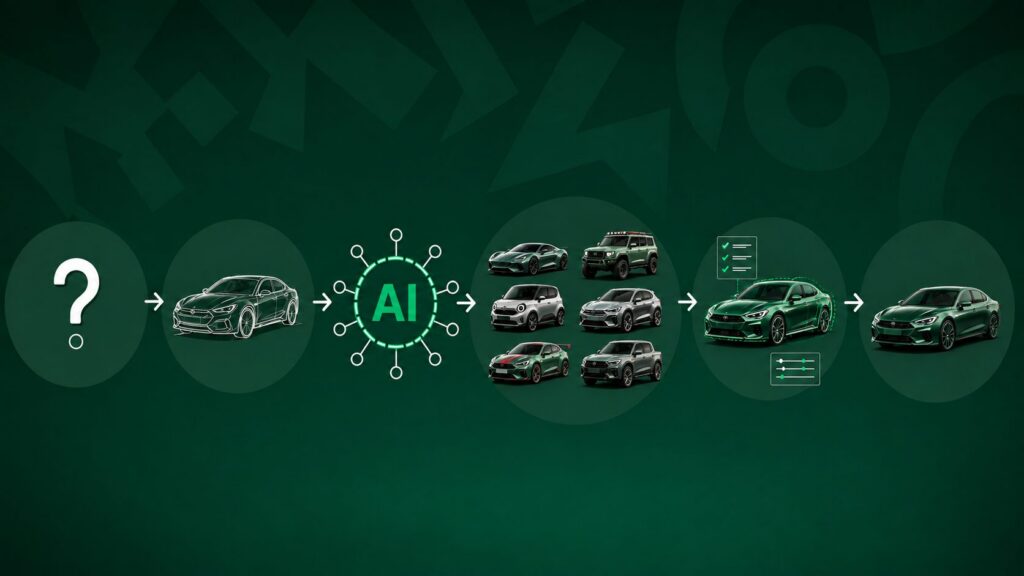
At AIF 2026, Lars Thomsen (CEO of future matters) used his keynote to shift the AI conversation away from tools and toward a more fundamental question: how will work itself change when intelligence and productivity become scalable?
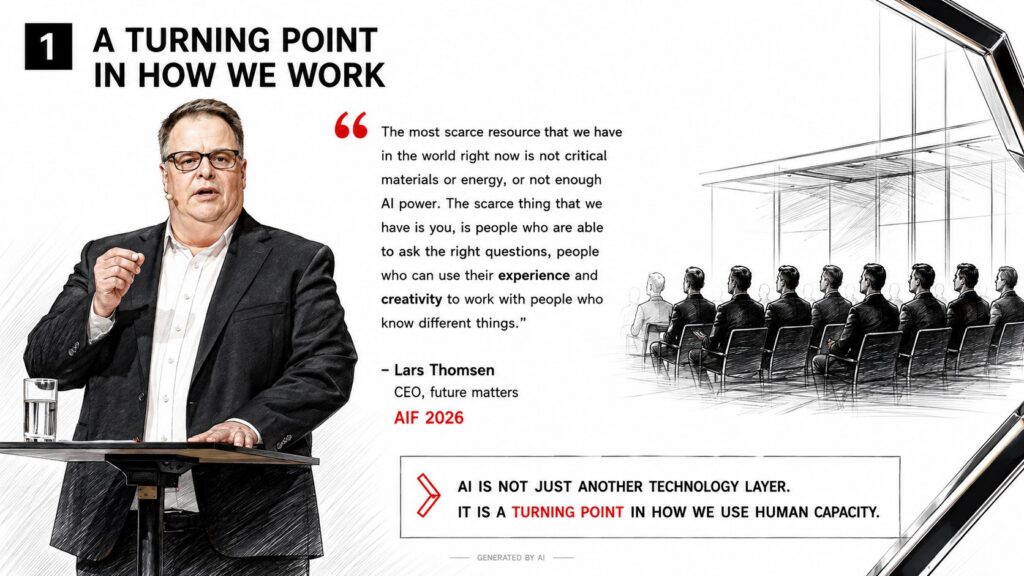
Rather than positioning AI as another technology layer, Lars framed it as a turning point in how organizations use human capacity. For design, engineering, and mobility teams, that distinction matters. The value of AI is not only in producing more outputs faster. It is in creating the conditions for people to spend more time on the work that requires judgment, creativity, experience, and the ability to connect ideas across disciplines.
From digitalization to scalable intelligence
Lars described the last 30 years of digitalization as an incomplete promise. Software improved many processes, but it also asked people to adapt to systems: learning interfaces, following workflows, and managing the repetitive structures around the work itself.
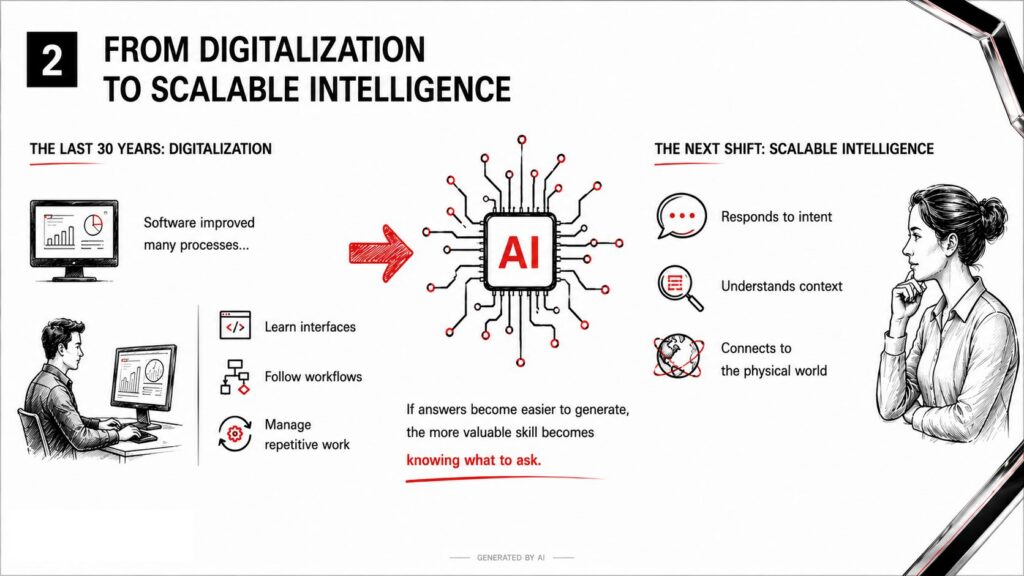
In Lars’ view, AI introduces a different relationship between people and technology. Instead of forcing human work into predefined software structures, AI can begin to respond to intent, language, context, and eventually the physical world. That shift changes the role of the human. If answers become easier to generate, the more valuable skill becomes knowing what to ask.
For designers, this is a familiar principle. The strongest outcomes rarely begin with the fastest answer. They begin with a better question: What problem are we actually solving? What assumption needs to be challenged? What experience are we trying to create?
The value of the question
A central theme of the keynote was that AI will make information, synthesis, and output increasingly abundant. In that environment, human value moves toward framing, interpretation, and decision-making.
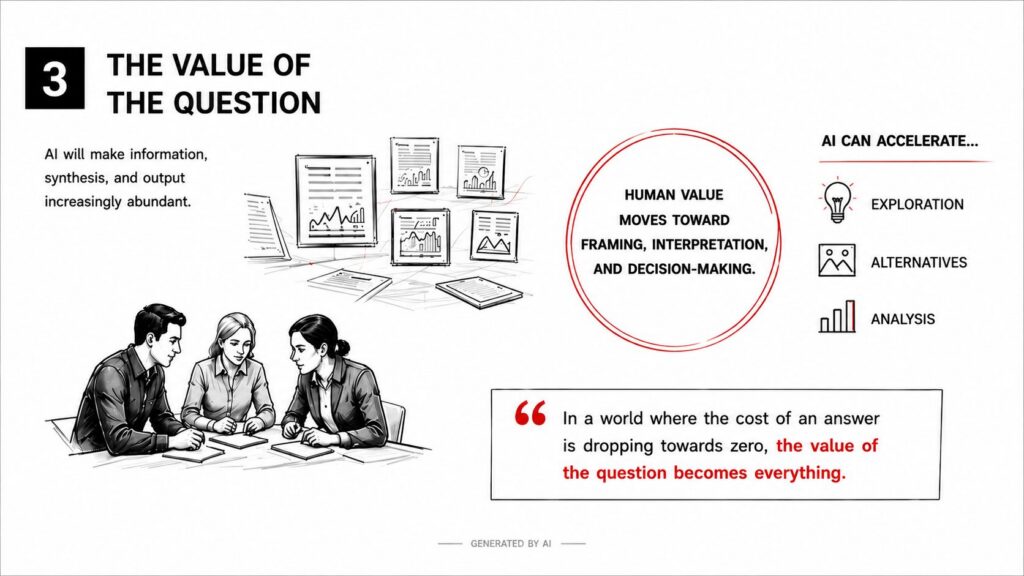
This has direct relevance for creative and technical teams. AI can accelerate exploration, generate alternatives, and support analysis. But the quality of that work still depends on human intent. A design team still needs to understand context, interpret ambiguity, and make choices.
“In a world where the cost of an answer is dropping towards zero,
the value of the question becomes everything.”
The opportunity is not to remove people from the process. It is to give people more room to do the work that machines cannot meaningfully own: noticing what matters, connecting unlike ideas, and asking the questions that change the direction of a project.
From language models to world models
Lars also pointed to the next stage of AI development: the move from language models toward world models. Large language models have shown that AI can understand patterns in human communication. World models extend that challenge into physical reality, where systems must account for how objects, environments, and people behave.
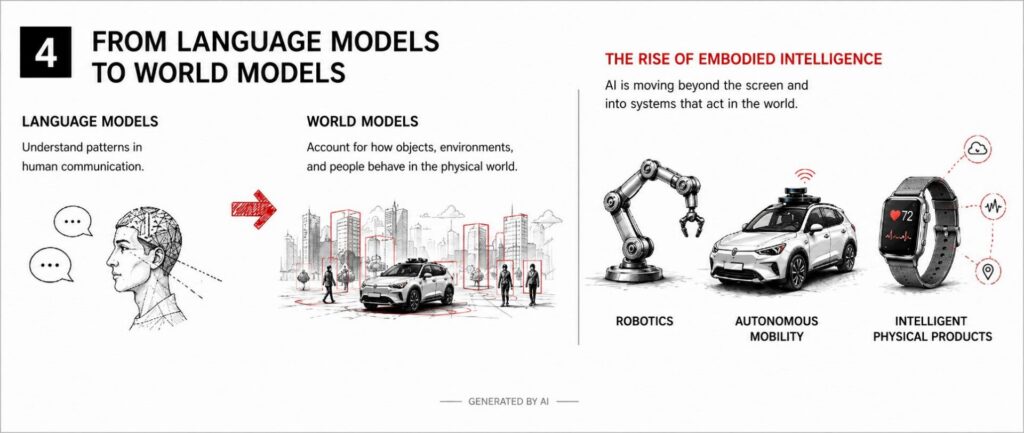
This is where Lars’ idea of embodied intelligence becomes especially relevant. AI is moving beyond the screen and into systems that act in the world. Robotics, autonomous mobility, and intelligent physical products all depend on this transition.
For automotive and industrial design audiences, the implications are significant. Embodied intelligence requires more than an algorithm. It depends on the ability to translate intelligence into systems that can operate safely, reliably, and repeatedly in real environments.
Why automotive-grade engineering matters
Lars connects robotics to a capability that automotive teams understand well: building complex systems that must work reliably in the real world.
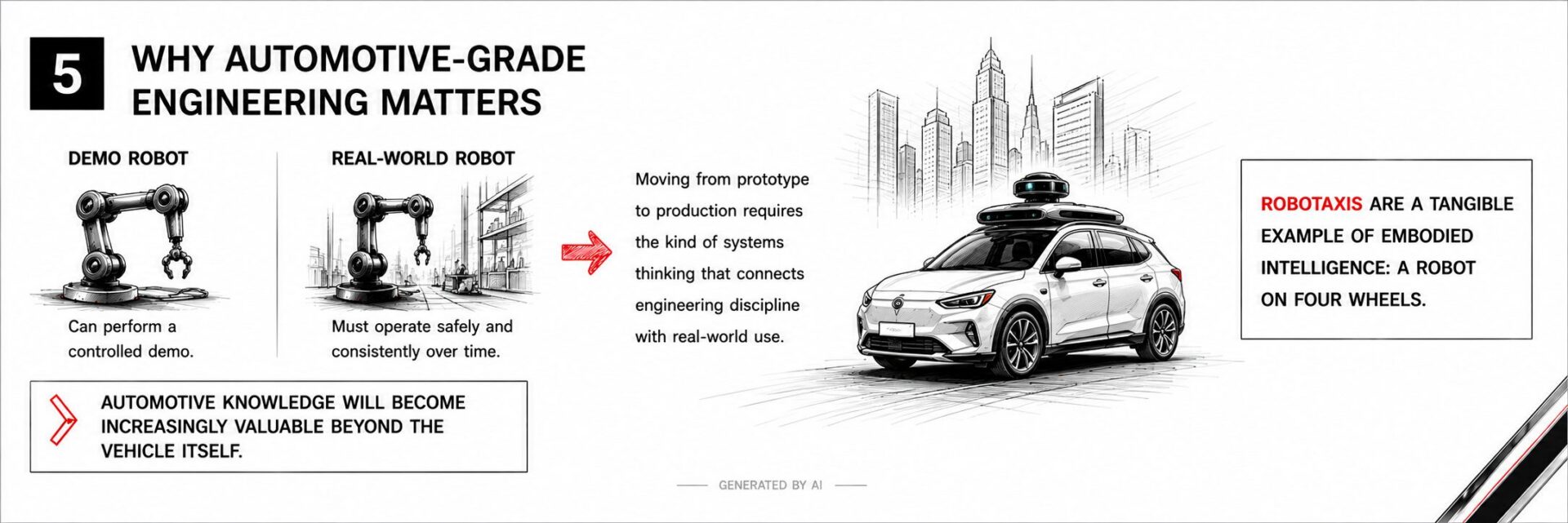
A robot that performs a controlled demonstration is very different from a machine that can operate safely and consistently over time. Moving from prototype to production requires the kind of systems thinking that connects engineering discipline with real-world use.
That is why automotive knowledge may become increasingly valuable beyond the vehicle itself. As embodied AI develops, the same capabilities that shape advanced mobility will matter across a much broader set of intelligent machines.
Lars’ example of robotaxis made this connection tangible. An autonomous vehicle is not only a car with software. It is a physical AI system navigating a constrained but complex environment. In that sense, it becomes one of the first familiar forms of embodied intelligence: a robot on four wheels.
Re-engineering how teams work
This keynote was not only about future machines; it was also about the daily reality of work.
Thomsen argues that AI should reduce complexity rather than add to it. Many organizations are already burdened by too many meetings, fragmented information, and slow decision cycles. If AI simply adds another layer of tools and outputs, it will increase that burden. But if used well, it can help teams clarify discussions, surface relevant context, and preserve decisions in a more useful way.
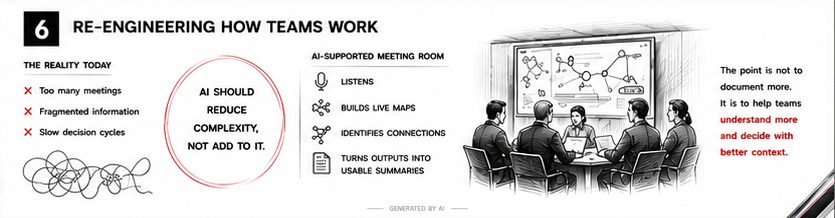
His example of an AI-supported meeting room suggested a practical near-term direction. In that model, AI acts as a structured assistant: listening, building live maps of the discussion, identifying connections, and turning meeting outputs into usable summaries. The point is not to document more. It is to help teams understand more and decide with better context.
For design and engineering organizations, this may be one of the clearest opportunities. AI can support the connective tissue of work: how teams align, remember, evaluate, and move forward.
A leadership priority, not a tool rollout
Lars closes his keynote with a bold assertion: AI transformation is a leadership responsibility.
The organizations that benefit most will not be the ones that simply deploy AI tools into existing workflows. They will be the ones that rethink how human potential is used. That means looking honestly at where time is being lost, where decisions slow down, and where people are spending energy on work that does not require their highest capabilities.
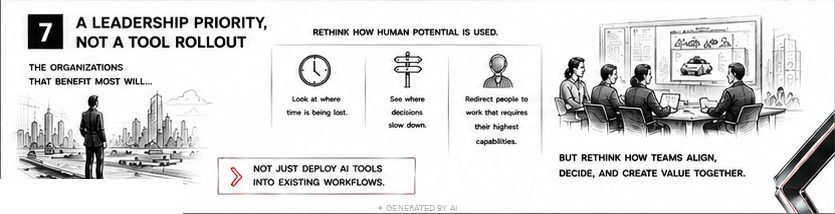
For design studios, engineering groups, and mobility organizations, the future of AI is therefore not only a technical question. It is also and crucially a design problem. How should teams work when intelligence is more available? How should knowledge move through an organization? How can people have more time to explore, learn, and make better decisions?
Final thought
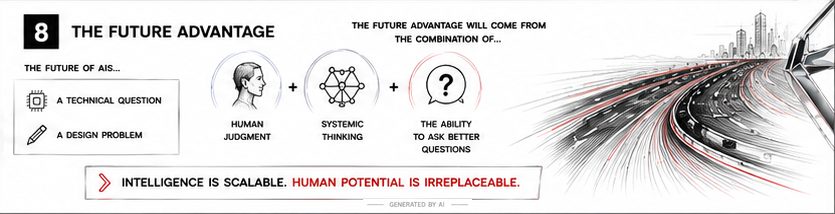
Lars offers a grounded provocation: the future advantage will not come from AI alone. It will come from the combination of human judgment, systemic thinking, and the ability to ask better questions.
This story was developed using a blend of human expertise and AI tools supporting the research and drafting. Our team shaped, edited, and fact-checked the final content to ensure accuracy and alignment.
Keep an eye on our blog for more session posts, including keynotes and customer presentations from AIF26 coming soon.
Stay connected with the Automotive Design team – browse our videos on our Autodesk Design Studio YouTube channel and get the latest from our Autodesk Automotive LinkedIn page.