 Autodesk Media & Entertainment
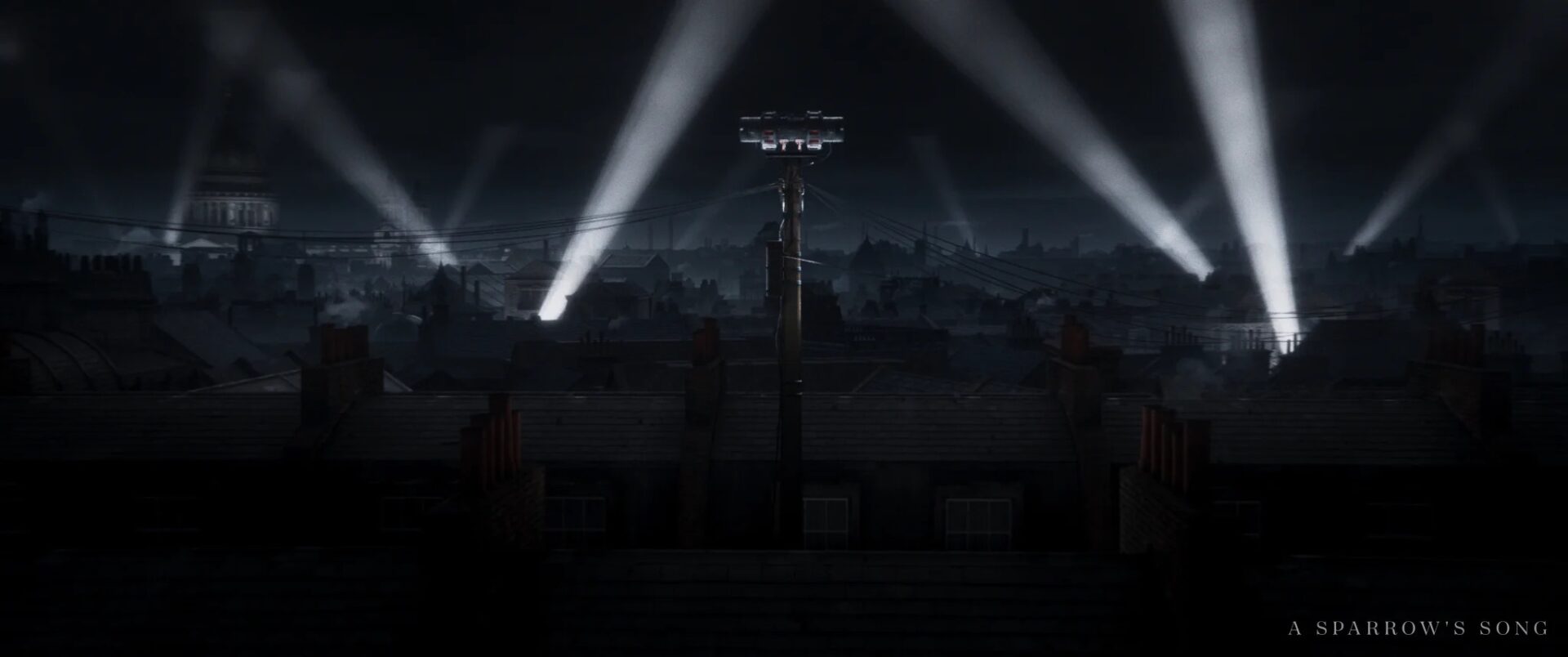
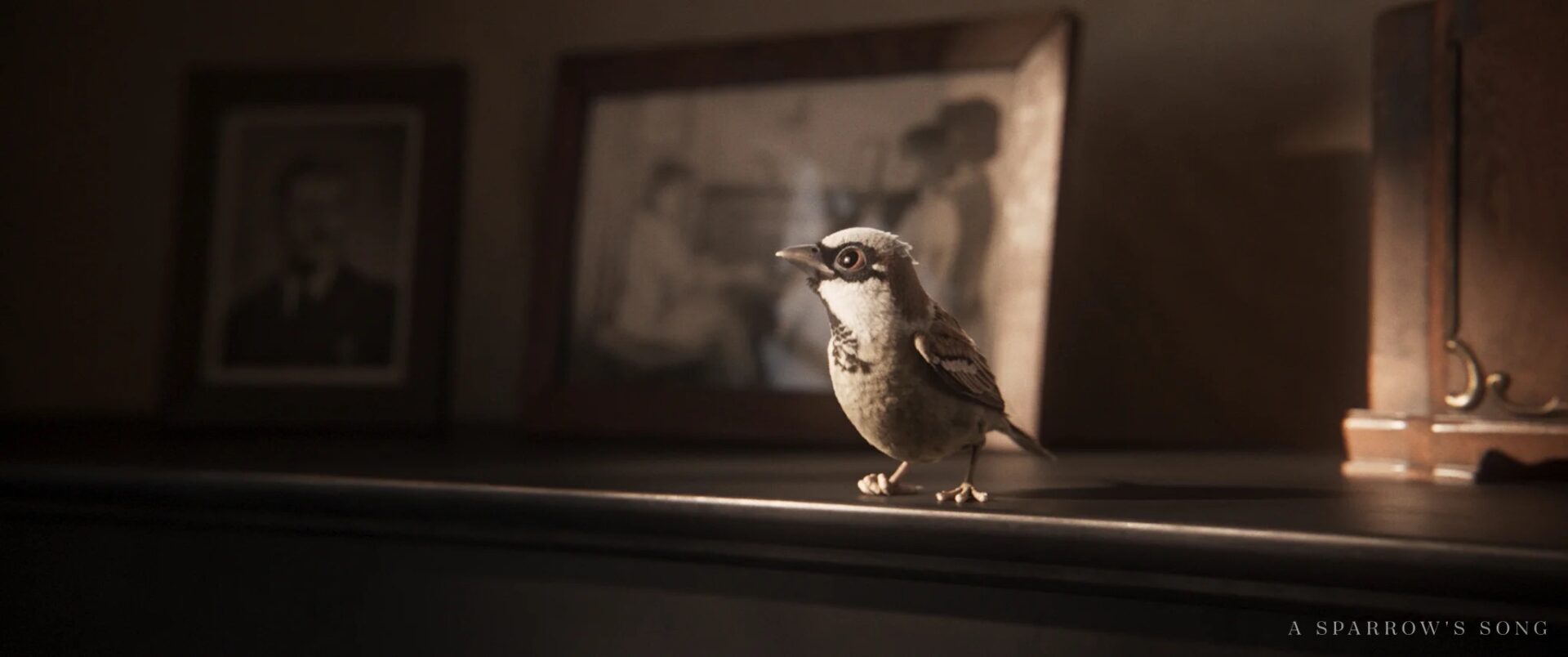
In life, and in art, encouraging those around you goes a long way. In the 2025 Student Academy Award-winning animated short film, A Sparrow’s Song, an injured sparrow singing along to a grieving widow’s piano playing in a World War II bomb shelter gives hope to everyone who hears it. On the 50-student team who produced the film, positive beliefs, motivation, and trust all played huge roles in pulling off an ambitious project with visually beautiful and emotionally powerful results.
“Collaborate, trust each other, be empathetic and reflective,” says Tobias Eckerlin, who directed A Sparrow’s Song while at Filmakademie Baden-Wuerttemberg. “Most importantly, believe in yourself, your team, and your project. Stick with it.”
Beginning with preproduction in 2022, Tobias spent about three years on A Sparrow’s Song, with the team size varying depending on the production phase. A peak of 20 animators with two leads wrapped animation in April 2024. Tobias and a core team of five other people (Vincent Maurer, Lead Technical Director; Elias Weber, Lead Character Artist; Rebecca Liebelt, Lead Groom Artist; and Lead Animators Lilli-Luisa Heckmann and Jiro Magracia) juggled various roles and finished the film in March 2025. Later that year they won Gold in the Animation category of the Student Academy Awards, qualifying the film for the 98th Oscars Animated Short Film category.
“This recognition by the Academy validates that we created something special and that it resonates with audiences,” Tobias says. “Personally, it’s a dream come true. It will also give the film the opportunity to reach a wider audience and hopefully connect with them.”
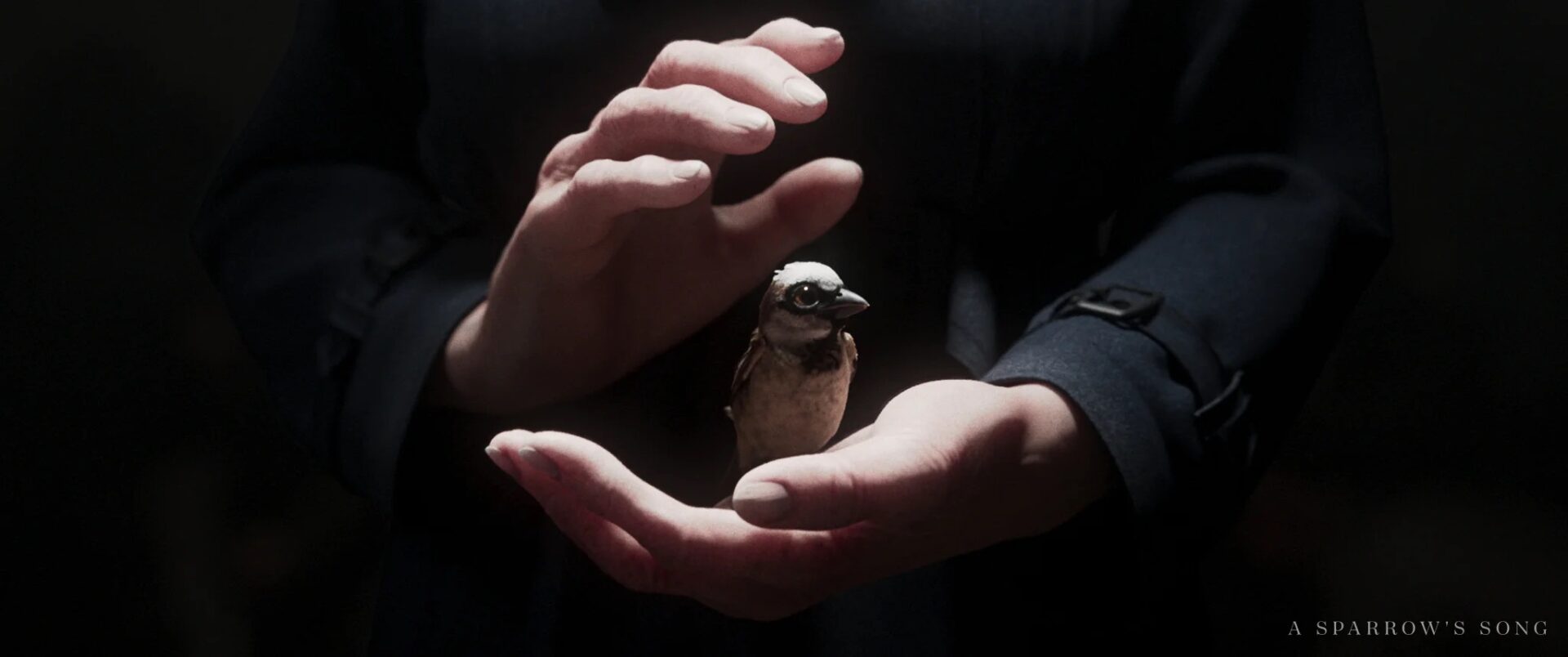
Taking flight
The two lead animators created an animation bible for A Sparrow’s Song, focusing on guiding an animation style centered on the characteristics and personalities of the main characters. Jiro says, “The texture of movement was key to defining the film’s tone.” He studied elderly people’s gestures and body language to work out the graceful and measured movements of the widow character. They also worked with an actress performing all of the script’s action for reference motion. Meanwhile, Luisa studied the behavior and recordings of real sparrows on which to model the animated sparrow’s quick and lively movements.
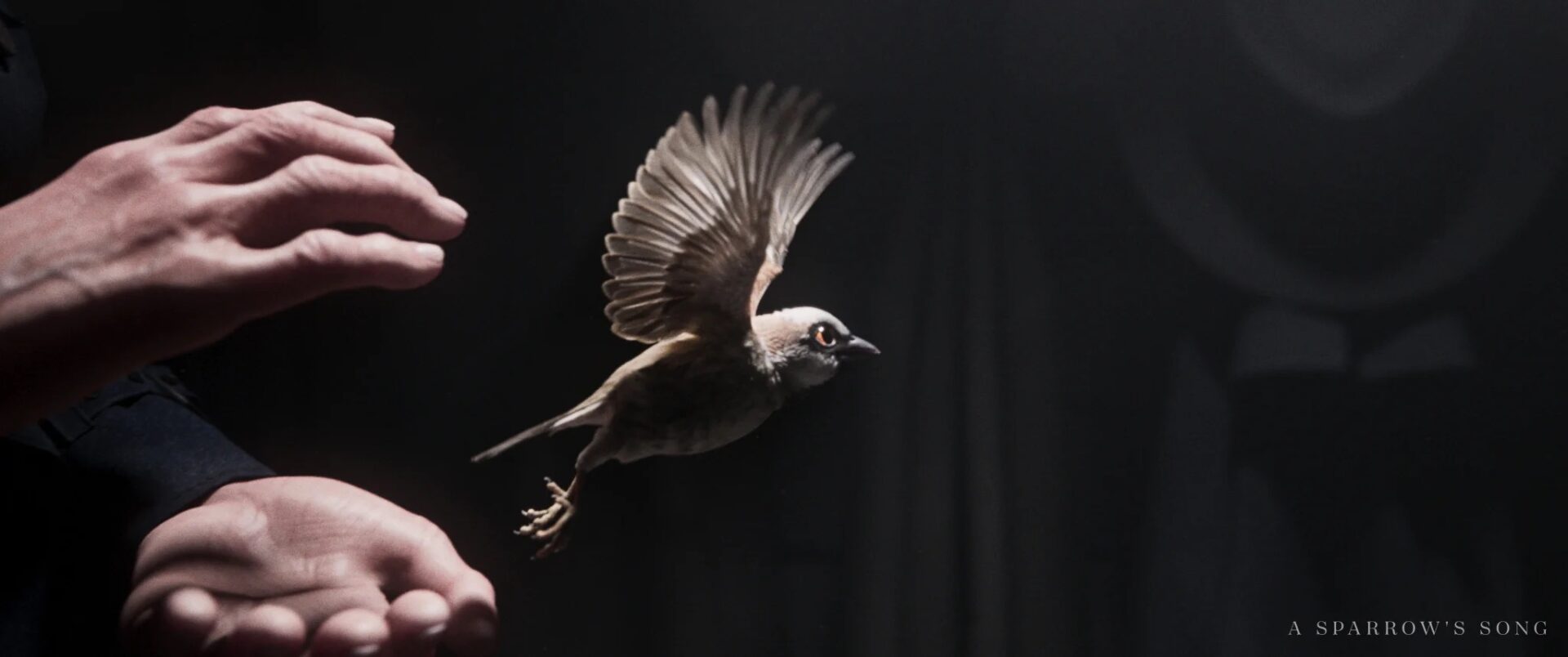
During production, Luisa and Jiro collaborated with the director and the other departments to regularly review animation shots and maintain the consistency with the reference material while also allowing creative interpretation. “One of our greatest challenges as Lead Animators was maintaining stylistic consistency across such a large and diverse team of student animators. Since the film’s visual style leans toward realism, we aimed to reflect that same authenticity in the animation: something that required strong communication, feedback loops, and a shared understanding of the characters.” Jiro says.
Their whole animation and character pipeline was built around Autodesk Maya and plug-ins such as Motion Library, animBot, and the AdvancedSkeleton rigging plug-in to supplement their custom character rigs. They also used Autodesk Flow Production Tracking (formerly ShotGrid) for version control. Elias says that nearly all their 3D assets went through Maya at some point, so Maya’s native integration with Flow Production Tracking worked very well for them.
They also created custom scripts for their workflow. For example, Vincent set up some scripts to create automatic playblasts with an information overlay that would publish to Flow Production Tracking for review. And the other technical director, Hannes Sturm, built a Maya script that imported MIDI (musical note files) so that the piano could play itself, serving as a great starting point for the hand-animated piano playing.
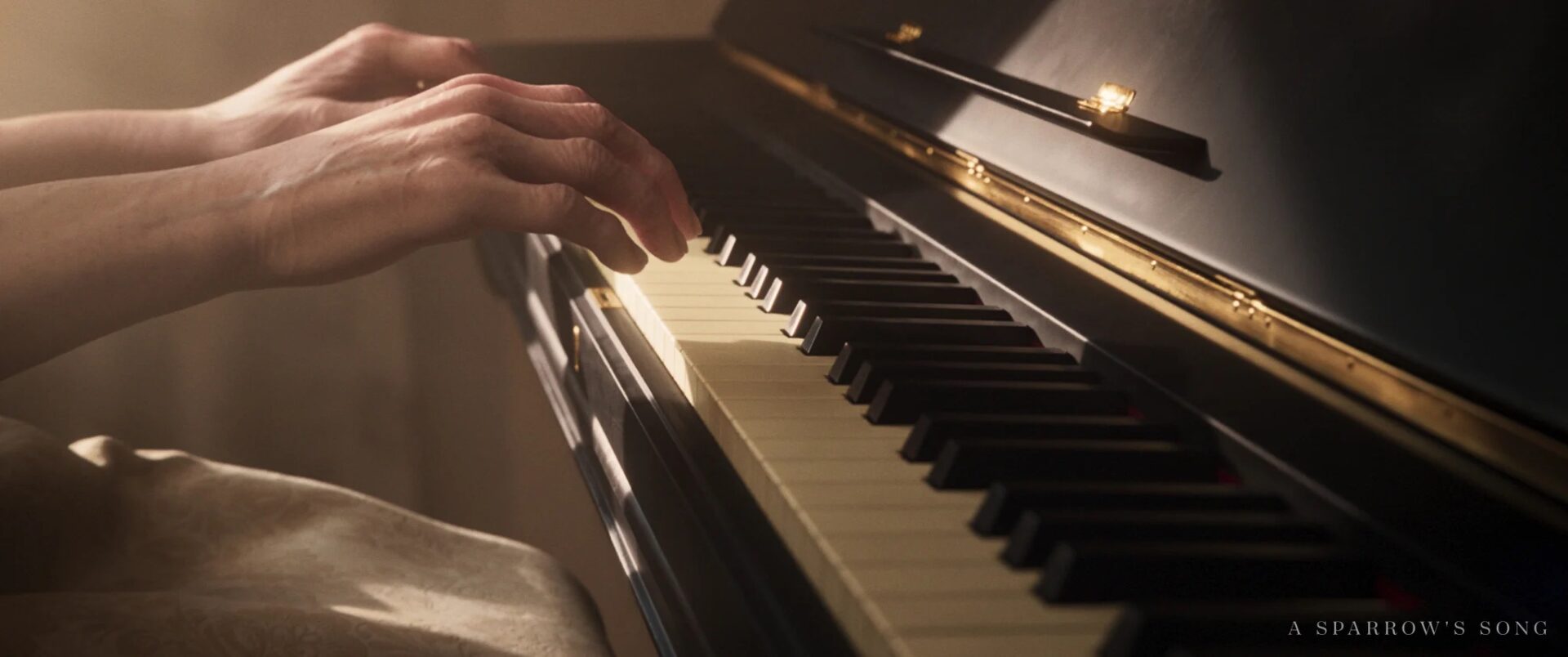
Technical director Vincent Maurer says they only had about three months for lighting and rendering, and they “went all in” on Arnold GPU, using it to render most of the film’s shots. He says that reduced their rendering time to about 10 minutes per frame and also reduced the energy used in their in-house render farm. “Arnold’s denoising tools were also super helpful,” Vincent says. “They made interactive lighting a lot quicker and were a big contributor to our fast render times. My estimations told me we wouldn’t have finished the film in time without it.”
A custom pipeline for the crowd scene
One particular scene, however, the crowd scene within the bomb raid bunker, presented their biggest technical challenge, which required the creation of its own custom pipeline. “I’m really proud of the workflow Elias and I developed to bring the shelter environment to life,” Vincent says.
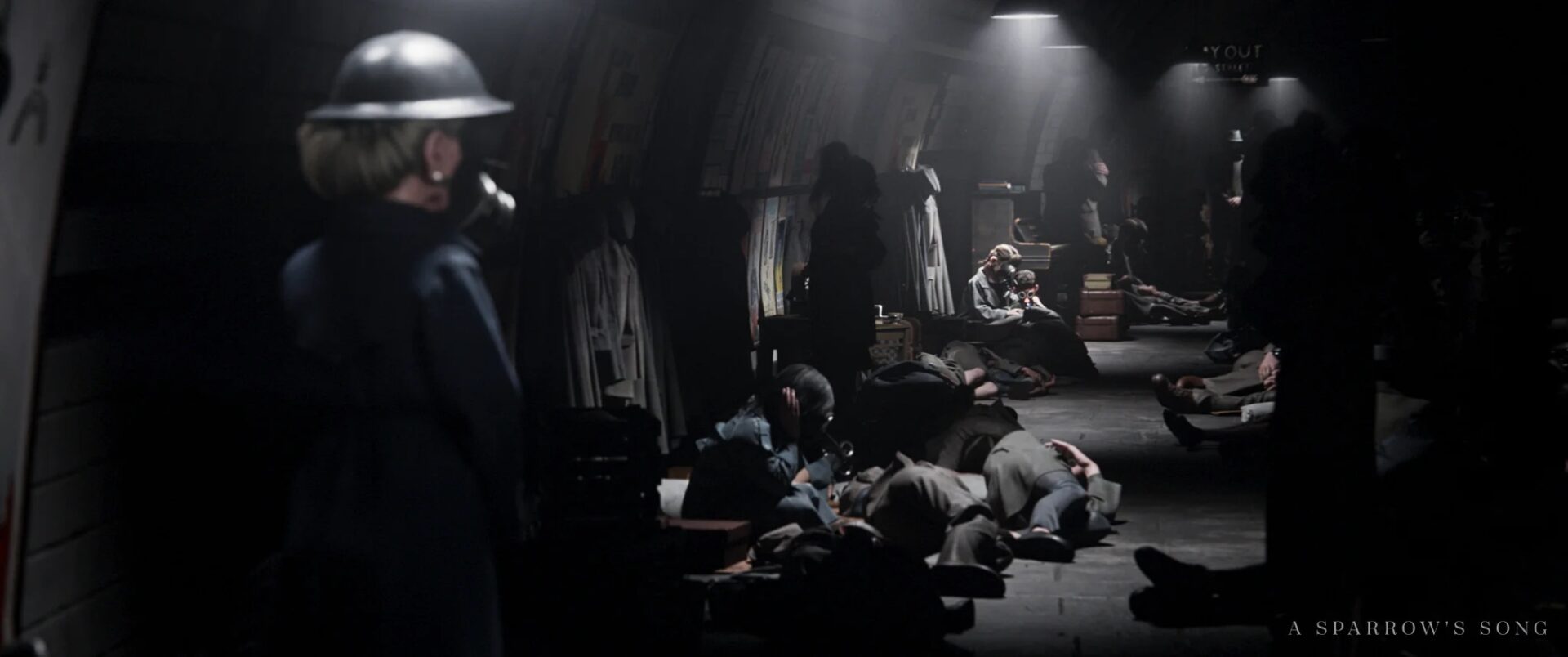
“We had 140 individual cycles that were all six seconds long,” Elias says. “Our regular cloth pipeline was way too slow for so many animations.” The alternative workflow they set up only roughly simulated the cloth into each pose, which was then deformed by the rig, making them easier to loop and eliminating cloth jitters. Those animations were then scattered with MASH using proxy meshes and exported to the renderer. Then the high-res caches were loaded in during render time.
Vincent adds that the widow and the children’s hair was groomed in Maya with XGen, which was rendered as an Arnold hair procedural. “That saved us a lot of memory and baking time,” he says “something we needed for our complex feather setup for the sparrow, which had a lot of hair and was the main contributing factor to our storage usage.”

Building adaptable pipelines
As talented young students, the artists who worked on A Sparrow’s Song represent the future of 3D art. With a very ambitious project in front of them, they took a very practical approach to adopting emerging tools, including open standards and AI.
Vincent says that they relied on open standards like Alembic, OpenUSD, OpenEXR, and ACES and that he’d probably base future pipelines more on USD. Since they used more than one renderer for the film, they exported all their assets and animated characters as Alembic caches to load into their renderers. “I think one of the greatest things about this industry is sharing knowledge and technology that enables us to work together,” Vincent says.
Machine Learning can also help artists work together and work more effectively, and Vincent sees them being best for very specific, technical tasks. “I see AI tools with a bit of caution,” he says. “Try to keep them in your hand and not the other way around. Be open and explore where their boundaries are.” Specifically, the team appreciated Intel’s Open Image Denoiser in Arnold for speeding up the creative process without taking away, as Vincent says, any of the fun hands-on parts.
Built on trust
Beyond the technological challenges, the sheer scope of the project was a challenge in itself, especially for a student production with limited resources. People may judge the latest Pixar movie, but few would ever doubt Pixar’s ability to finish it. Not so of a student film.
“One of the biggest difficulties was convincing people that the project was actually achievable, as it was very ambitious in scope,” Tobias says. He pushed through that barrier with belief in the project, patience and persistence when pitching, and by building trust with his team by putting in the hard work. Tobias and Vincent both mention trusting their team members and keeping them motivated.
Vincent was able to look at the task overview in Flow Production Tracking and create graphs that motivate the team by showing their progress. And Tobias understood that achieving the vision for the film meant supporting the team and making them part of the process.
“Communication is everything,” Tobias says. “Understand their needs; give them space to grow in their areas. A motivated team goes a long way, even if it seems impossible in the beginning.”
If you’re just out of school, an indie artist, or you just love to make awesome stuff in 3D, get access to pro tools at an affordable price with Autodesk Maya and 3ds Max Indie.