 Brandy Ryan
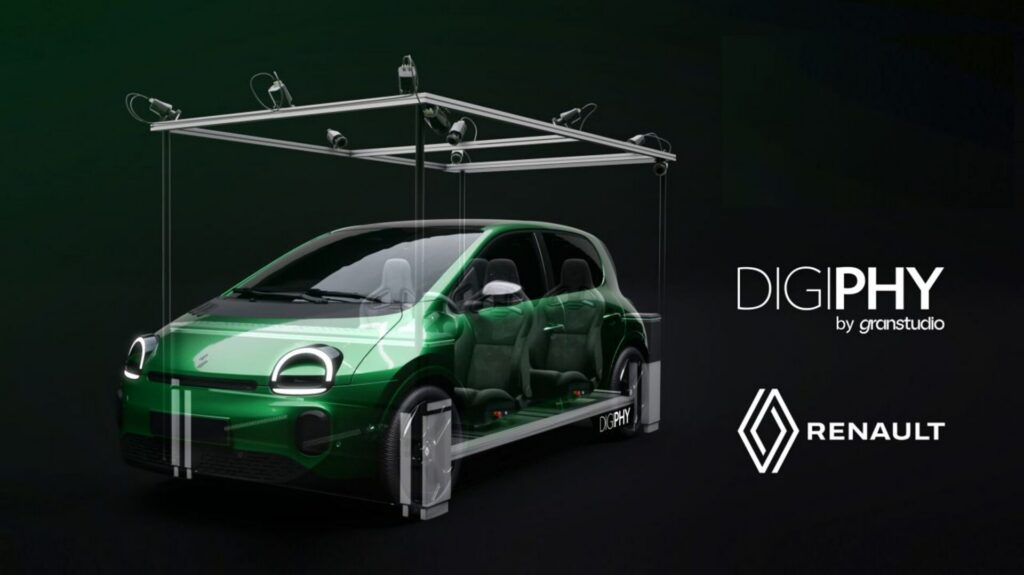
At AIF 2026, Renault Design and Granstudio came together to share how they are making immersive vehicle reviews more accessible, repeatable, and useful throughout the design process.
The full presentation, available below, covers the history of Renault’s visualization pipeline to the development of Granstudio’s mixed-reality platform, and, importantly, to its application to the Renault Twingo project.
This presentation demonstrates that immersive review is not simply a new way to present a finished vehicle. Connected to the right data and workflows, immersive reviews can become a practical environment for evaluating and developing ideas while they are still changing.
Renault: Making immersive review accessible
Florent Dieudonné, Virtual Reality Leader at Renault Design, and Jacques Labouret, who leads Renault’s 3D visualization pipeline, opened with the challenge facing their teams.
By 2019, Renault designers were already using virtual reality to sit inside digital vehicles and assess proportions, volumes, and spatial perception at full scale. The value of reviewing vehicle designs in immersive virtual environments was clear. The process behind those reviews, however, remained manual and difficult to scale.
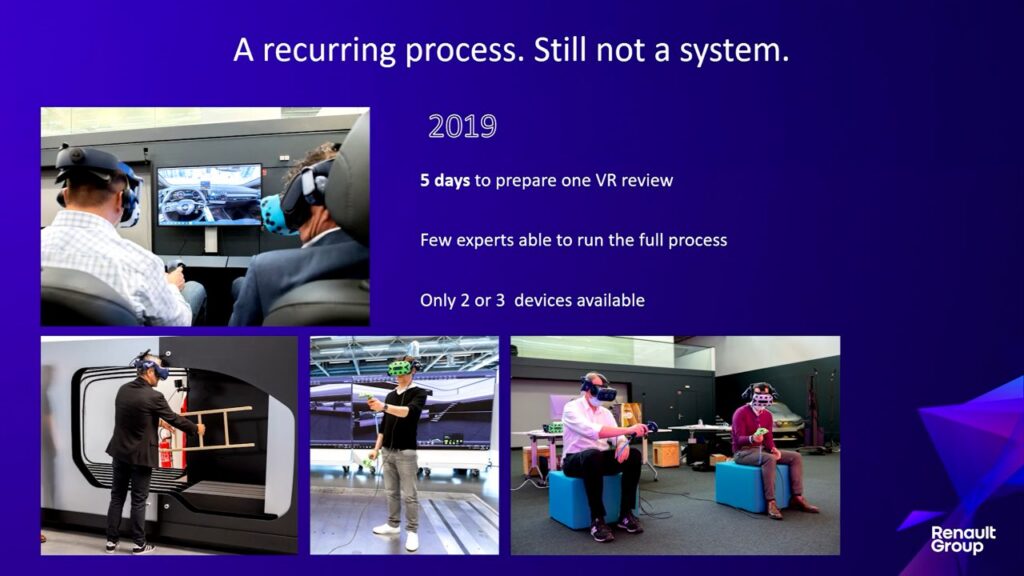
Preparing a session could take five days and required support from a small group of specialists. Renault’s goal was therefore not simply to create more immersive experiences, but to make them available as part of everyday design work.
“Our goal is to make expertise available to anyone.”
— Florent Dieudonné, Renault
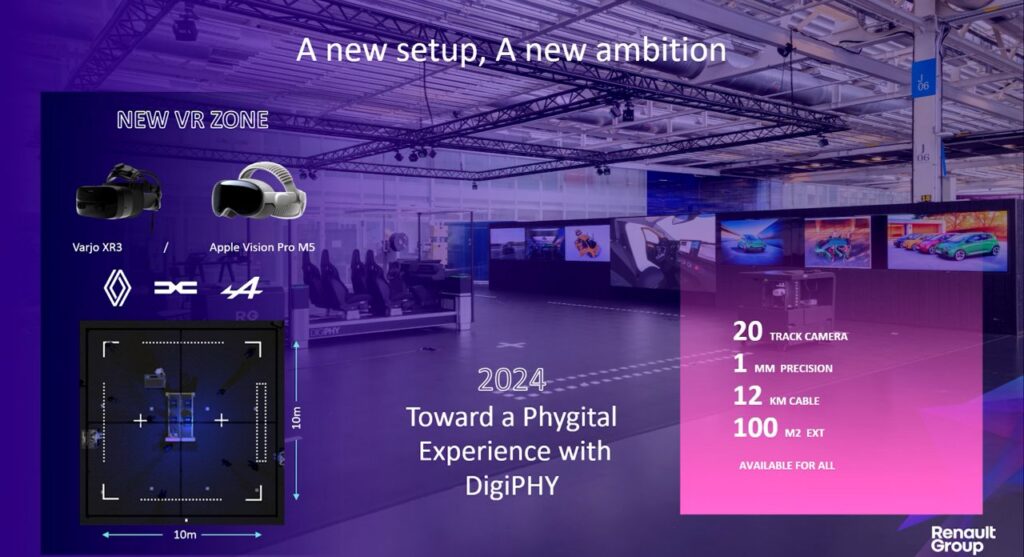
For Florent and Jacques, this required thinking beyond an individual VR application. The team needed a connected system that could prepare design data, automate repetitive work, and deliver consistent files to designers across projects and locations.
Embedding expertise in the visualization pipeline
Jacques traces this work back to Renault’s early visualization automation efforts and the development of 3DVISU, the company’s internal visualization platform.
What began as a way to reduce repetitive rendering tasks gradually evolved into a central environment for preparing and publishing design content. Renault’s “Car Park” contains vehicle models that have already been processed, shaded, and made available for different forms of production and review.
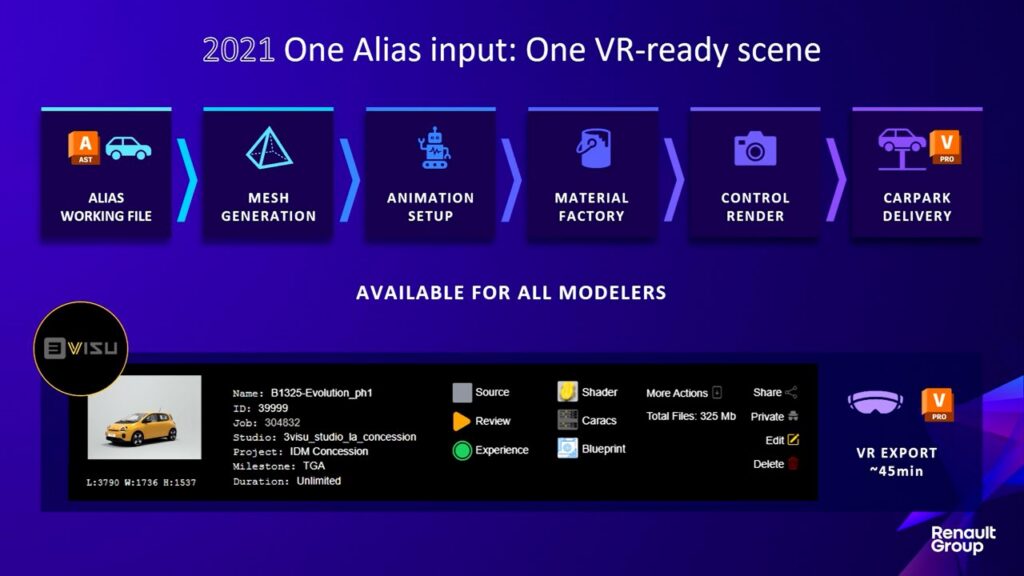
A designer can upload a daily Alias working file without first preparing a separate version for VR. The pipeline then handles mesh generation, scene organization, material assignment, and validation. A VR-ready scene can be delivered in approximately 45 minutes.
The most important change, Jacques explains, is not the time itself; it’s that specialist knowledge has been embedded in the workflow. Designers no longer need to understand or manually complete every visualization step before reviewing their work.
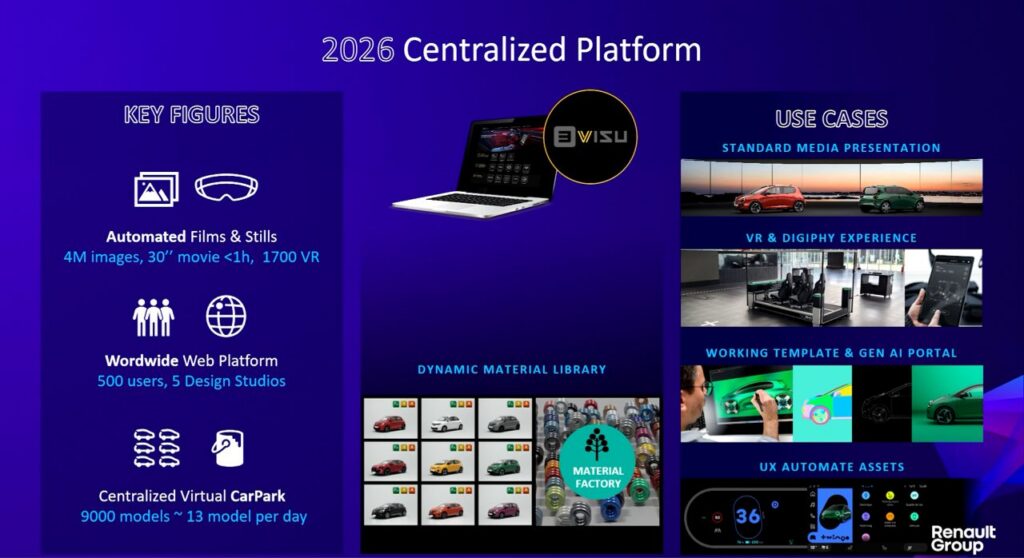
Renault also developed a Material Factory containing approximately 1,500 physically scanned materials, each prepared for several software formats. This helps maintain material consistency while supporting uses ranging from visualization and immersive review to simulation and content production.
By 2026, 3DVISU has become a global platform serving around 500 users across five Renault design studios. It contains approximately 9,000 models and supports 1,700 new VR scenes each year.
Connecting the pipeline to a physical design environment
Renault’s next step was to connect this automated content pipeline with Granstudio’s mixed-reality platform.
The system combines a configurable physical rig with a virtual vehicle environment. Components such as seats, steering wheels, dashboards, and door elements can be positioned to correspond with their digital equivalents, allowing designers to see a complete virtual interior while receiving physical feedback at key touchpoints.
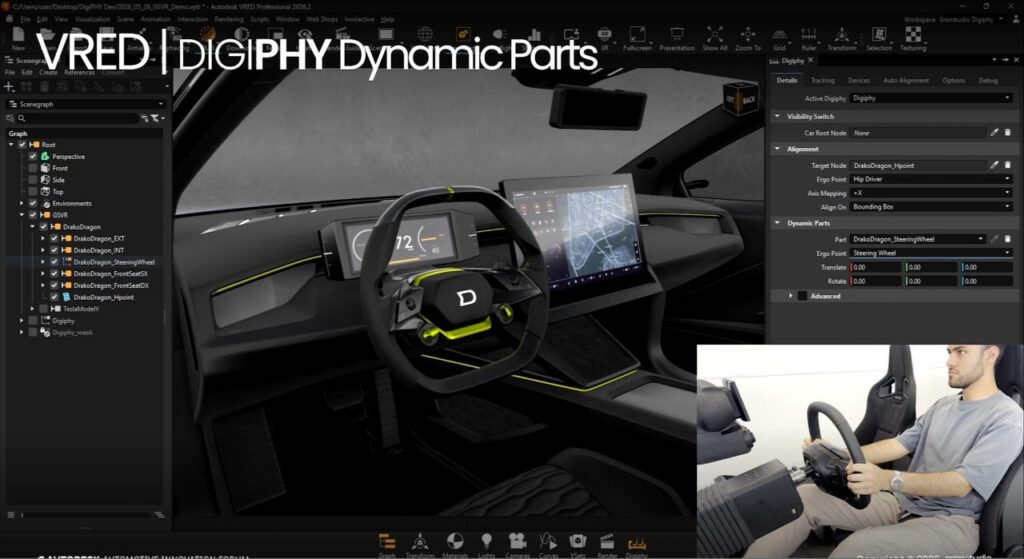
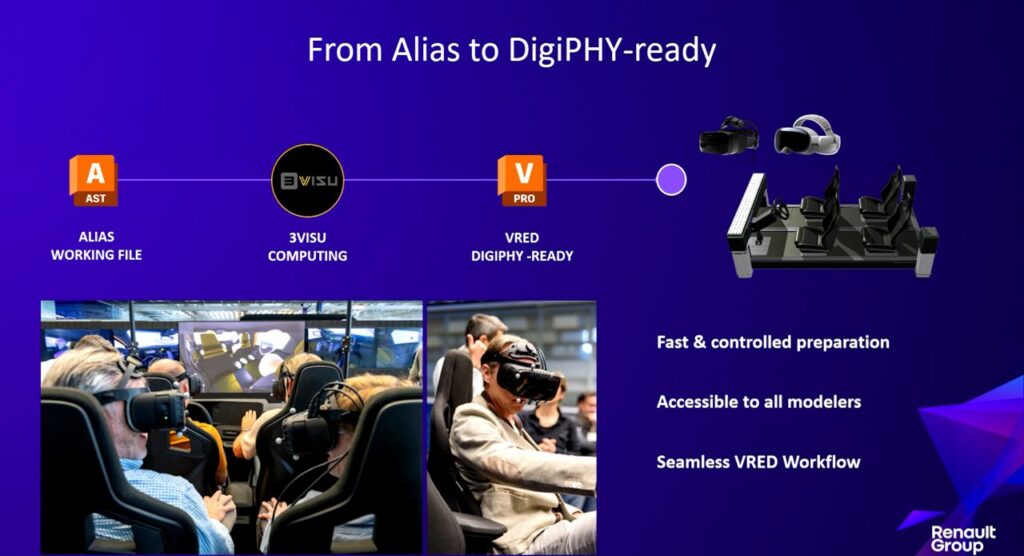
Integrating the platform into Renault’s design ecosystem required collaboration among Renault, Granstudio, and their technology partners. The teams developed an integration layer and APIs that could connect the physical system with Renault’s existing visualization and tracking workflows.
Once a small set of vehicle reference values has been established, the system can align the physical configuration with the vehicle model and generate the required scene automatically. According to the Renault team, this additional step takes less than 15 minutes.
The result is a workflow that can move from a current Alias model to a physically aligned immersive review without requiring a separate handcrafted setup for every session.
Granstudio: Developing an open mixed-reality platform
Antonio Mignano, Granstudio’s Chief of Digital Technology, then explained how the platform evolved alongside the Renault implementation.
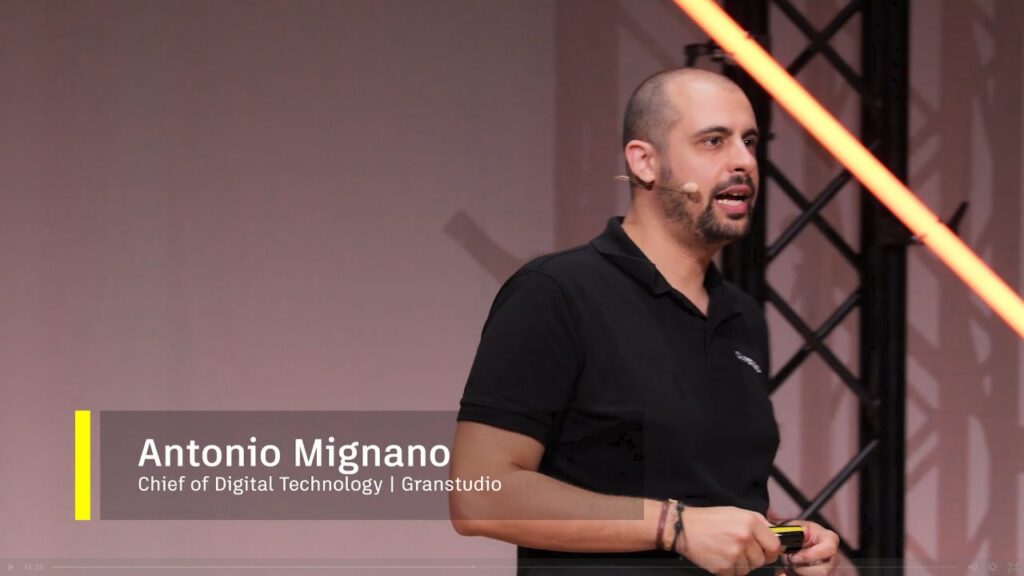
The first version began around 2020, as a research and prototyping system used for internal workshops and customer projects. As deployments expanded, Renault provided practical insight into what was required to operate the platform within a large automotive organization, including workflow integration, IT security, and support for users with different levels of technical experience.
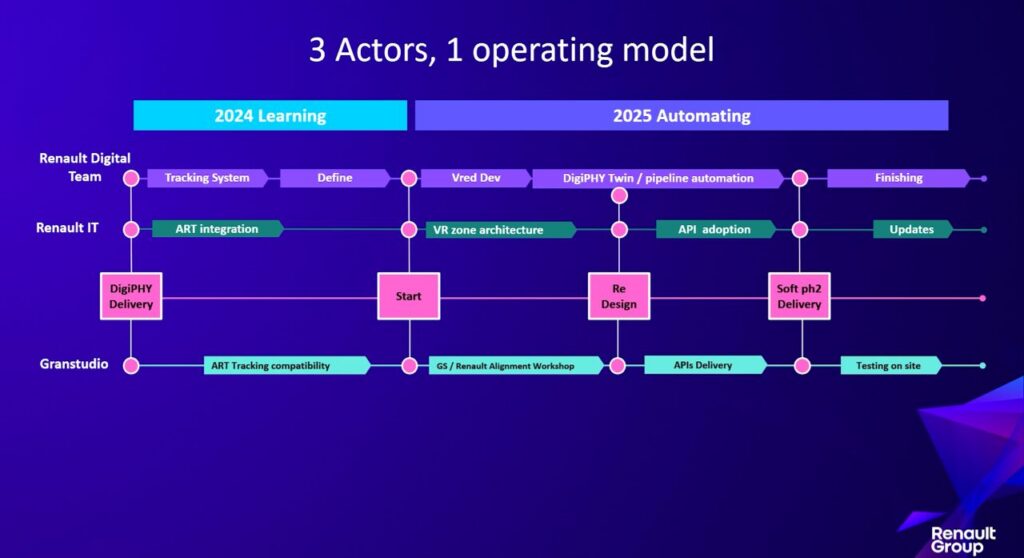
These lessons shaped the next version of the platform around ease of use, modularity, and integration. Rather than requiring designers to change their established processes, the system was designed to connect with the tools and data they were already using.
“We wanted it to be part of the toolkit that design engineers were already using.”
— Antonio Mignano, Granstudio
Antonio demonstrates how a digital twin of the physical rig can be brought into a scene and aligned with a vehicle model. Dynamic components can then be connected so their physical and virtual positions remain synchronized. Automated alignment uses motion-tracking data to place the user correctly within the virtual environment.
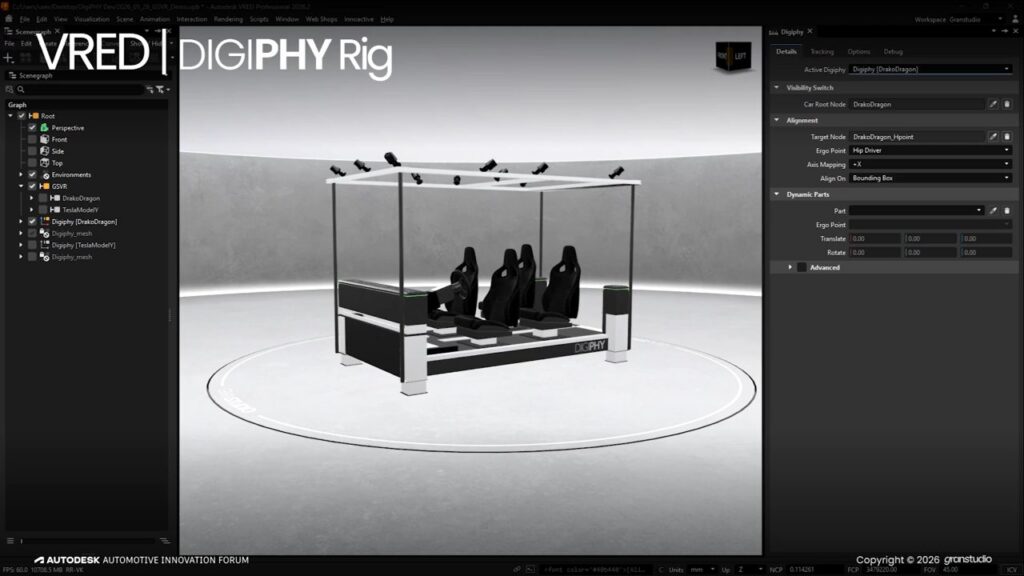
Granstudio’s longer-term direction is an increasingly open, software-agnostic platform. APIs allow customers and partners to develop their own integrations, while support for different visualization tools, tracking systems, and headsets helps the system adapt to existing design environments.
Go deeper on DIGIPHY: Where physical meets digital: Granstudio’s DIGIPHY and Autodesk VRED
Twingo: Evaluating the whole experience
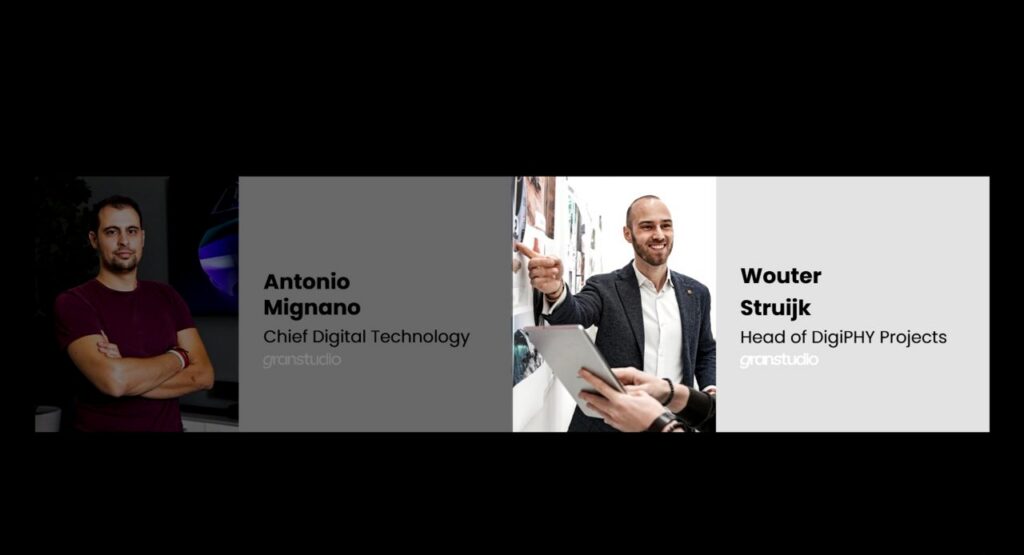
Wouter Struijk, Head of DigiPHY Projects for Granstudio, closes the presentation by showcasing the results of the Renault Twingo project.
In one workshop, Stephane Maiore and the Twingo design team evaluated an early interior concept across several levels of development. They were able to assess elements such as the central display, door panel, and B-pillar while experiencing them in the context of the complete vehicle.
The benefit was not simply seeing a more realistic model. Designers could evaluate form, ergonomics, interaction, and spatial perception together—and make decisions while the design was still flexible.
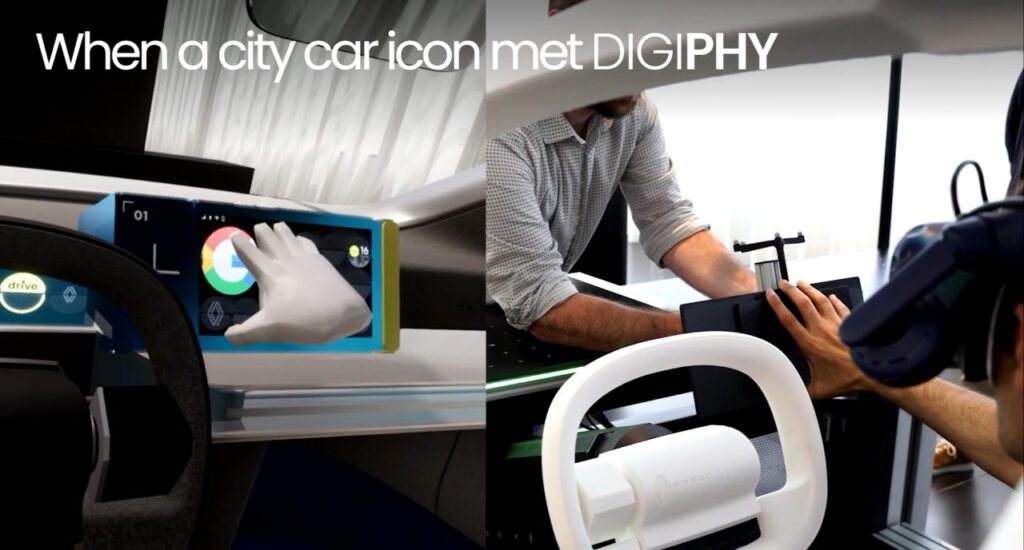
Wouter described this as a “fail-fast” approach. Instead of waiting for each discipline to complete its work in sequence, teams can bring different aspects of the experience together earlier, identify problems, and begin another iteration.
“The most expensive mistake is the one that you find out too late in the process, when you don’t have the time or budget anymore to go back and change it.”
— Wouter Struijk, Granstudio
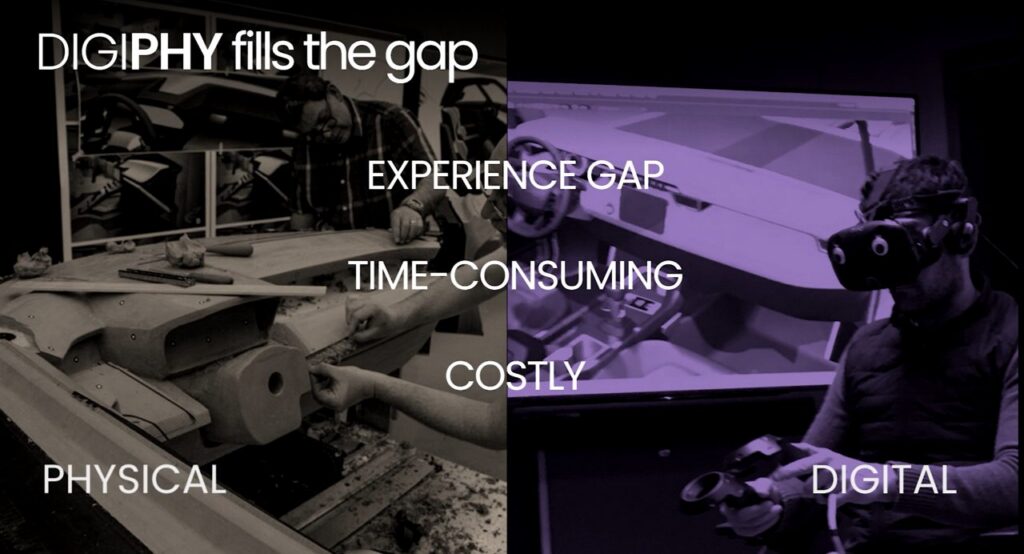
Rapid physical prototypes can also be introduced into the environment. A section of an armrest or door panel, for example, can be milled or 3D printed, positioned on the rig, and evaluated against the complete virtual interior. Materials, sound, interfaces, and other experiential elements can be added as the design progresses.
This creates a shared space for designers, engineers, HMI specialists, CMF teams, and other contributors to understand how their decisions affect the complete experience.
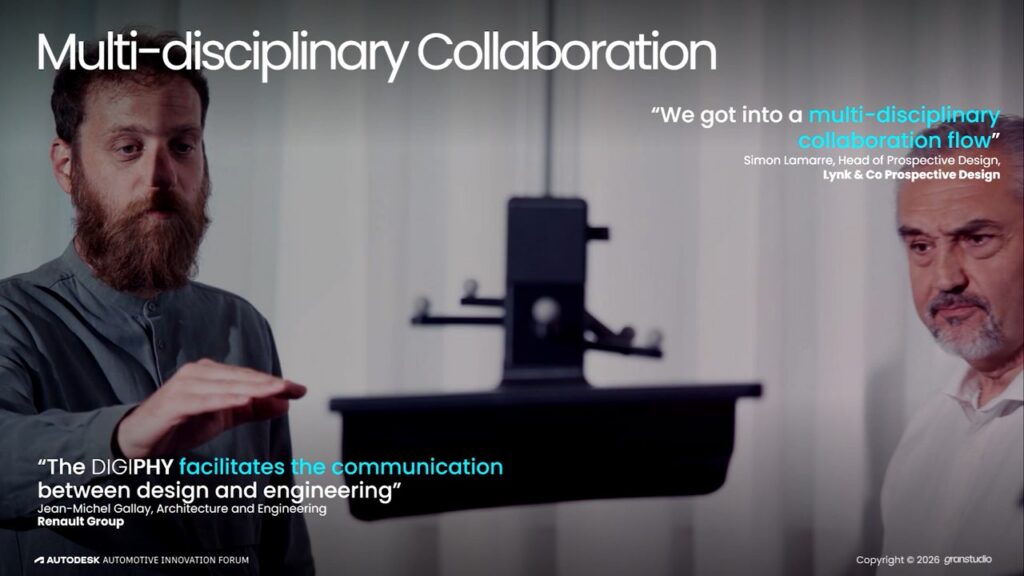
For Renault and Granstudio, the future of immersive review is therefore not limited to visualization. It is about giving teams a practical place to explore, test, and refine vehicle experiences together.
This story was developed using a blend of human expertise and AI tools supporting the research and drafting. Our team shaped, edited, and fact-checked the final content to ensure accuracy and alignment.
Keep an eye on our blog for more session posts, including keynotes and customer presentations from AIF26 coming soon.
Stay connected with the Automotive Design team – browse our videos on our Autodesk Design Studio YouTube channel and get the latest from our Autodesk Automotive LinkedIn page.