 Autodesk Media & Entertainment
When millions of people tune in for the Super Bowl, the commercials are as much a part of the culture as the game itself. For brands, the stakes couldn’t be higher. For visual effects studios, Super Bowl spots are a rare opportunity to bring full‑blown cinematic ambition to advertising.
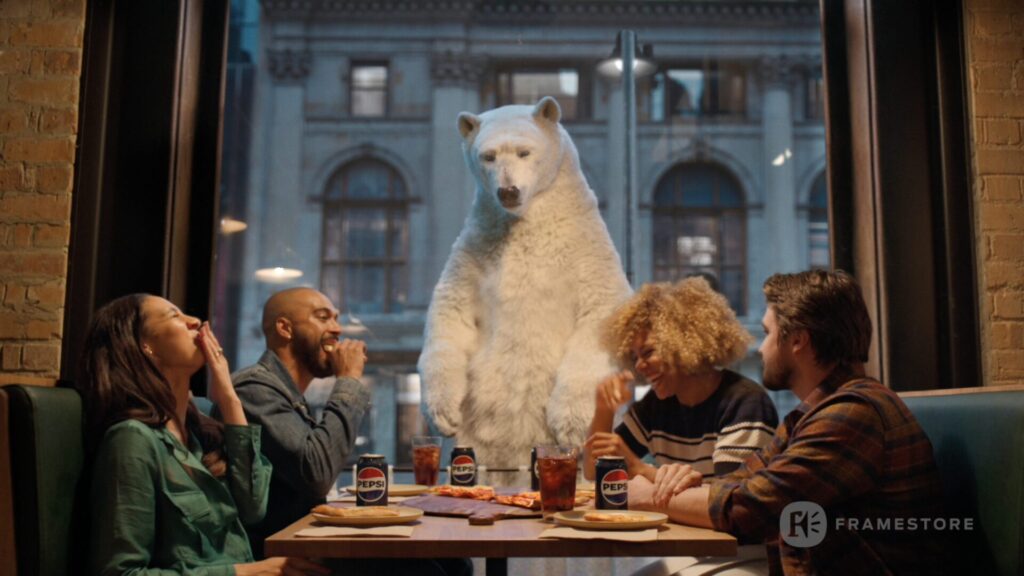
This year, one of the most talked-about ads was created by Framestore, the gold standard for creature work. For Pepsi’s The Choice, the team turned a blind taste test into a surprising character moment for one of advertising’s most iconic polar bears.
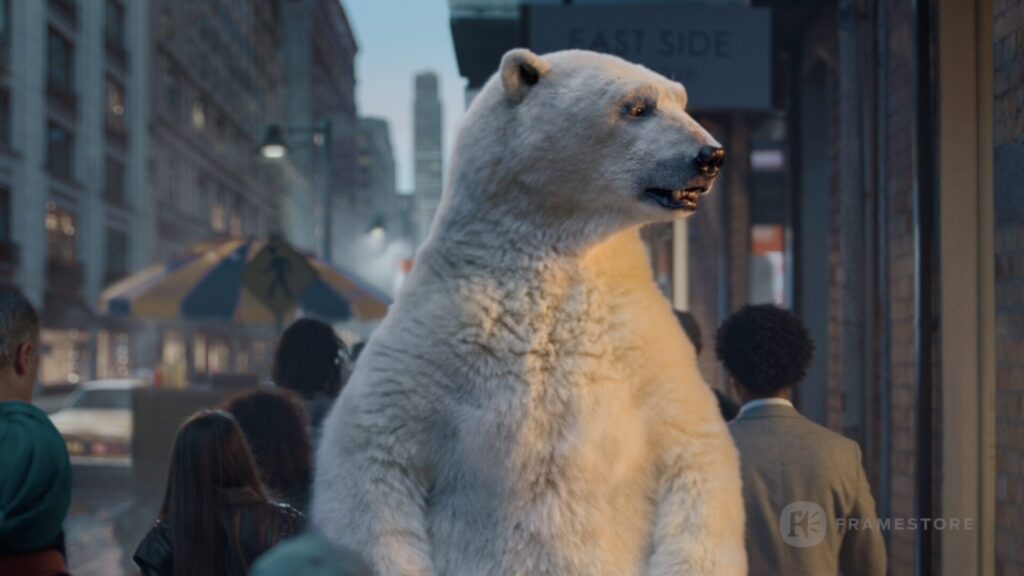
At the center of it all is Framestore’s CG polar bear that feels expressive, relatable, and unmistakably alive. Behind that performance was an intense 11‑week production sprint, powered by a 30‑person global team working across multiple Framestore offices.
Framestore’s Patrick Ross (CG Supervisor), John Montefusco (Head of CG), Lyndsey Saunders (Marketing Director), and Alex Thomas (VFX Supervisor) shared how the team delivered feature‑level creature work on a Super Bowl timeline, using Autodesk to keep character performance front and center.
Creature Work: Framestore’s Bread & Butter
Framestore’s reputation for creature work is well earned. From Paddington to Toothless, the studio has spent years creating emotionally engaging digital characters. For the commercial team, The Choice was a proud accomplishment.
“A lot of our creature work lives in film and episodic,” Patrick Ross, CG Supervisor, explains. “So when a commercial comes along that really demands this level of character detail, it’s exciting.”
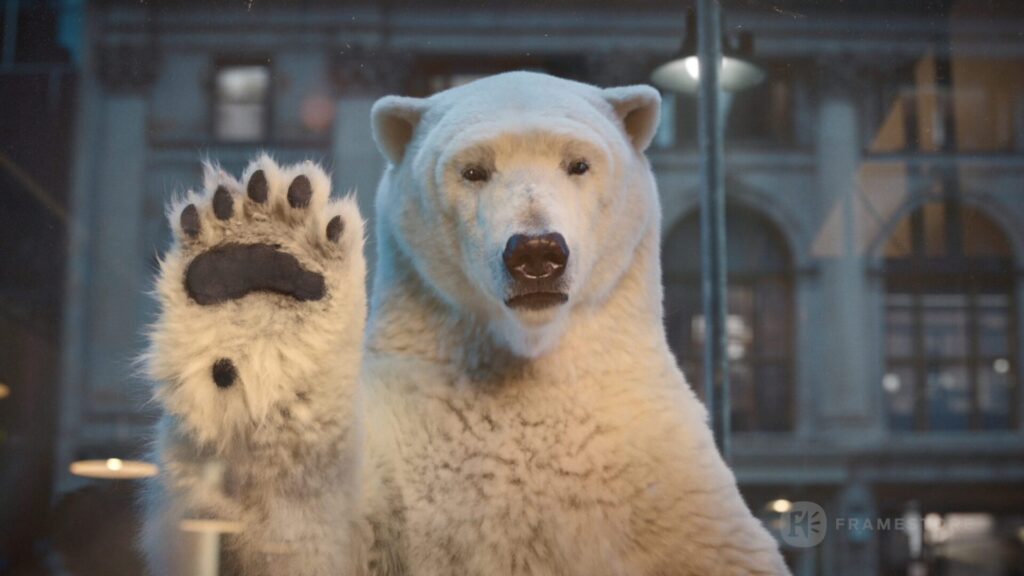
The polar bear’s performance is deliberately restrained. He never speaks, but communicates through posture, timing, and subtle facial cues, exactly the kind of nuanced storytelling Framestore is known for.
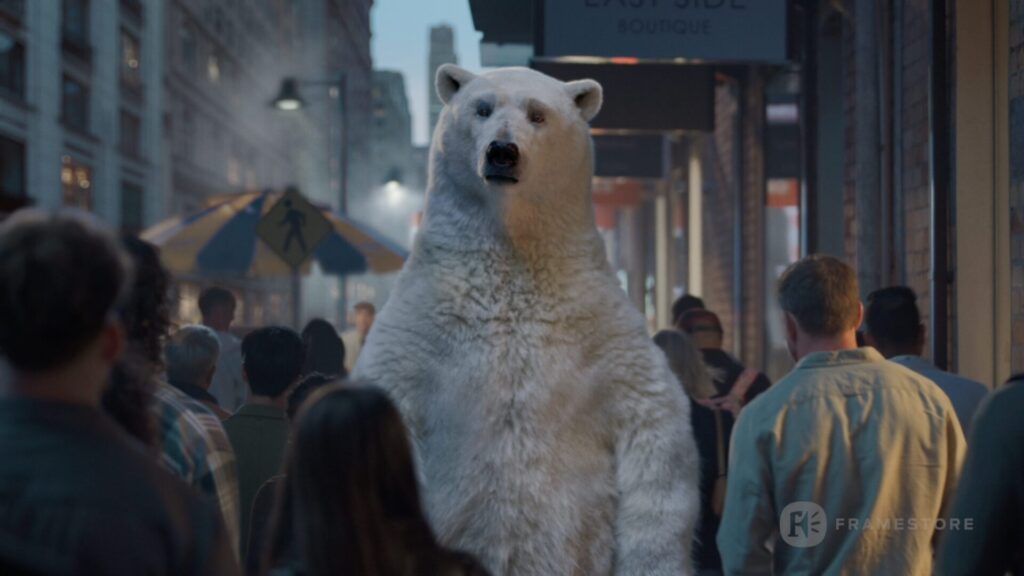
“Our animators were really excited,” John Montefusco, Head of CG, adds. “There was a lot of freedom to play and explore the emotional side of the character.”
There was even a personal angle.
“My parents were die‑hard Pepsi fans, so I grew up in a Pepsi household,” Montefusco jokes. “Helping the bear make that choice was pretty fun.”
Maya: The Home of Character Animation
All of the modeling, rigging, and animation for the polar bear happened in Autodesk Maya, with performance guiding every creative decision.
“Creature animation is always done in Maya for us,” says Montefusco. “That’s been the foundation for decades.”
“When you’re dealing with complex rigs and heavy scenes, reliability and speed really matter,” Ross adds. “You need real‑time feedback.”
Maya’s real-time viewport performance played a key role, allowing animators to refine timing and motion without breaking their creative flow.
“The responsiveness of the viewport is critical for us,” Ross explains. “Being able to make adjustments and see instant, high-fidelity feedback lets animators iterate faster and stay focused on the performance.”
Those tiny refinements, an eye flick, a delayed reach, a subtle shift in weight, are what sell the bear’s internal debate and land the humor.
Flexibility was just as important. Framestore builds extensively on top of Maya, integrating proprietary rigging and animation tools directly into the software.
“We customize a lot,” Montefusco says. “Maya gives us a strong foundation, but being able to build on top of it and tailor it to our pipeline is essential at our scale.”
That mix of robust core tools, responsiveness, and deep customization helped keep animation at the heart of the project.
The Framestore Zoo
To move fast, the team leaned on the Framestore Zoo, a long‑running internal library of creature assets developed over decades.
“It gives us a starting point,” Ross says. “We’ve done polar bears before, so we weren’t starting from zero.”
That head start mattered.
“In total, we had 11 weeks once the project was awarded,” Ross explains. “Roughly six weeks were asset development, and five weeks were execution once the edit was locked.”
Even so, this bear required major reinvention.
“For this spot, the polar bear had to stand upright and do human things,” Ross says. “That alone changes everything.”
The team rebuilt the anatomy for an upright stance, created a new groom from scratch, and designed a rig capable of subtle, expressive facial performance.
“We treated it more like a human character,” Ross explains. “When you stand upright, the weight shifts, the posture relaxes. We had to redo a lot just to make it feel natural.”
When it came time to render, Framestore relied on Autodesk Arnold, the studio’s primary rendering engine for commercials.
“One of the biggest challenges with fur, especially white fur, is noise,” Ross notes. “We use adaptive sampling in Arnold to reduce that noise while keeping render times at a level we can actually live with.”
Collaborating with Taika Waititi
The spot was directed by Taika Waititi, whose signature sense of timing helped shape the tone of The Choice. Waititi also appears in the ad as the polar bear’s therapist.
“You always start with the director’s vision,” Ross says. “There’s a lot of early collaboration around story, tone, and how the performance should feel.”
Framestore supported the shoot with an in‑house virtual production tool, fARsight, that let Waititi and the cinematographer preview the CG polar bear on set in real time. By loading the CAD data from the CG assets created by the post team, they ensured the polar bears had the correct measurements and scale during filming.
“It helped everyone get on the same page early, especially around framing and performance,” Ross says.
Waititi worked hand-in-hand with Framestore’s VFX supervisors throughout the shoot, thoughtfully planning the CG needs for every shot.
“That level of collaboration was invaluable. He was incredibly open to input and made sure the Framestore team had everything we needed,” shares Alex Thomas, VFX Supervisor. “Capturing reference, clean plates, and additional passes was integral to setting the project up for success.”
“Filming in Auckland was an absolute dream,” adds Thomas. “The local production team were total pros, and we wrapped feeling energized, inspired, and excited to make something we knew would turn heads.”
A Truly Global Team Effort
In total, about 30 artists worked on the project, an unusually large crew for a commercial. Teams collaborated across Framestore’s New York, London, and Los Angeles offices, spanning animation, CFX, lighting, compositing, and production.
“It was a big team,” Ross says. “Commercials don’t normally run at this scale.”
That collaboration was supported by Autodesk Flow Production Tracking, which acted as the connective tissue across locations.
“All of our visuals live in Flow Production Tracking,” Ross explains. “Renders, comps, playlists for review, it’s the hub.”
With direct integration into Maya, Flow Production Tracking allowed artists to publish work, track versions, and pull only the data they needed, keeping everyone aligned and reducing friction during the final push.
Forty Years In and Still Full of Pop
The Choice lands as Framestore enters its 40th anniversary, no small feat in an industry defined by constant change.
That longevity comes from staying grounded in core strengths: creature work, collaboration, and human touch.
“This project really reflects what our artists are capable of when they’re given the space to collaborate, experiment, and focus on character,” notes with pride Lyndsey Saunders, Marketing Director at Framestore.
While creature creation remains Framestore’s bread and butter, this Super Bowl spot shows how that expertise continues to evolve, bringing feature‑level artistry into advertising and helping brands create moments that resonate with massive audiences.
The polar bear may only appear on screen for 30 seconds during the game, but the craft behind it reflects four decades of experience and a creative approach built to last.
“This Super Bowl commercial aired to millions, and the feedback has been so positive,” shares Saunders. “People are talking about the human craft behind it, and what our artists, working with the production company and the agency, were able to create. It’s a really nice cultural moment, during one of the biggest cultural moments in the U.S.”