Autodesk Media & Entertainment
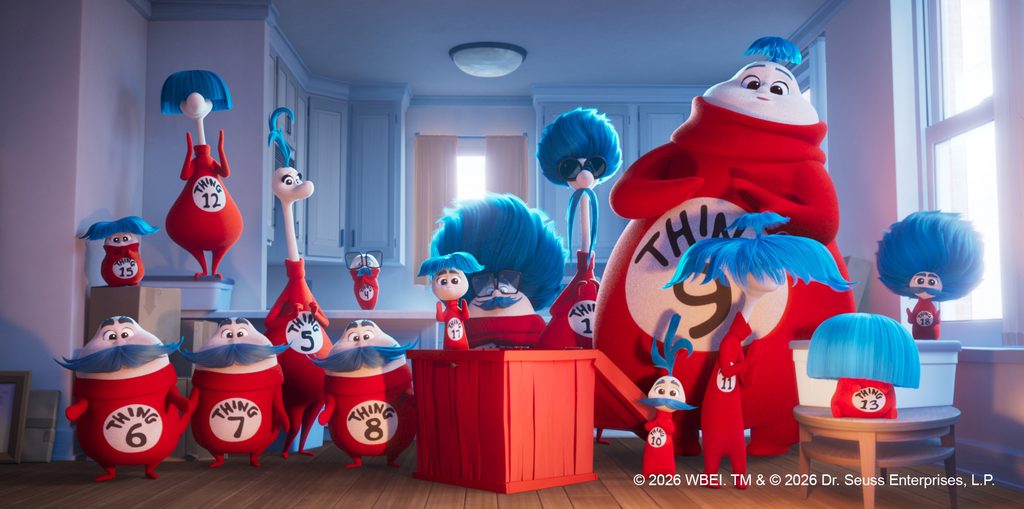
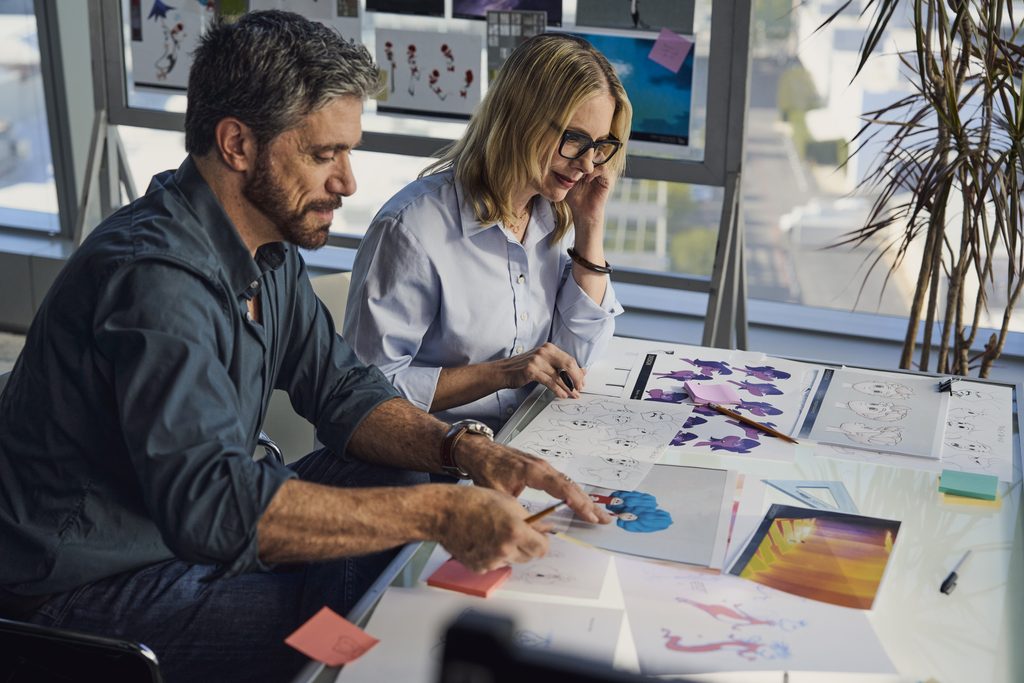
The writer-directors and artists behind Warner Bros. Pictures Animation’s The Cat in the Hat share how they turned a short book into the studio’s first full-length feature film, how they created a look that’s new but still Dr. Seuss, and the role Autodesk played in shaping a new era of animation at the studio.
Our brains love seeing something new. It’s science. That’s why originality is so prized in filmmaking: original storytelling makes for happy audiences. But originality gets harder when the source material is one of the most familiar stories in print. For generations, The Cat in the Hat has been among the first books people read on their own, and nearly everyone has a picture of it in their head. Making it feel new again takes the right team.
Warner Bros. Pictures Animation is shaping its upcoming animated film slate around the idea of reinvention. The studio has committed to artist-driven storytelling without a single house style, promising each film a visual identity of its own. The Cat in the Hat, opening in theaters November 6, demonstrates what becomes possible when the right team is entrusted with a classic and guided by a single goal: reimagine it.
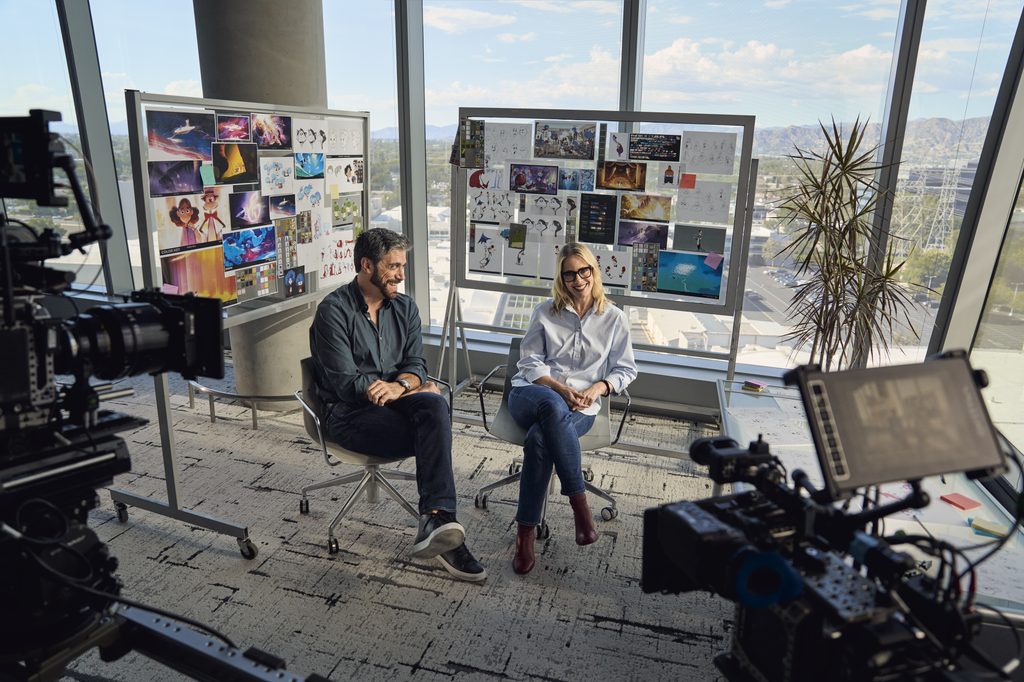
For Autodesk’s new series, Made to Make, we went behind the scenes at Warner Bros. Pictures Animation with chef, entrepreneur, and humanitarian José Andrés to ask the filmmakers and artists how they reinvented The Cat in the Hat.
Making a short book feature-length
The book is set in a house on a rainy afternoon. A feature film was the opportunity to expand that world with more story, more characters, and more places to explore. So the team started with a deceptively simple question. “We’ve asked ourselves, well, what happens after the book ends?” says writer-director Erica Rivinoja. “Where does The Cat in the Hat go when he leaves this house? And that was really the launching question for this movie.”
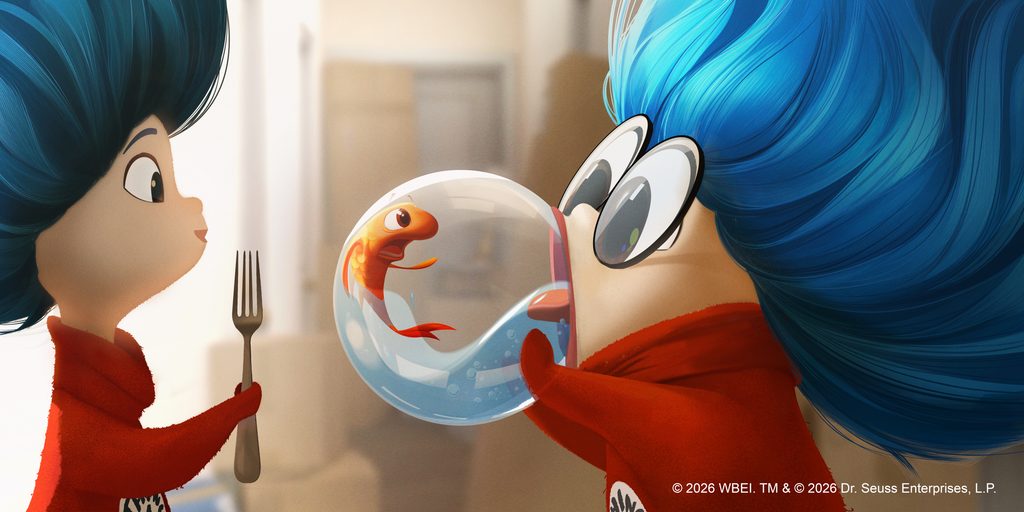
Answering it meant building well beyond the page. Many of the book’s characters are sketched in just a few lines in Dr. Seuss’ signature style, so the team had the fun job of giving them full personalities and story arcs of their own. In the book, the fish mostly complains. In the film, he becomes a full character named Waffles.
Rivinoja and fellow writer-director Alessandro Carloni came up with all of it together. “A lot of people talk about dividing and conquering,” Carloni says. “Erica and I don’t believe in that. It’s fun to do things together and it’s fun to figure out things together.”
Expanding the story also meant poking a little fun at the original. In the book, the children welcome a total stranger into their home. “One thing I really wanted to address in the movie that they didn’t address in the book is how children should act if a crazy stranger comes into your home,” Rivinoja says. “It was fun to have The Cat enter and the children call 911 and pepper spray him.”
Carloni and Rivinoja had no shortage of ideas. That’s the beauty of animation: you can make anything. The catch is that you have to make everything. Every new scene, character, and world had to be built from scratch.
“When Warner Bros. gives you the budget to make a movie, you make something epic,” Carloni says. “Our job is to come up with something absurd, entertaining, and crazy, and then discover we can make it happen.”
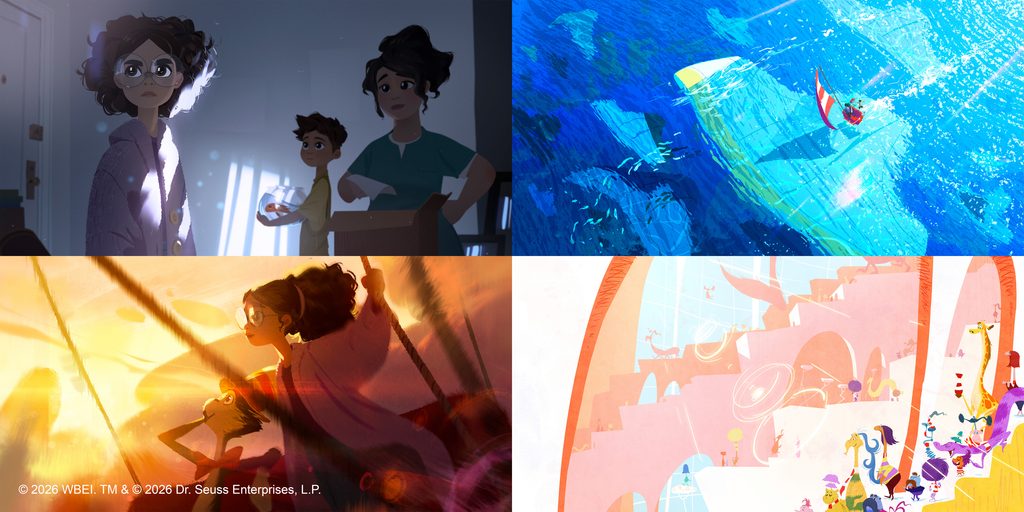
Designing a look that’s new but still Seuss
Committing to a unique visual style is one thing. Building it is another. It starts with the most basic choices a designer makes: which colors to use, and how every line is drawn.
Production designer Aidan Sugano says animation gives filmmakers far more control over those choices than live action does. “Live action is prose. Animation is poetry,” he says. “You can basically design anything you want to reinforce the story.”
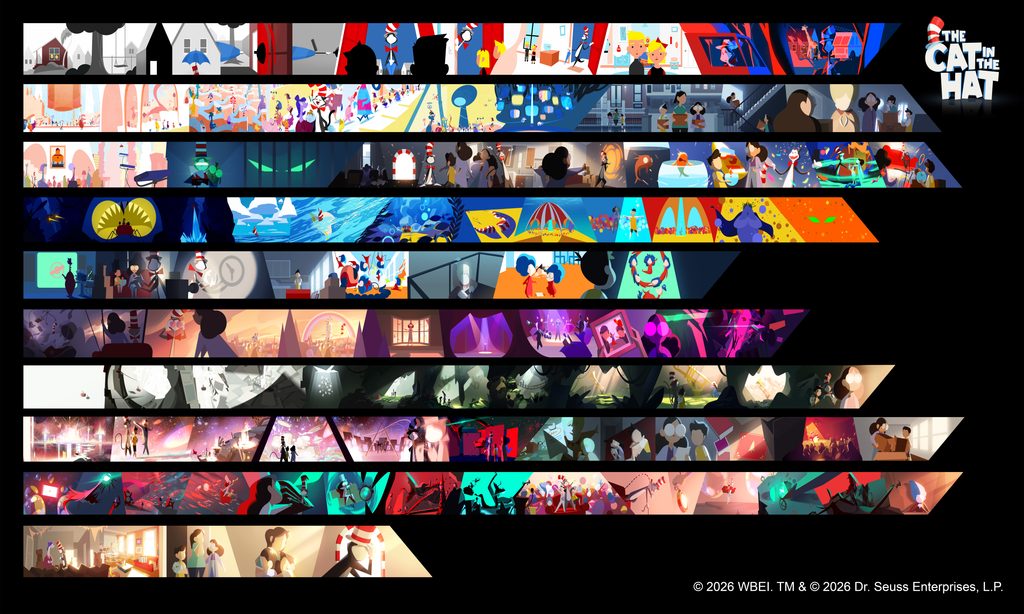
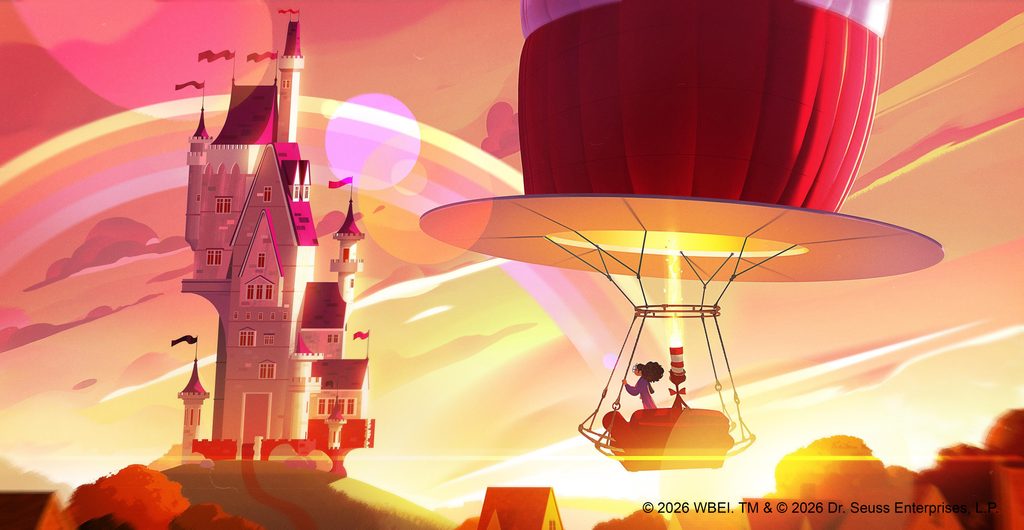
The directors wanted three distinct kinds of worlds. There’s the real world, which looks like an ordinary day. There’s the Seuss world, a celebration of books many people hold close. And there are three box worlds, each embodying one of the film’s characters. Each has its own visual language, and none feels borrowed from another. That’s the no-house-style promise in practice.
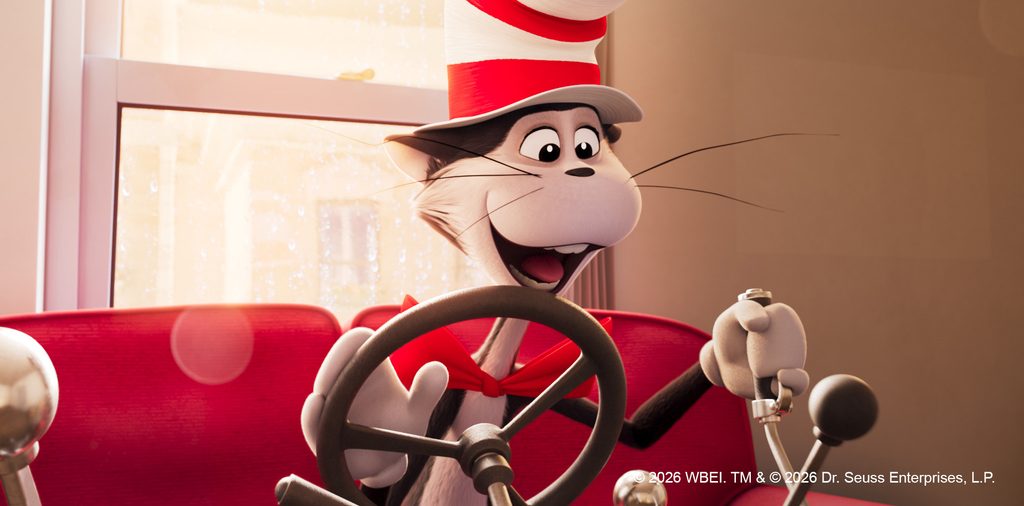
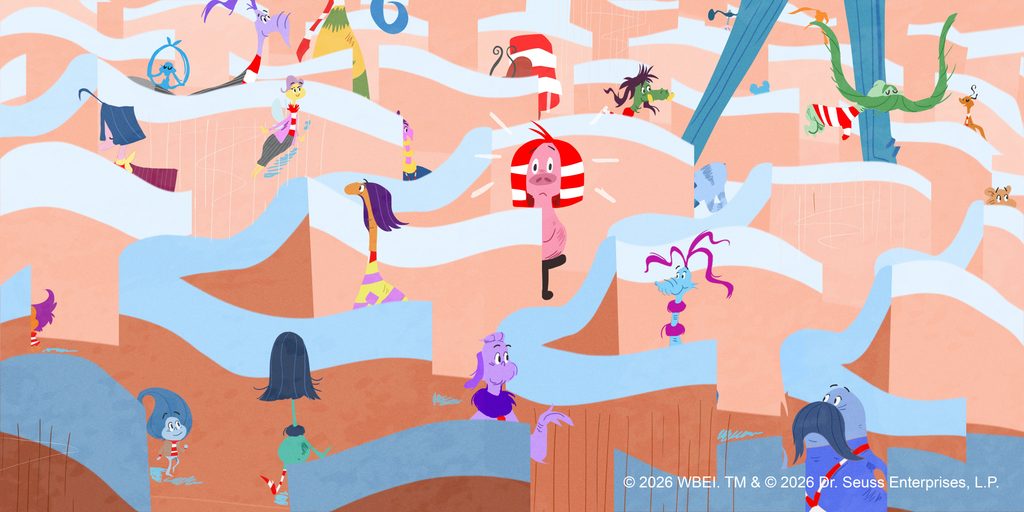
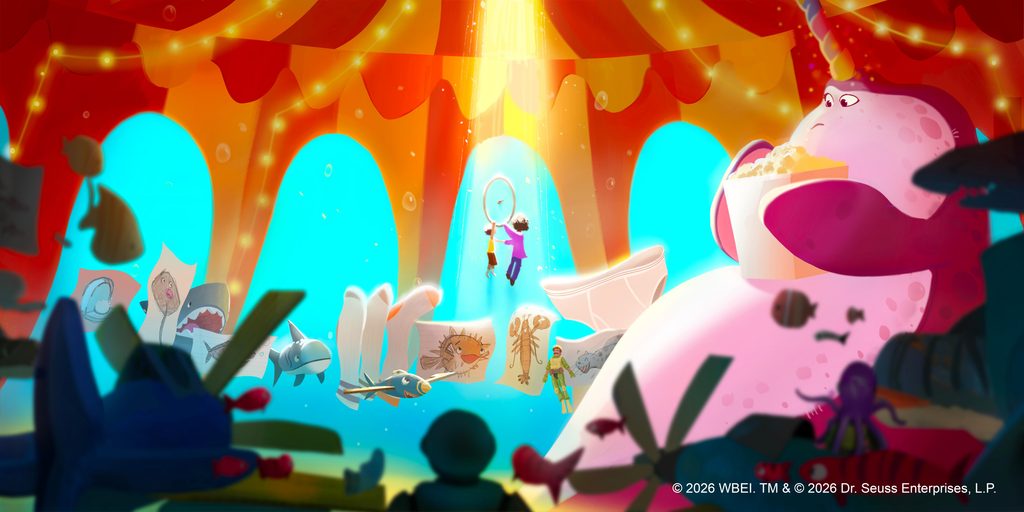
Sugano’s designs are what made it possible. He drew hundreds of characters and the many corners of each world, and the results are striking. Every one of them had to walk a fine line.
“We had to give permission to honor the source material, but also reinvent it,” Carloni says. The question underneath every design was how to make something new without losing the respect owed to Dr. Seuss. “We had to really make sure that we did justice to this thing that is so beloved across the world,” Sugano adds.
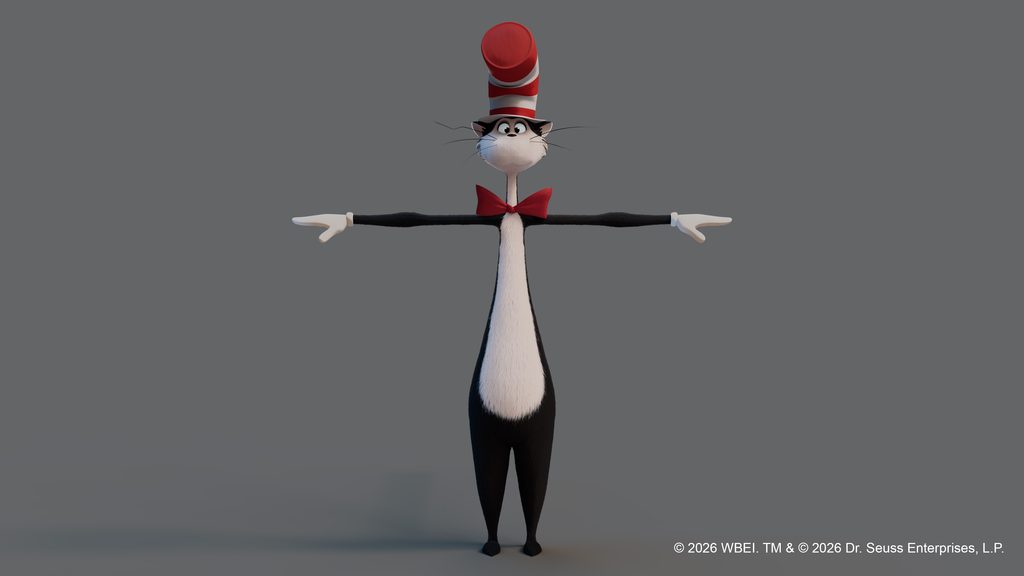
When you’re taking a beloved book to the big screen, the tools have to be up to it. The team used Autodesk Maya to turn Sugano’s drawings into 3D models, working with Matt Waters, visual effects supervisor at DNEG.
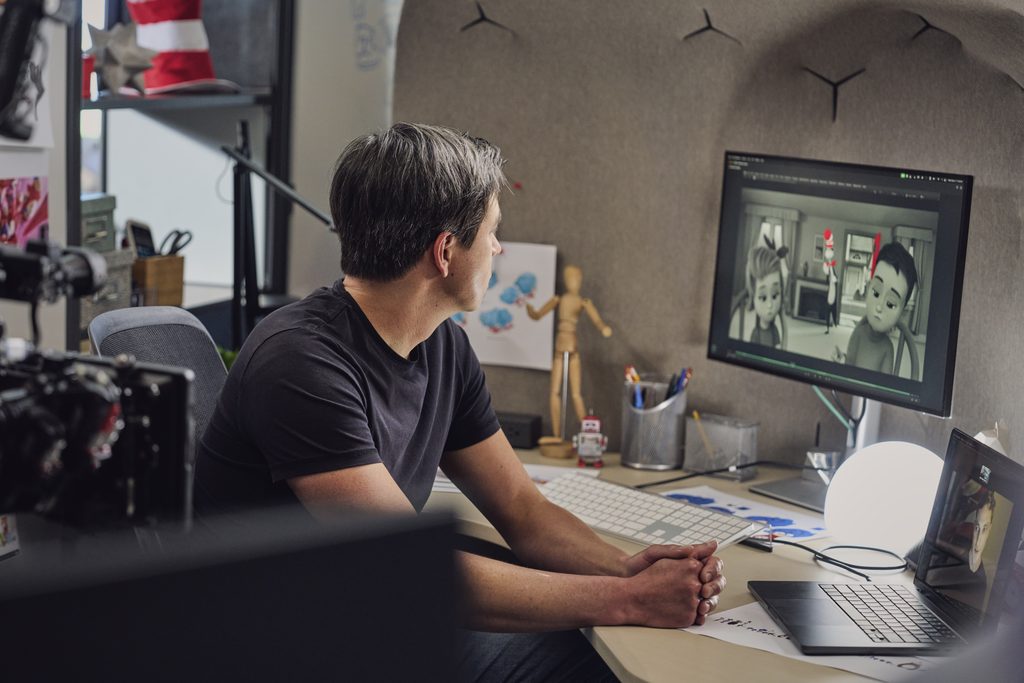
“Maya is the hub of our pipeline,” Waters says. “We need to make sure Aidan’s designs can be created in Maya to actually have it be produced on the big screen.” Everything in the film, from characters to props to entire worlds, is built in Maya.
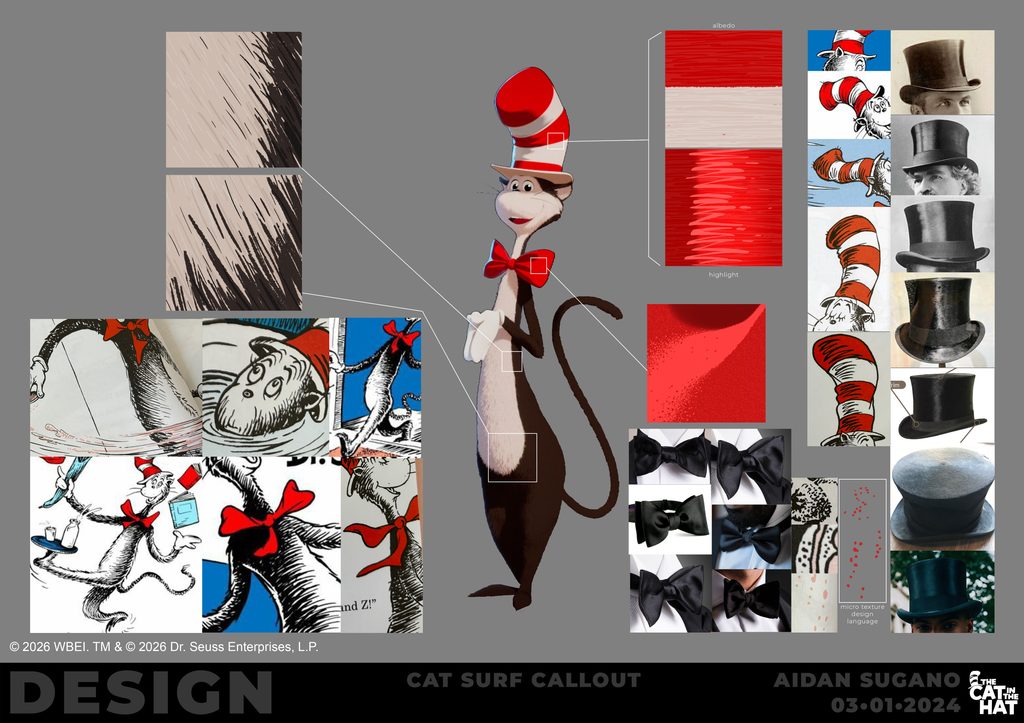
Making sure those drawings came through faithfully in Maya meant reviewing the work closely and often, and the team did it in RV inside Autodesk Flow Production Tracking. With Sugano based in New York and Waters based in London, remote collaboration was key. “RV allows us to each be in our own remote locations,” Waters says. “We’ll be looking at the same content, so we can feel confident that we’re talking about the same thing.”
For Sugano, that back-and-forth in Maya and RV in Flow Production Tracking was a highlight. “It was super cool to see how we could push and pull and break things, and how quickly we could iterate on top of it,” he says.
Animating a performance worthy of the hat
The Cat’s performance had to earn the name as much as his look did. That responsibility fell to the animation department, and to thousands of creative decisions made in Maya.
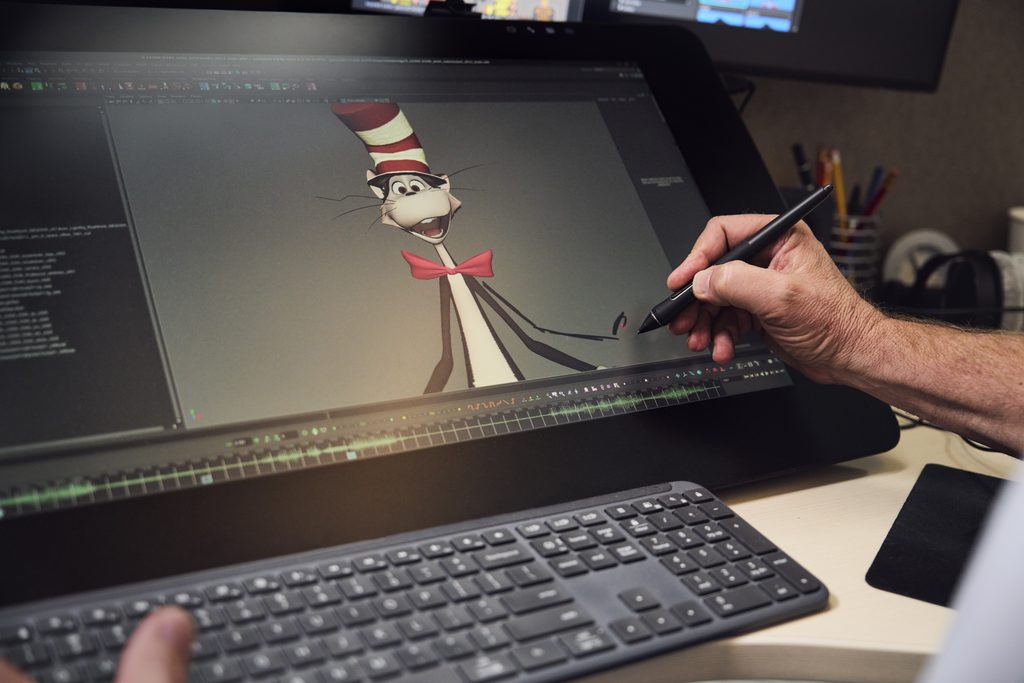
Animator Marek Kochout started by filming himself acting out a shot. The video isn’t animation, just a way to think. He studied it to figure out how The Cat might move, then built every choice himself in Maya.
“Maya’s essential,” he says. “I have no other way of touching these characters other than through Maya. It’s my portal into the marionette.”
Much of that control lives in the Maya Graph Editor, where every movement is a curve Kochout can shape by hand. On a character this expressive, that means hundreds of curves layered on top of each other.
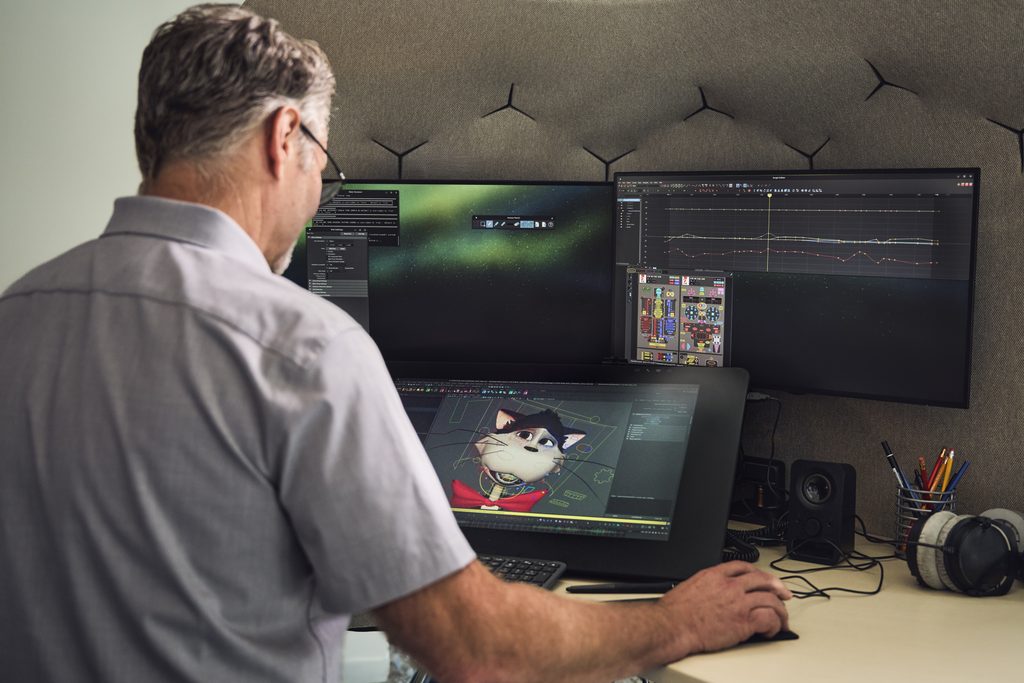
Once an animator has built a few poses, they can save them to the Maya Pose Library and reuse pieces later. When The Cat’s eyes needed more sparkle, Kochout could pull a pose from the library, apply it, and refine from there. That saved time on the basics and left more time for nuance.
Over time, the library became something bigger: a shared guide to the character. “When animators like Marek did a scene that truly represented who The Cat is, we’d add it to the library so it becomes something every animator could open up,” Carloni explains. “An expression, a pose, an attitude. It becomes a reference for how The Cat would move.”
Carloni loves that every animator on the film works a little differently. Some animate from the side, some from overhead, some from the camera view. “As I go around as director to look at all the shots, every animator has a completely different screen,” he says. “It’s mind-bending how each person chooses a different way to work.”
Keeping The Cat on track and in the bag
The Cat in the Hat was made across four countries. “We had teams in multiple cities in India. We have a big team in Montreal, in Canada, and of course a big hub of our core team in London,” reveals Carloni from Warner Bros. Pictures Animation’s Los Angeles office, where a large share of the team is based.
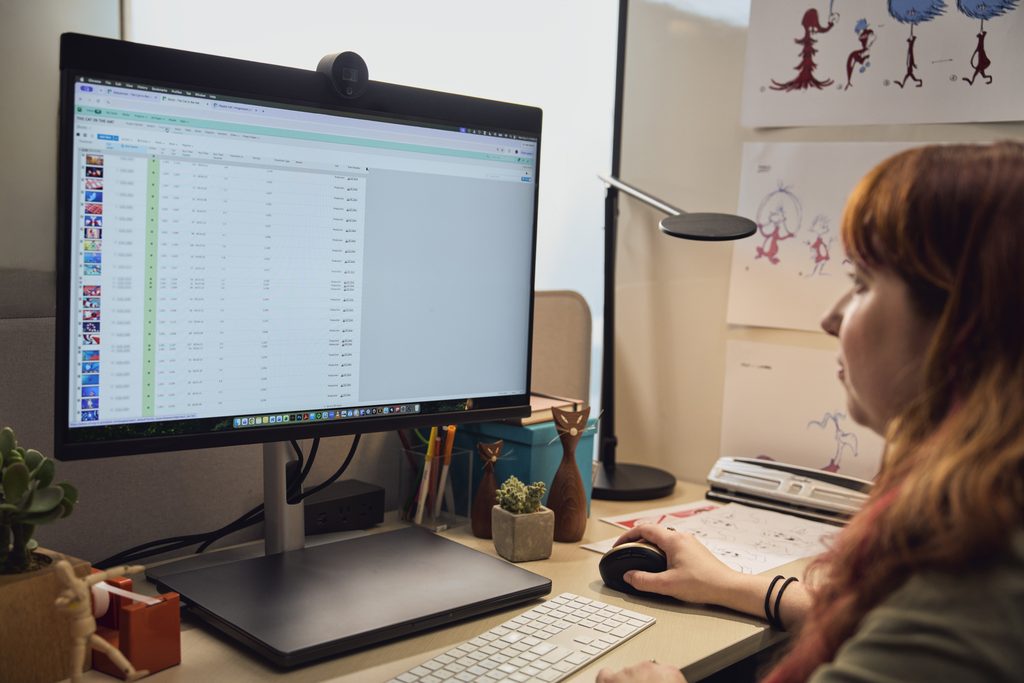
Jessica Killam, central production supervisor, oversaw the production’s departments, using Flow Production Tracking to track the whole movie, from boards to layout, animation, lighting, and final compositing. That covered every character, environment, and prop, plus every version of each one, across two years of production, which is a tight timeline for an animated feature.
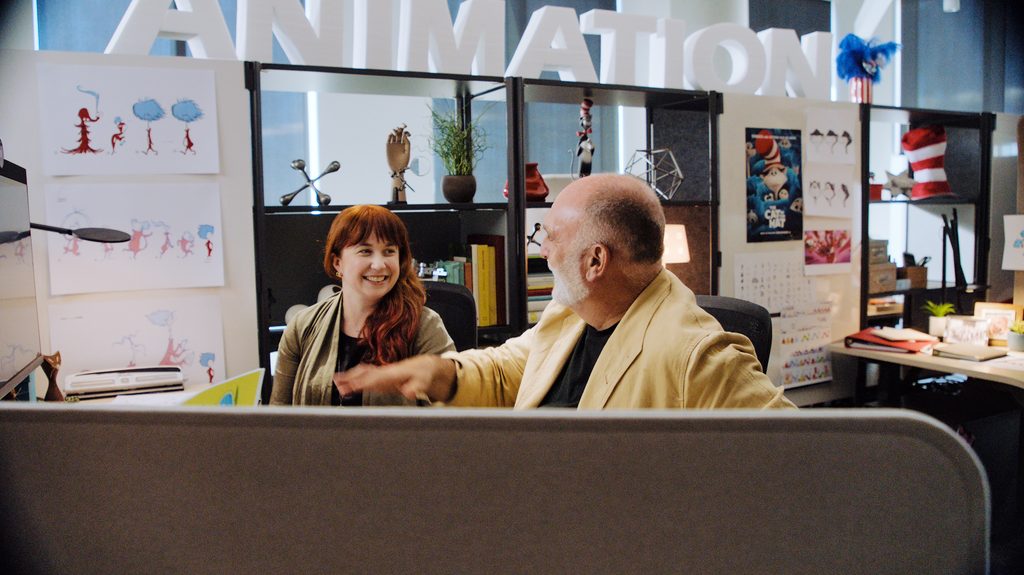
Most of her job, she says, is following the notes and understanding how one department’s work affects the next. “So if a change is made in animation, how does that affect lighting and layout and all these various departments and people?” she says.
With hundreds of people on the crew, even a small idea travels a long way. Carloni says if Rivinoja and himself dreamed up a quick, funny bit involving something as simple as a scarf, that scarf then had to be designed, modeled, animated, and lit, and one silly moment could end up in the hands of dozens. Flow Production Tracking is how an idea like that made it from the writers’ room to the screen without anyone losing track of it.
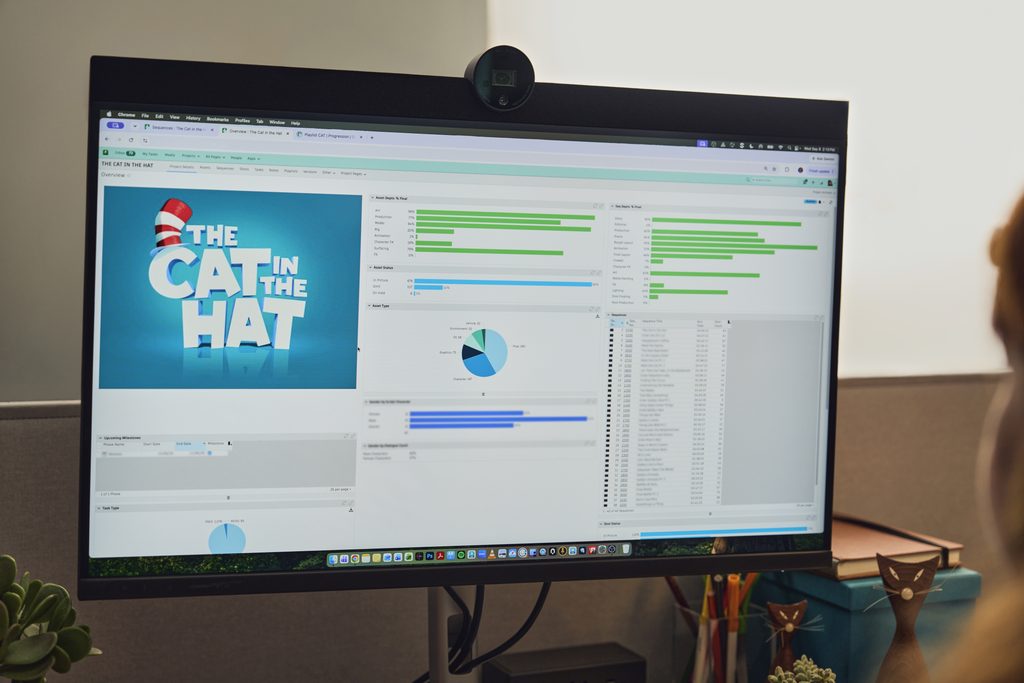
When it was time to show the film to executives, crew, or outside partners like Autodesk, the team used PIX, now part of Autodesk Flow Capture. “We’ll send the film to them through PIX, which is another program that we use to share our media with various people,” Killam says.
Forensic and visual watermarketing, digital rights management (DRM), and access control in PIX also meant The Cat never got out of the bag early.
Closing one book, and opening many more
When Warner Bros. Pictures Animation finally locked their first full-length feature film, they loved what they had. “It was really important to both of us that we made sure to make a film and characters that we love and enjoy,” Rivinoja says. “And we did it.”
Getting there took a lot of imagination and the right tools. Maya gave the artists a place to bring designs to the big screen. Flow Production Tracking and RV kept hundreds of people working from the same page, and PIX kept it all under wraps until it was ready. Carloni puts it simply: “This movie would not exist without the tools we had.”
The Cat in the Hat is one of several animated films Warner Bros. Pictures Animation has announced, and Autodesk technology is helping power the studio’s reinvention of animation. We got a glimpse of what’s next while we were in their LA office. Concept art covered the walls and filled the hallways, with new looks being designed and classic stories being stretched in new directions. The joy and creativity that went into The Cat in the Hat were everywhere we looked. If this is the energy behind the rest of the slate, audiences are in for a wonderful few years.
See The Cat in the Hat only in theaters November 6.