 Autodesk Media & Entertainment
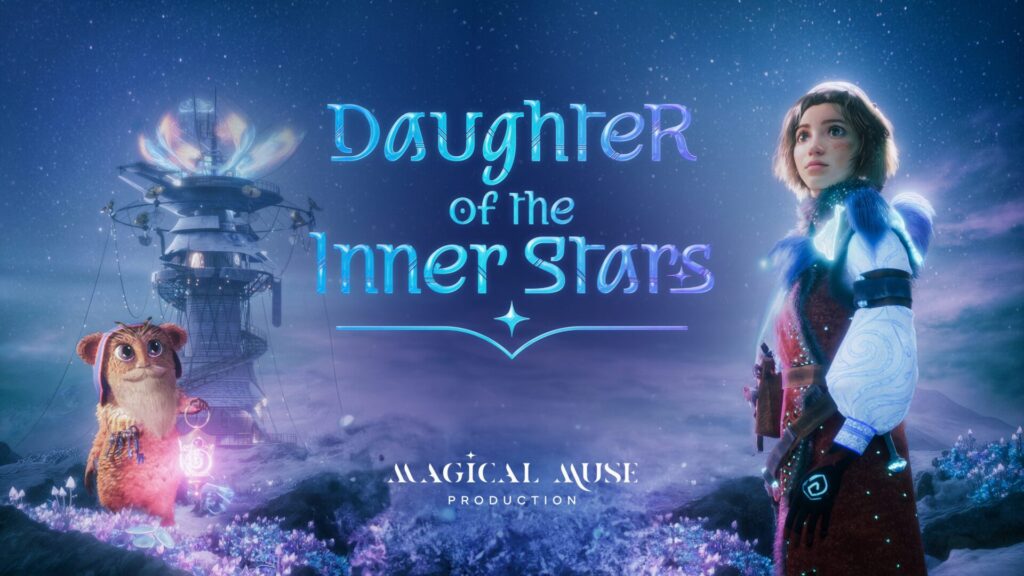
Daughter of the Inner Stars is a 50-minute symphonic orchestral experience that blends live narration, original animation, and Nicholas Buc’s cinematic score into a richly imagined family adventure. Built from the ground up, its visual world spans mythical characters, fantastical spacecraft, and wild architecture on even wilder planets. The saga follows Fia, a courageous young girl searching for her lost father, Burto, amid a cosmic war. Along the way, she encounters ancient spirits forgotten by her culture and uncovers deeper truths about folklore, animism, grief, and kinship.
The show premiered with the Sydney Symphony Orchestra at the Sydney Opera House in 2024, then made its North American debut with the Vancouver Symphony Orchestra in 2025. The creative team included writer and director James Vinson; composer Nicholas Buc; producer Melanie Hiluta; and production designer Nathan Su.
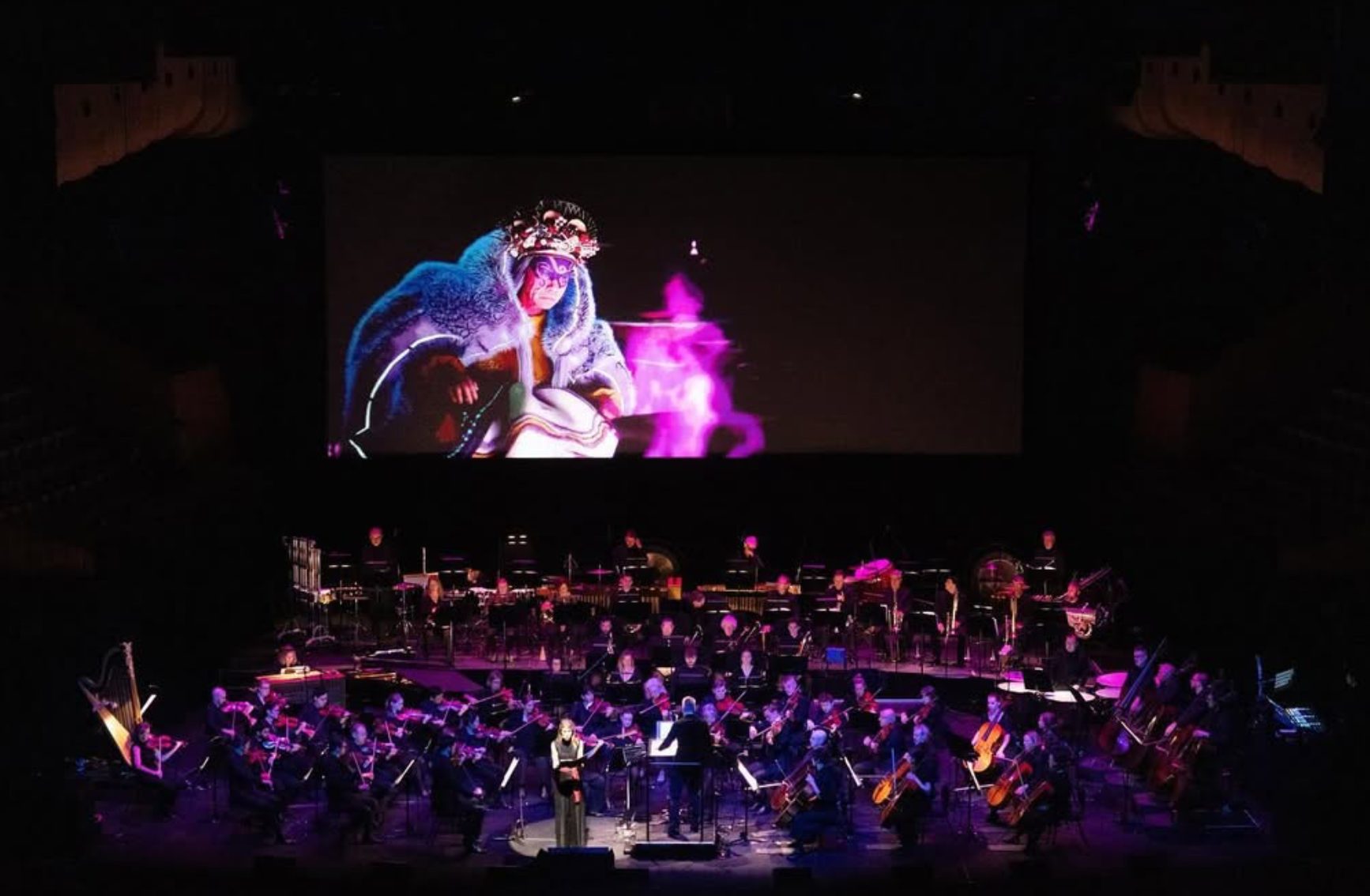
Vinson describes Daughter of the Inner Stars as a continuous orchestral journey, performed with live narration and film. Rather than relying on traditional sound design, the entire soundscape is created by the orchestra, while the narrator guides audiences through the story and gives voice to the characters onscreen.
In practical terms, Vinson said, the project became a 50-minute animated film. The team used non-generated assets, including handmade props, characters, and environments, while relying on Autodesk Flow Studio to help translate footage of real performers into animation data that could drive the characters.
“I delivered scripts. I delivered storyboards, which were all hand-drawn and painstakingly put together,” Vinson said. “I think there were about 200 boards or something like that, maybe more. And critically, I provided directorial guidance over all major aspects of the creative department. So, music, visual effects, environments, cinematography, and motion capture performance, where a lot of my experience working with real actors of flesh and blood became surprisingly relevant.”
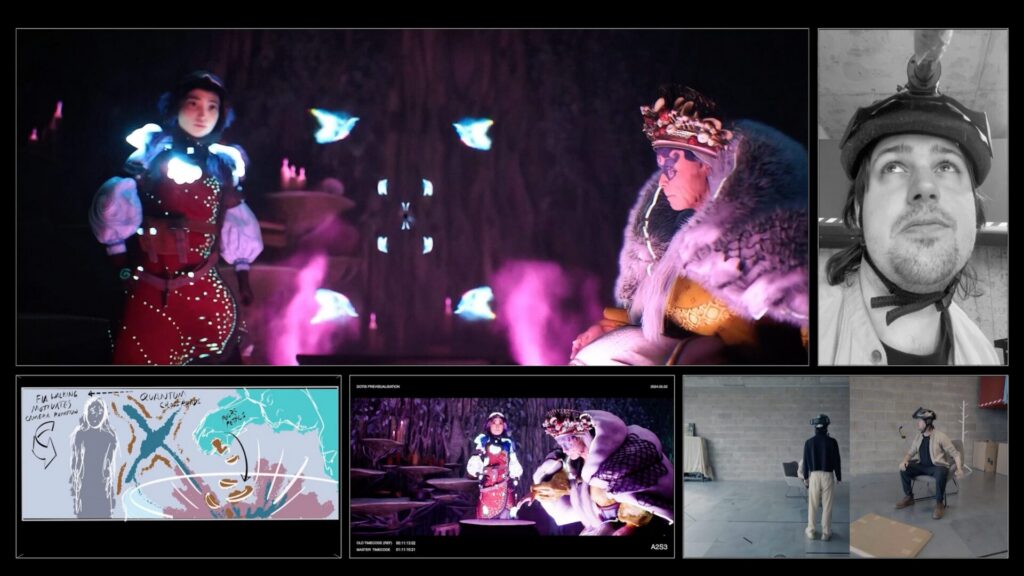
Illustration as storytelling
Before Inferstudio joined the project, Daughter of the Inner Stars began as a piece of music written for symphonic orchestra. Buc and Hiluta approached Su with the idea of building a story around the score, originally envisioned as a series of static illustrations accompanied by live narration.
Su brings an architectural background to his work in production design, having trained in Melbourne and London. He is also the co-founder of Inferstudio, a London-based world-building practice that explores environmental and social change through speculative fiction and what the studio calls “investigative design.”
Inferstudio operates with a small core team and, depending on the project, collaborates with 3D artists and software developers while staying closely involved in the hands-on creative process.
Su’s role initially focused on shaping the environments, worlds, and overall look and feel alongside Vinson as he developed the story structure and drafted the script. At the same time, Vinson and Hiluta worked with Ukrainian concept art and illustration studio Tubik to define the character art. At this stage, the project was conceived much like a picture book brought to the concert stage, serving as a visual backdrop for the music.
Adapting 2D sketches for an emerging 3D world
As the project developed, Vinson began to see the possibility of pushing the visual language further. He had recently worked with Su on a visual effects project and became interested in exploring whether the world of Daughter of the Inner Stars could be built in 3D while still honoring the stillness and composition of illustrated storybook tableaus. The producers were initially cautious, but they agreed to let Su and Inferstudio create a one-minute prototype sequence to test what the concept might look like in 3D.
In its earliest form, Daughter of the Inner Stars was still rooted in the language of a picture book. The team planned to use 2D character cutouts with minimal animation, moving between illustrated tableaus through long, roaming tracking shots. At that stage, Autodesk Flow Studio had not yet entered the process.
“When James originally pitched Daughter of the Inner Stars to us as this chance to build a world from scratch, we were really hooked,” Su said. “But at the same time, it terrified us completely because it was well beyond the scope of anything we’d previously done. It was way longer than anything we’d previously done. And our expertise was really in environments more so than in characters.”
From tableaus to motion capture
By the time the team began thinking seriously about how to film the characters, they had already established a rich and fully developed world around them. During that period, Su and the team began testing ways to translate Tubik Studio’s illustrations into 3D.
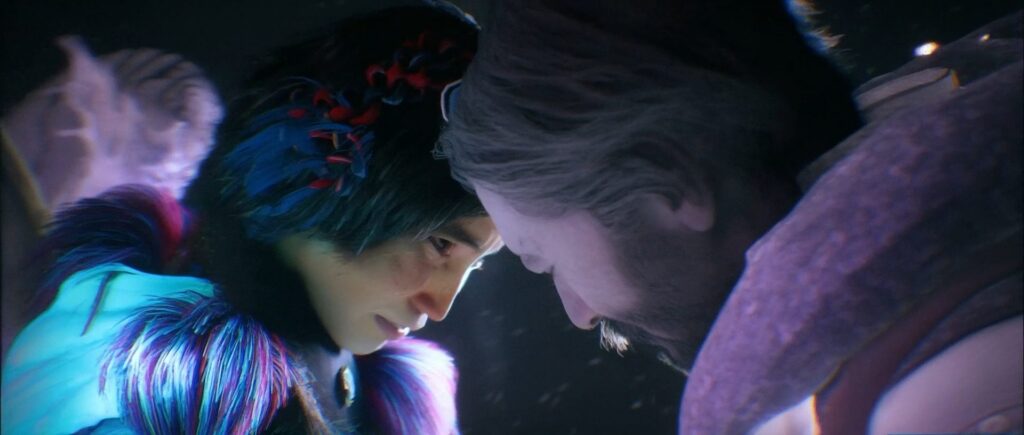
To explore that process, they brought on character artist Ludvig Holmen, a longtime collaborator, to sculpt the characters as full 3D meshes. These early tests helped the team understand which qualities from the original illustrations carried over successfully, and which elements needed to be reinterpreted for the new format.
As the team continued to define creature designs, environments, and character rigs, new technology began to redefine what seemed possible. Autodesk Flow Studio was emerging as a platform for AI-powered motion capture and character animation, while MetaHuman Animator opened new possibilities for facial performance capture.
The team began experimenting by placing one of its characters into a stock animation and sharing the result with Vinson. What started as an exploratory test quickly expanded the project’s ambition.
Over the next 18 months, Su said he sometimes wondered whether the team had opened a creative Pandora’s box. The early 3D tests had dramatically increased the project’s scope. When Vinson saw the test, he asked Su and the team to seriously explore whether fully animated sequences might be possible. At that point, they were only 18 months away from the premiere at the Sydney Opera House, so the team quickly shifted into research and development to determine whether a motion capture pipeline could work.
In one of their earliest tests, Holmen performed a simple range-of-motion study that the team captured on a phone. They uploaded the footage into Flow Studio to see whether the resulting character animation might be usable within the film.
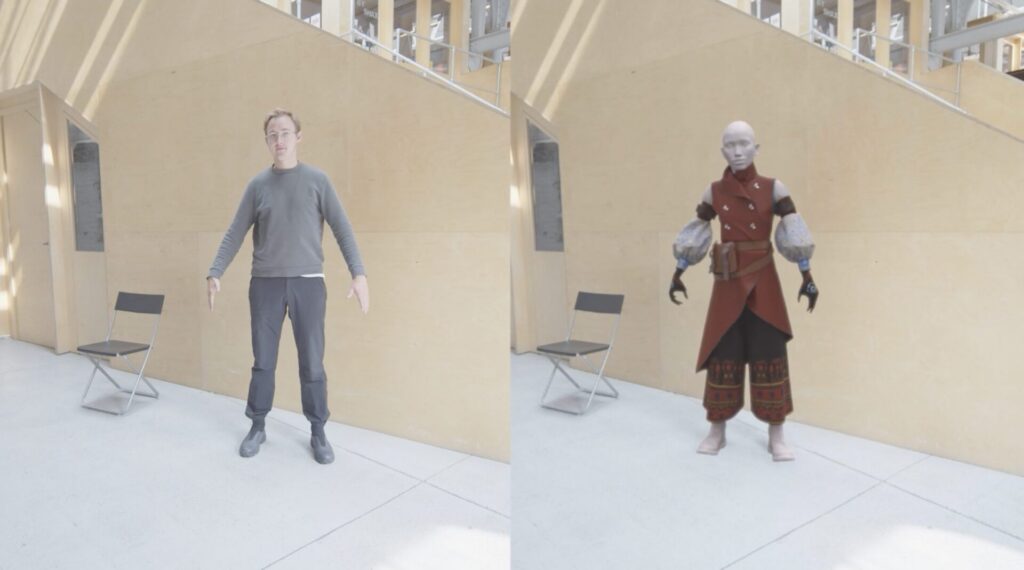
Flow Studio offers a web-based workflow for turning live-action performances into 3D character animation. Creators can upload video footage alongside a custom 3D character, use AI-powered motion capture to translate the performer’s movements onto the character, preview the result within the original live-action scene, and export the motion capture data into tools like Autodesk Maya or Unreal Engine for further refinement.
That early test, created in 2023, featured an unfinished version of Fia before she had her final face or hair. Even in that rough form, Flow Studio was able to composite the character back into the scene and translate Holmen’s performance into her movements with surprising accuracy. For the team, the test offered the first real indication that fully animated sequences might be within reach.
New technology, new opportunities
Watching those results, Su and Vinson began to see a possible path forward, committing to using Flow Studio as a solution for creating fully animated 3D content that would otherwise have been out of reach.
They knew the animation would require cleanup and additional work, but the test opened the door to a full motion capture workflow. By this stage, the project had evolved into 3D, but without a viable mocap solution, the characters may have remained posed in largely static tableaux rather than fully animated. With Flow Studio, the team was able to bring performers into the process and expand the production around performance-driven animation.
That transition also brought Animation Technical Director Nour Hassoun into a central role in the production. Hassoun worked with the motion capture data generated through Flow Studio, interpreting and refining it as it moved through the animation pipeline and helping shape the quality and character of the final animation.
In parallel, the team tested facial animation in Unreal Engine and MetaHuman Animator, exploring how those tools could be combined with Flow Studio’s body-tracking workflow. They also tested different render styles, frame rates, and texturing techniques to see how the animation could be shaped to fit the project’s storybook-inspired aesthetic.
Even as the team pushed the project into technically new territory, Su said that using real performers kept the production grounded in an analog approach. Thinking about the shoot in practical, performance-driven terms helped the team focus on the details that mattered most and, ultimately, made the most emotional sense for the story.
Because the project began from such an emotional foundation, with storyboards shaped by the music and shots designed around how characters related to one another, the team’s priority was not technical perfection for its own sake. Instead, they focused on what would create the strongest emotional impact. That approach helped clarify the project’s creative priorities and define what the team was ultimately trying to achieve.
“And when we were transitioning into the Flow Studio shoot, we had a real understanding of what was truly important,” Vinson said. “And suddenly a core pillar of my directing practice became relevant, which is my work in theater and stage.”