 Autodesk Media & Entertainment
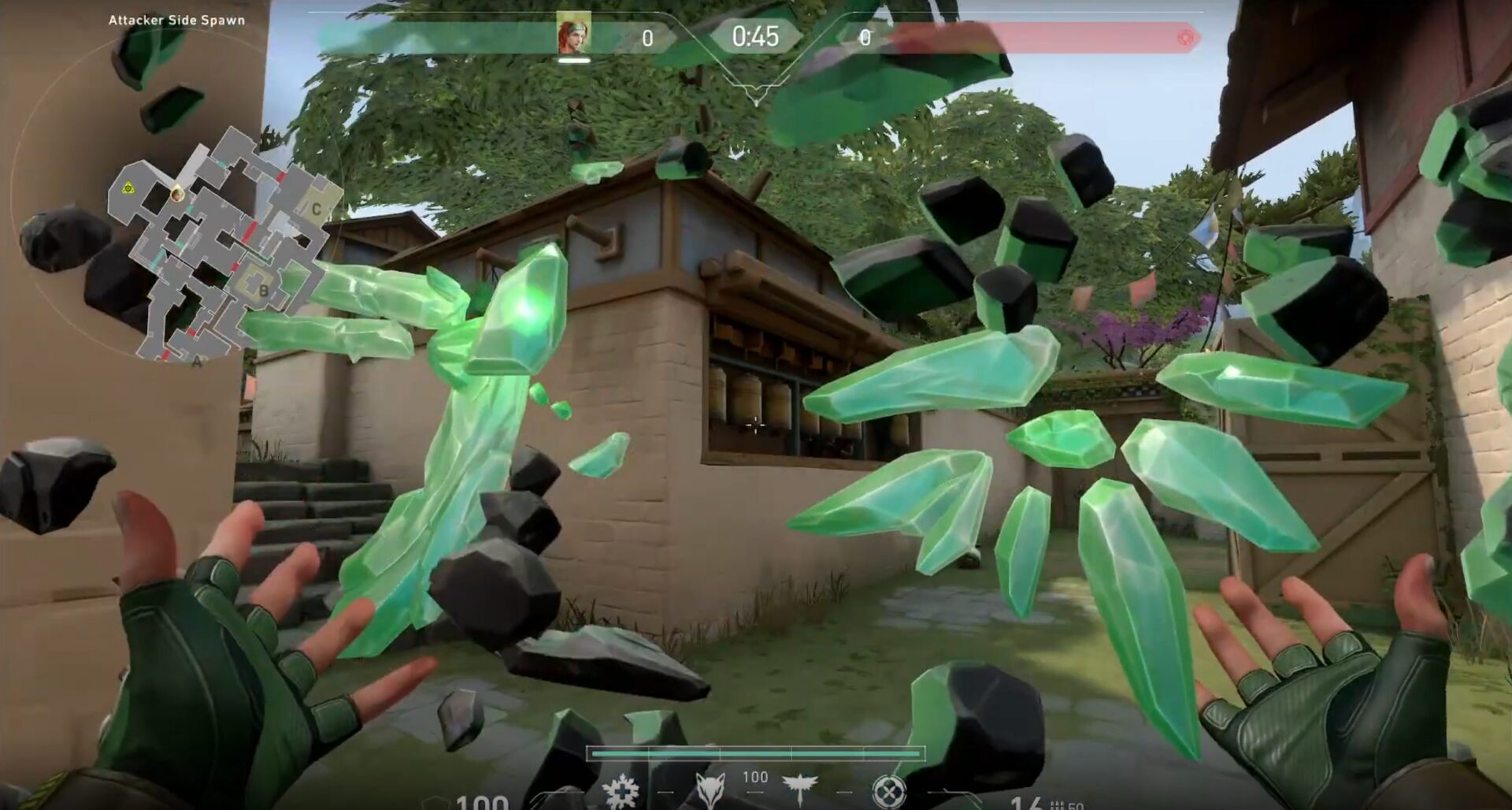
In VALORANT, Riot Games’ award-winning five-on-five tactical shooter, weapons might range from realistic models to a dragon that spits out its magazine. But no matter how imaginative the design becomes, players still need to recognize what the weapon is doing and when it’s ready to fire.
That balance between fantasy and gameplay shapes the work of Riot Games’ animation team. For Senior Animator Brendan Russert, who has spent five years at Riot working across character animation and premium content, animated weapon skins offer a particularly creative challenge: making each design feel distinctive without changing the gameplay cues players depend on.
At SIGGRAPH 2026, Brendan took the stage as part of Autodesk’s Vision Series to share a behind-the-scenes look at animating VALORANT’s weapon skins. Read on for highlights from the session, or watch the full recording to see the animations in action.
Keeping weapon animations consistent
According to Russert, the team works around five core weapon actions: equip, fast equip, fire, reload, and inspect. Individual weapons introduce variations—a shotgun reload, for example, depends on how many shells are needed—but equip times, firing rates, and reload timing must remain consistent with gameplay. VALORANT’s first person animation is animated at 60 frames per second (FPS), giving animators a precise framework in which to explore different designs.
A rifle reload illustrates the constraint. Russert describes three important beats: the magazine comes out, the ammunition resets, and the weapon returns to a fireable state. A dragon-inspired skin can express those beats through an entirely different performance, but the critical timing still needs to be clear.
Russert notes that an early dragon animation did not communicate its final ready-to-fire moment as distinctly as the team would aim for today. The lesson was not to pull back on fantasy; it was to make the gameplay information easier to read within the fantasy.
How animation shapes the feel of gameplay
Timing affects more than weapon readiness. It can also shape a player’s sense of speed, even when the character’s actual movement speed does not change.
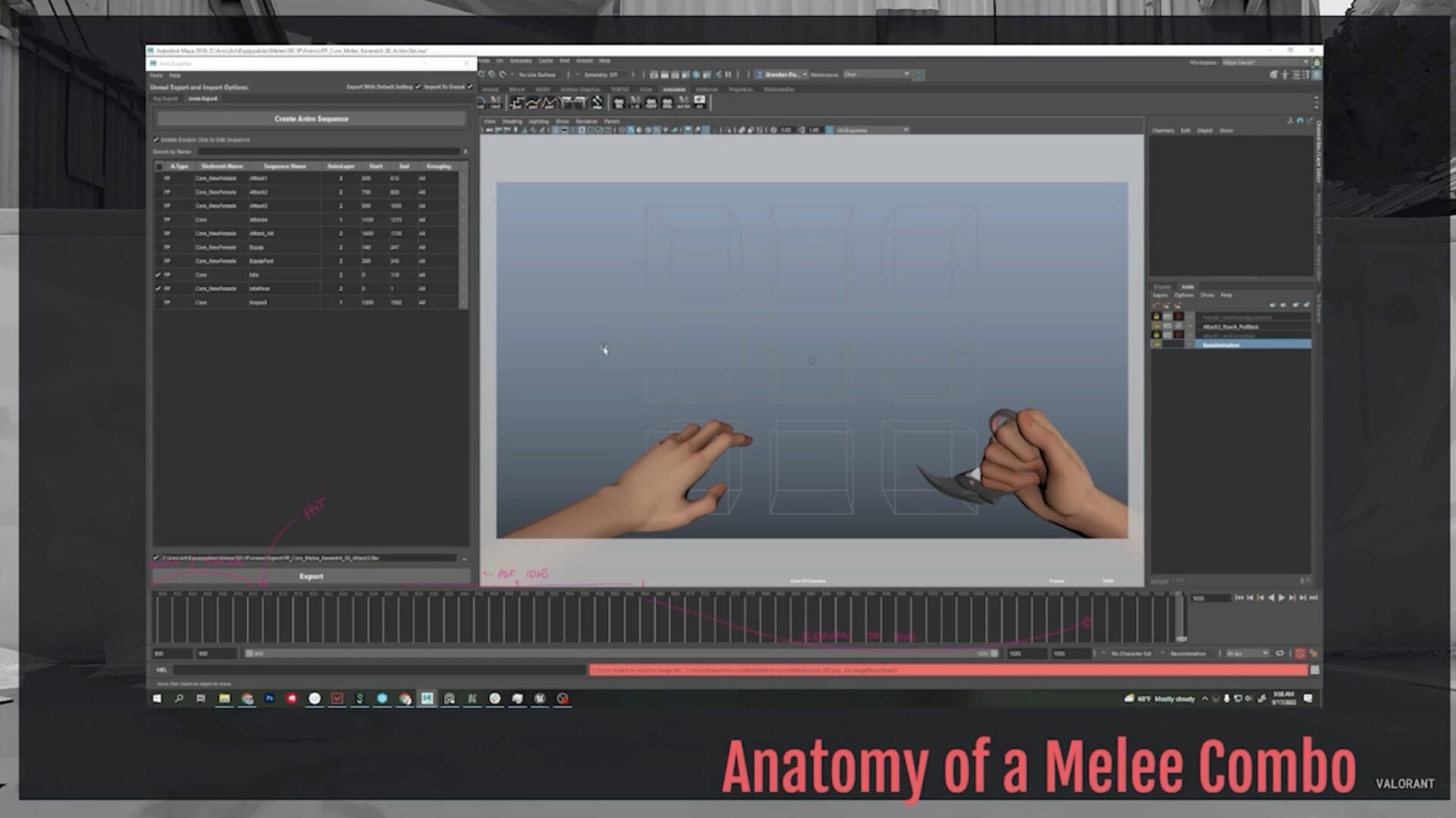
In VALORANT, equipping a melee weapon lets a player run faster. The animation that accompanies it helps establish how that movement feels. For many knives and one-handed swords, the team uses a default base run cycle. More unusual weapons, however, can invite a different approach.
While exploring a sword that would stay sheathed during a run and emerge when the player stopped, Russert shortened each running step by two frames. Playtesters responded enthusiastically. Another animator tried adding three frames per step to the run cycle of a large hammer to emphasize its weight. Players felt slower and less powerful, despite moving at the same in-game speed.
“The character still moves at the same speed,” Russert explains. “So, it’s really just an illusion.” The examples show how a few frames can change a weapon’s personality—and the player’s experience of using it.
Working in Maya, from first idea to finished movement
That balance between a consistent foundation and expressive detail shapes how Russert works in Maya. The challenge is not simply to animate an appealing object; it is to find motion that reads immediately in first person, hits the required gameplay beats, and still feels unique. Russert describes testing ideas against the style of VALORANT, which favors sharp movements and brief settling actions. For one small animated octopus, he used a quick transitional pose followed by settling frames to communicate the opening of its tentacles in only ten frames.
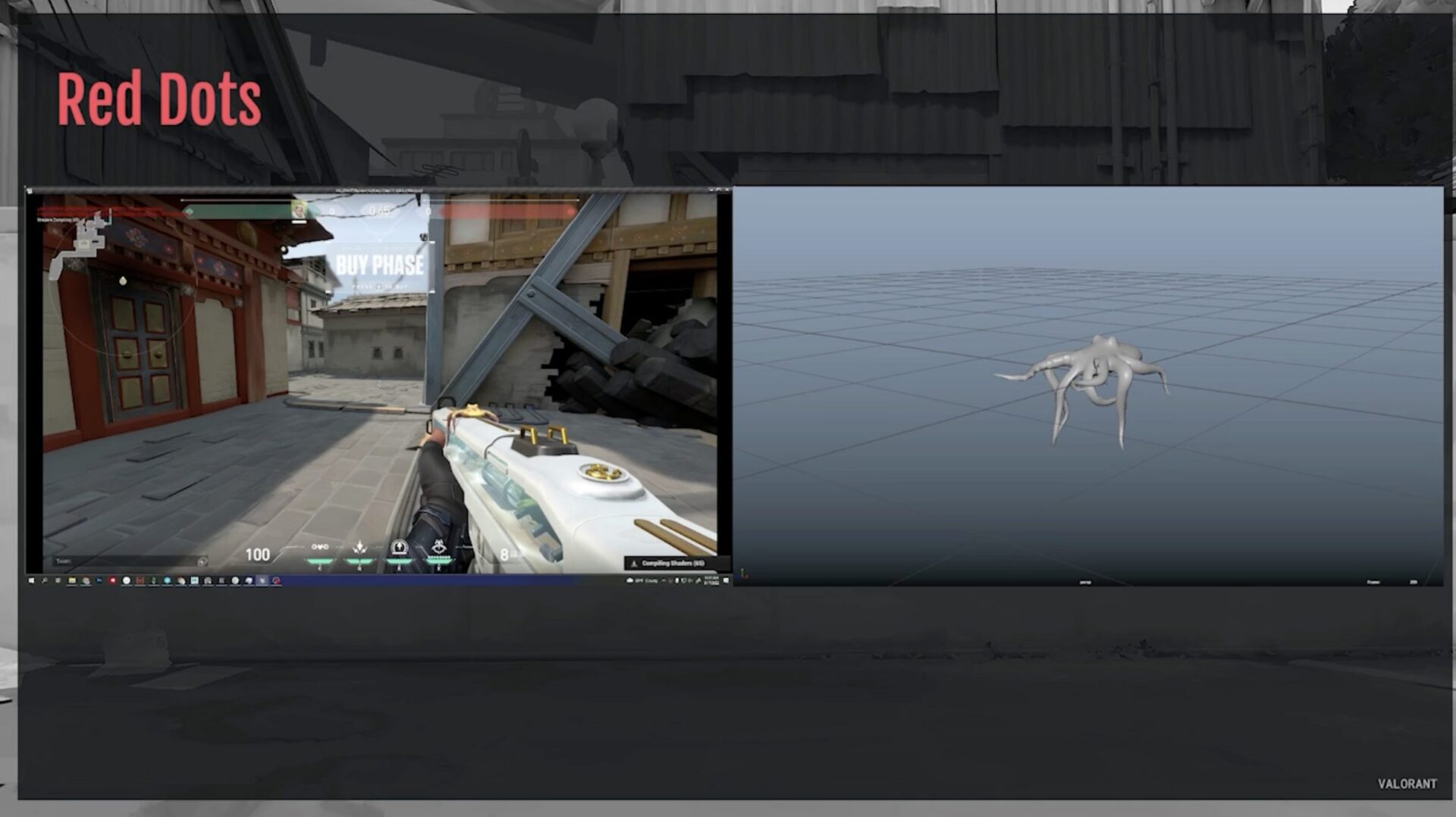
For Riot’s animators, Autodesk Maya is also part of the process of testing and communicating ideas. Russert describes prototyping a weapon barrel in Maya that clicks without making a full rotation while frozen, then spins after thawing. The Maya prototype gave engineers a visual reference for what the team wanted to achieve.
Reusable foundations, distinctive personalities
The team also uses an established animation direction to guide work across a collection of weapon skins. In one case, Russert spent about three days developing an animation with spinning turbines, including reviews, approvals, and timing checks. The team initially budgeted roughly a week and a half to adapt it across the remaining weapons.
Instead, Russert describes transferring animation curves from one weapon to another and adjusting them for differences such as equip time and firing rate. Because he already understood the original setup, he says, the curve transfer and adjustment took about half an hour. It is a specific example of how reusing creative work can leave more time to refine the details that make each weapon feel unique.
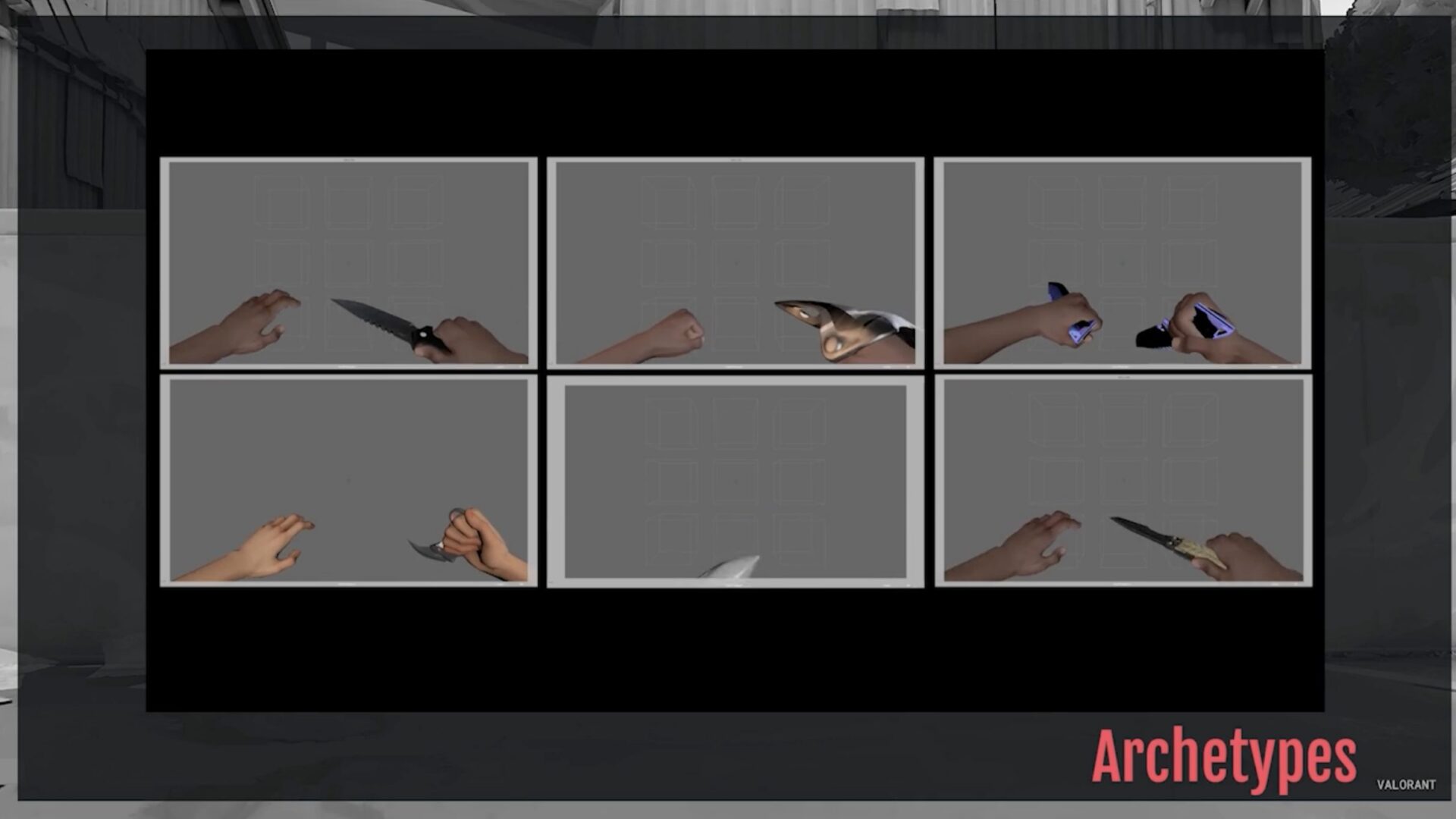
Reuse is a recurring principle in VALORANT’s premium-content animation. Weapon archetypes give animators an established motion foundation, even when a new skin has a completely different silhouette, model, texture, or visual effect. Within that structure, the team can experiment with interactions and personality.
One knife, for instance, can appear to flip continuously in the player’s hand when the inspect action is triggered repeatedly at just the right rhythm. Russert describes experimenting with button inputs, blend times, and starting frames to find an interaction that feels playful without introducing a new control.
In another skin set, an animator established the animation direction with one representative weapon before developing small creatures that help reload the rest. Each creature had its own personality—excitable, affectionate, or cheerfully oblivious—but still had to hit the firing and reload cues required by the underlying weapon.
Russert calls the team’s iterative method “steppingstones.” After finishing an animation, the group evaluates what worked, what could be clearer, and what to try next. An early dragon reload and a later lever-action sniper animation, for example, offered different lessons about communicating gameplay beats.
That process also helps animators learn from one another. Russert recalls an onboarding exercise in which principal animator Billy Lamb completed half of an animation for a weapon shifting between tactical and assassin archetypes, then handed the file to Russert to finish. The shared starting point helped him explore the established VALORANT style while contributing his own work.
Creativity within the frame
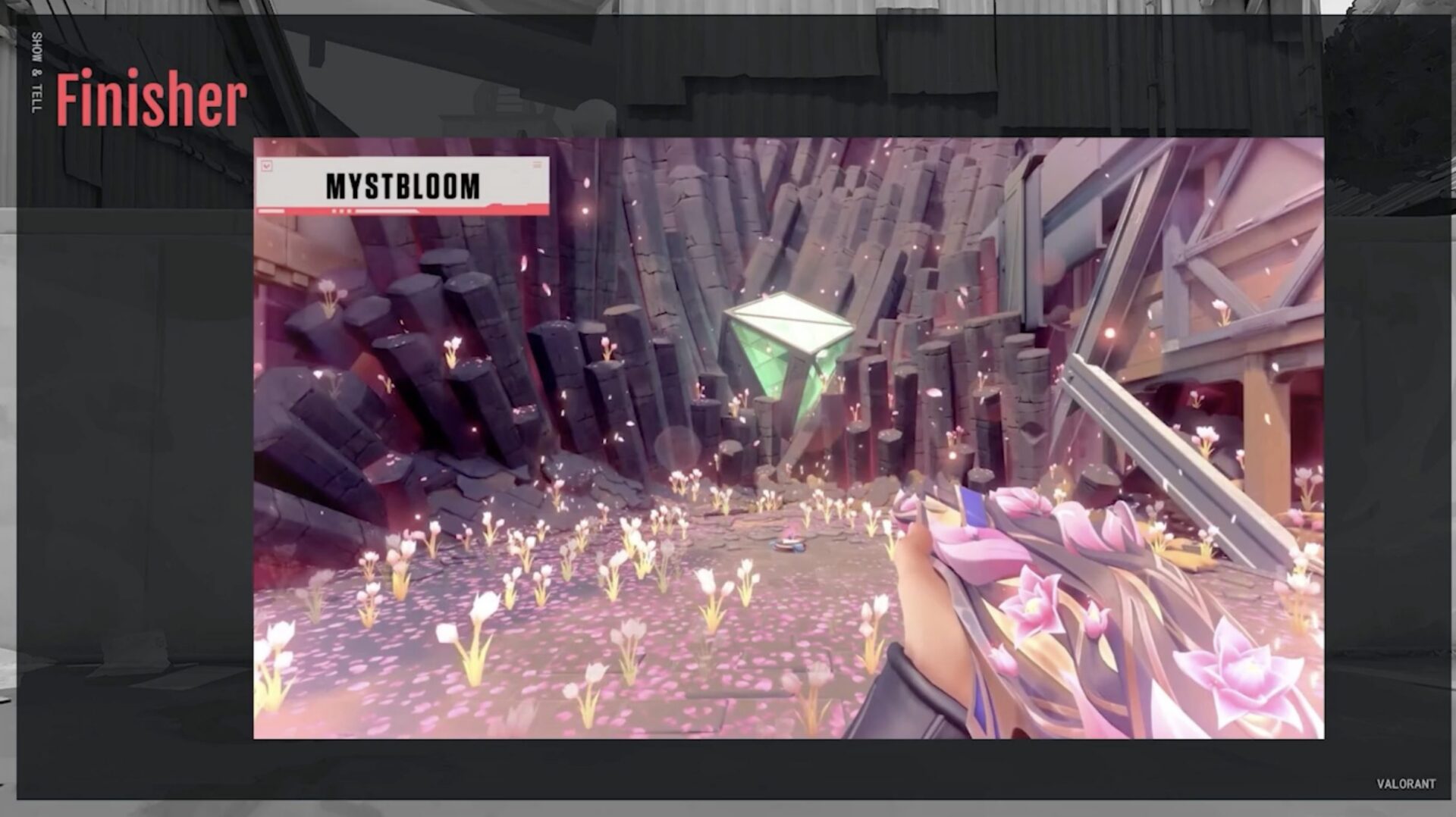
The most memorable VALORANT weapon animations do two jobs at once: they deliver a compelling fantasy and preserve the split-second clarity that competitive play demands. From Maya prototypes to reused curves and carefully tuned running cycles, Riot’s examples show how constraints can become a creative framework rather than a limit. As Russert puts it, the team keeps asking: “What can we learn from this and do something new?”