 Autodesk Media & Entertainment
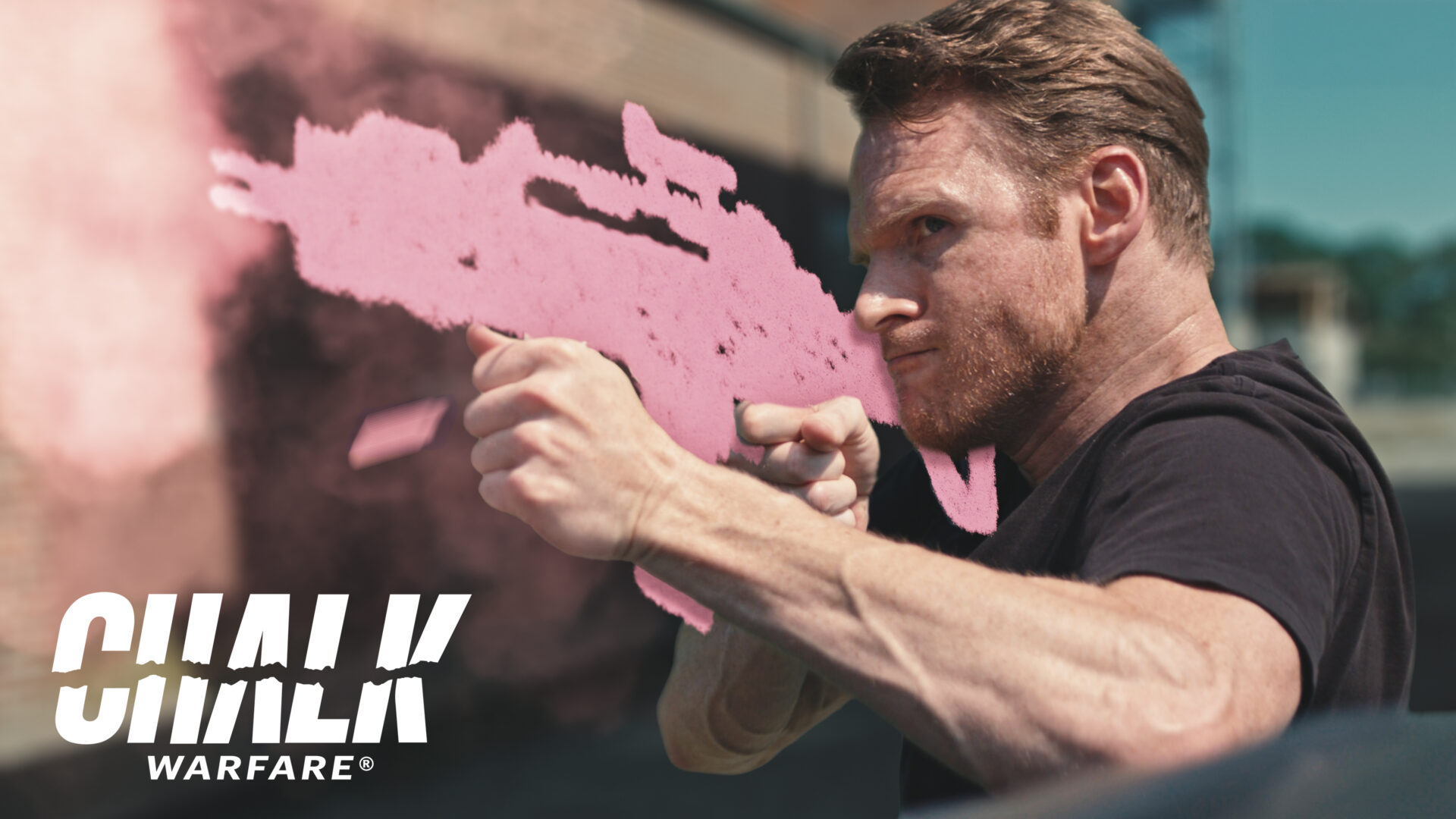
The magic of Chalk Warfare, a viral sensation that has amassed more than 400 million views and 3.1M subscribers on YouTube, comes from people creating something out of basically nothing. Characters sketch weapons and gadgets in chalk onto walls and then pull functional devices right out of the surface. This heightened sense of creative possibility mirrors the path of the artists behind the hit series.
“Our company has largely been in the world of marrying high-end visual effects on a cheaper-scale budget to pull off the impossible in the digital sphere,” says Sam Wickert, founder and creative director of SOKRISPYMEDIA. His company has parlayed its own YouTube success and collaborations with the likes of MrBeast into working in established traditional media, including handling previs for HBO’s The Last of Us.
Now SOKRISPYMEDIA is charting new ground by fulfilling a decade’s worth of Chalk Warfare fan requests to make the franchise into a playable video game—and fans are showing up. Since its reveal in early August 2026, Chalk Warfare on Steam has crossed 100,000 wishlists and opened its closed beta to the community. While simultaneously producing new Chalk Warfare films, SOKRISPYMEDIA anchors its film-to-game pipeline in Autodesk Flow Studio, Maya, 3ds Max, and Unreal Engine.
This just in: games are fun!
While SOKRISPYMEDIA has amassed its following and reputation on YouTube films, commercials, and previs/techvis, it began seriously exploring the prospect of Chalk Warfare as a game years ago, with prototypes starting in 2017.
“Making games is very hard,” Wickert says. “So the number one thing you want to focus on: Is your game fun? The years we spent prototyping, that was our number one concern.”
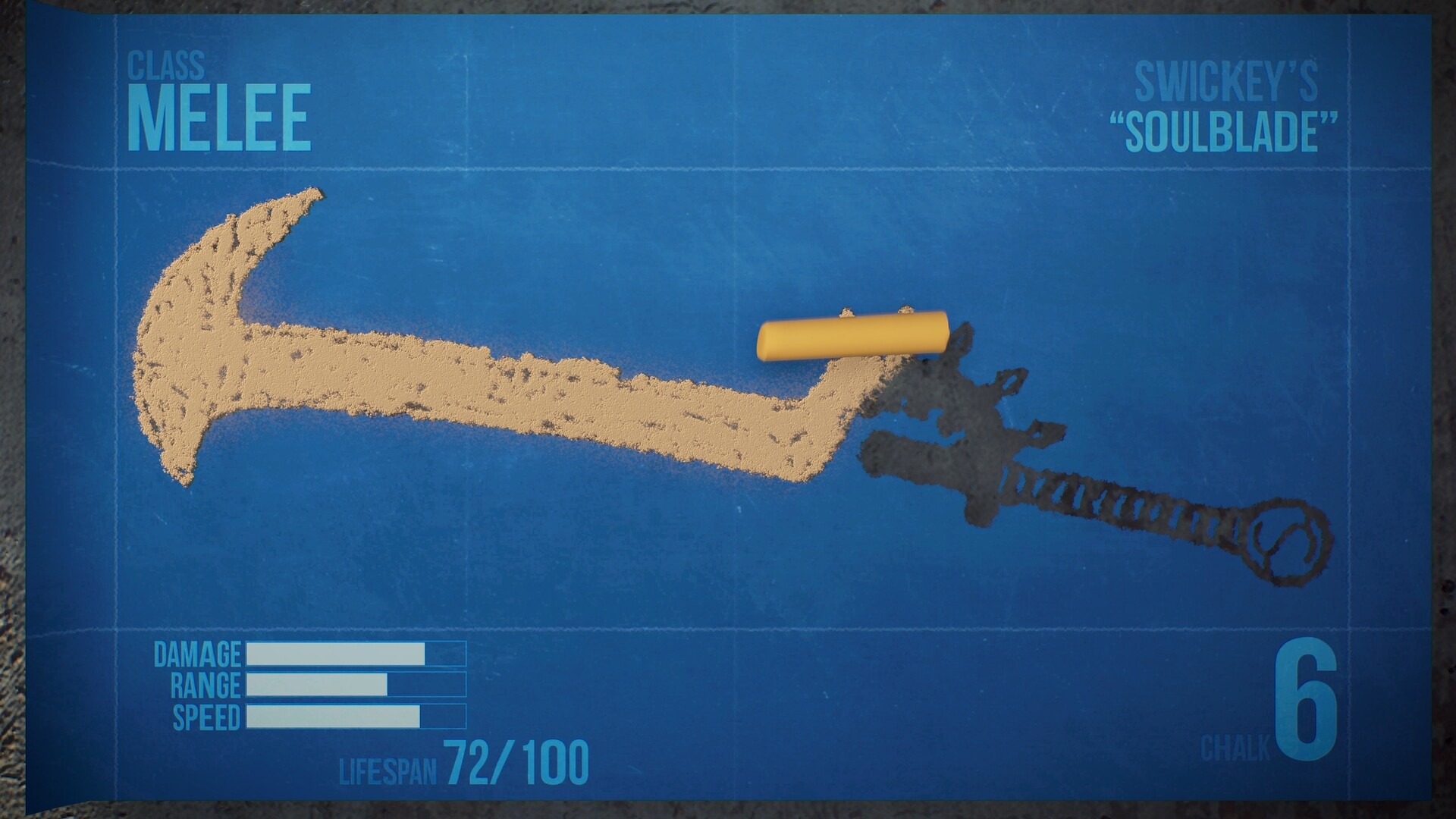
Prototyping also centered around the weapon-drawing mechanic that makes Chalk Warfare unique. The team built Chalk Vision, its own custom machine-learning model, so players can draw their own weapons and gadgets in-game rather than pick from templates. Chalk Vision is not generative AI: SOKRISPYMEDIA trained it in-house on a decade of its own Chalk Warfare drawings—it owns every image in the training set—and the model can run locally on the player’s machine rather than in a data center. It reads a sketch, works out how the weapon is held and what it does, and derives the item’s in-game stats from the drawing itself, so players can draw anything they can imagine. After that, iterative tests went on for a couple of years. Once it sufficiently passed the “fun” test, the game went into full production in 2023.
Boss-level previsualization
Through its extensive VFX work, SOKRISPYMEDIA has developed a full, traditional motion-capture stack, including Xsens suits, Manus gloves, and camera tracking. It can all fire into Unreal Engine for real-time capture, which Wickert says can account for 80% of the needed performance data for final animation. However, it does require a lot of setup, especially if they just want to test a shot idea to see if it will work.
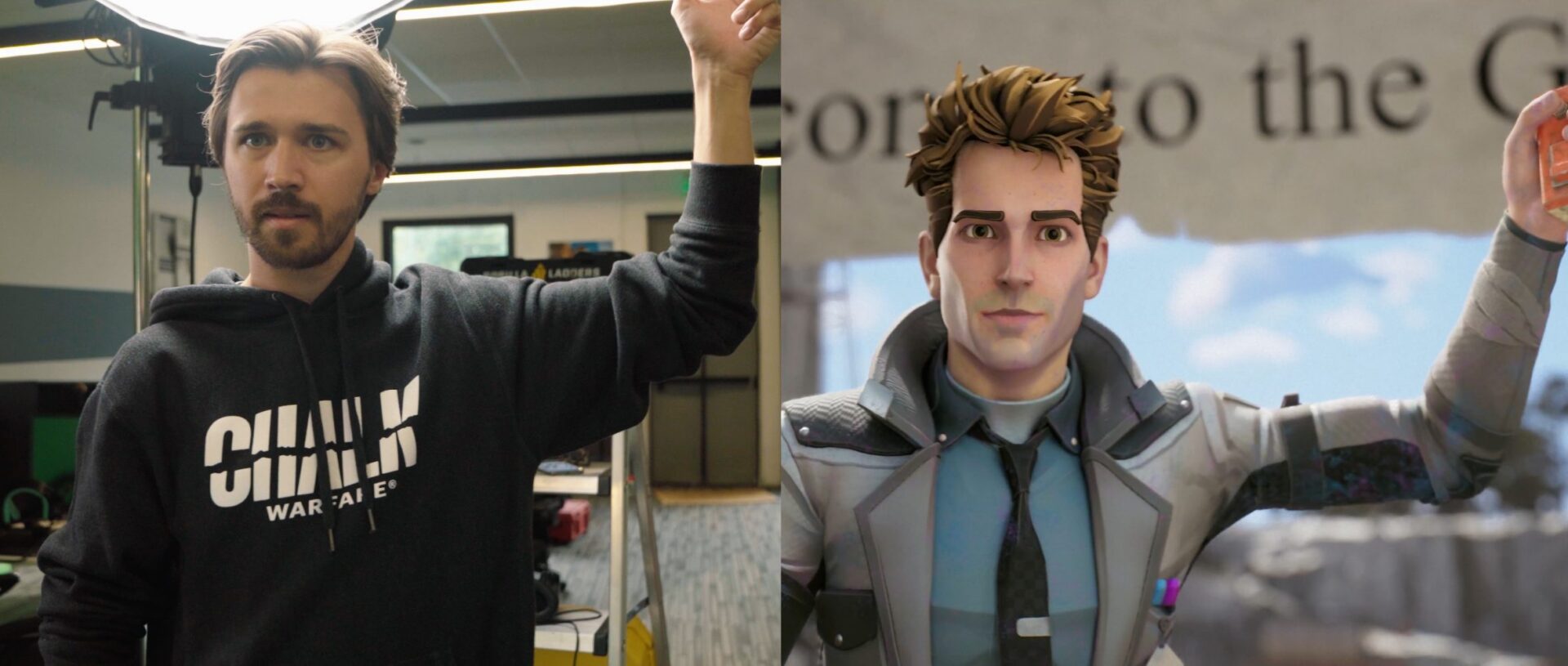
In that case, SOKRISPYMEDIA turns to Autodesk Flow Studio as a previs accelerator and the perfect mocap starting point for scene ideation. Wickert describes his Flow Studio workflow as lightweight. He just shoots a video on his phone in a single take, uploads the video to Flow Studio, and clicks on each actor in the frame to get back a rigged character with retargeted body and facial animation, as well as camera tracking.
“With Flow Studio, we can just stage our scenes with single shots,” Wickert says. “Its algorithm builds a biped model, and you’re able to stage previs scenes in Unreal Engine or Maya very, very quickly.”
It’s also very quick for him and his small team to rearrange the scenes that Flow Studio generates from their footage. They can efficiently iterate upon the staging, blocking, and timing of a scene, compounding their time savings with each round of revisions. On the game, that has meant new cinematics can be staged with a phone and an actor instead of a full suit session. Sometimes Flow Studio’s previs output even makes it to the next round of production.
“We’re often very surprised and very excited when we see the mocap that we end up getting from it,” Wickert says. “Sometimes we end up just using it for the cinematics as well.”
Sharing intellectual property assets
Chalk Warfare now lives essentially in multiple worlds. SOKRISPYMEDIA continues to produce YouTube shorts while it works on the game, so it designed an art pipeline where one intellectual property (IP) asset library can serve both mediums.
“Sharing assets between both the film and game has been a core concept of ours,” Wickert says. “It allows us to build the game as we’re also creating shorts and user-generated content for our audience.”
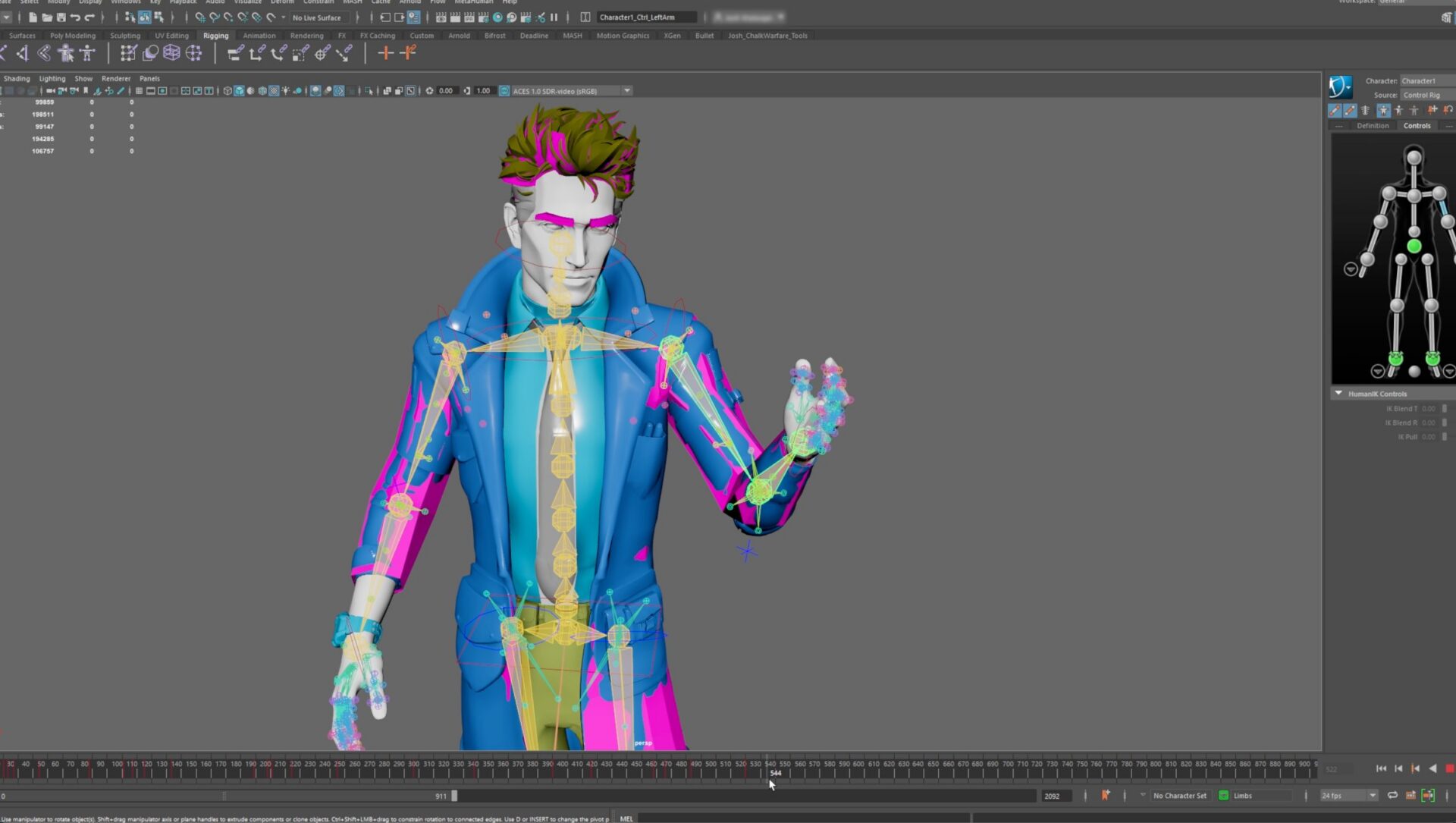
As one strategy, SOKRISPYMEDIA built sets natively in Unreal Engine that are mirrored both in physical space and Maya and 3ds Max, so a physical shoot location, a cinematic, and a playable game level can all share the same geometry. Characters work in a similar way. The Chalk Warfare host, Stuart, is played by a real-life actor in the films and doubles as the game’s in-game guide, built in Maya on a customized MetaHuman rig of about 600 bones. This gives animators the option to hand-key facial performances if they want it for a shot. In the closed beta, Stuart is the one teaching players to draw—and reacting to what they make, with hundreds of motion-captured responses recorded at the studio.
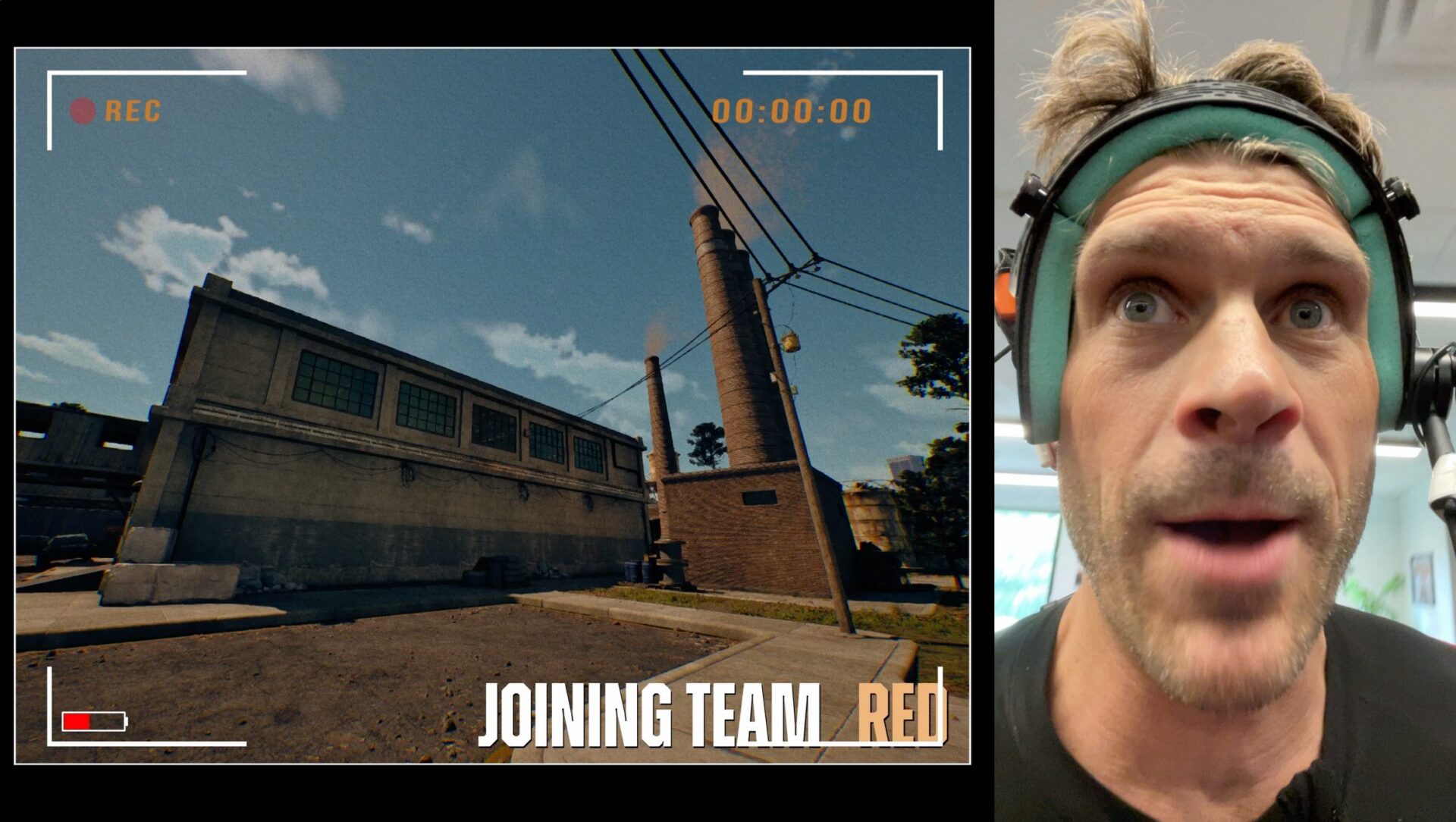
“We used the MetaHuman pipeline but with custom characters, which is quite awesome,” Wickert says. “It makes it very simple to pull off some pretty wild facial animations with ease—just from an iPhone 12 doing all the facial motion capture.”
Meanwhile, much of the character work shuttles between Maya and 3ds Max. “The beautiful thing about the Autodesk products is you really can use 3ds Max and Maya together,” Wickert says. “We use 3ds Max for different animation assets and rigging solutions. For character creation, we largely utilize a pipeline with Maya in particular.”
Filmmaking and game-creation crossover
Wickert describes some of the upside of being a filmmaker working in game development. For example, creating cinematics in Unreal Engine offers him the freedom to re-pose characters, re-frame shots, or change the lighting and cameras at any time, as well as easy movement to and from Maya or 3ds Max for more surgical animation or character work when a shot needs more hand-tuned detail.
“This is very empowering as a filmmaker,” he says. “At any time, I’m able to stage a scene, relight, change the acting, change the lighting—in a way, it’s kind of like playing God.”
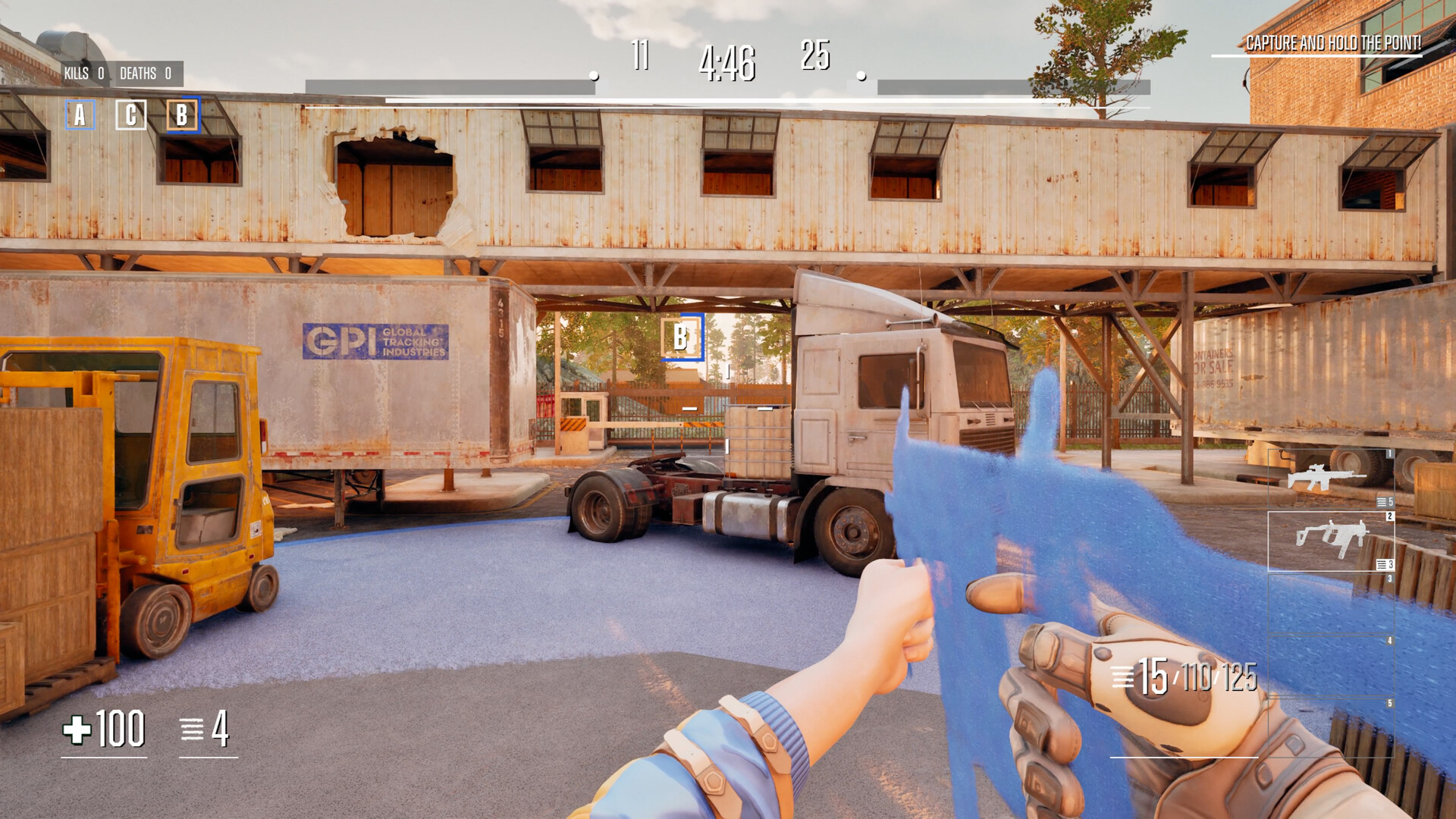
And because games render in real time rather than through an offline VFX pipeline, the studio built a custom script that re-skins its high-fidelity hero assets for the game, so the game carries the same Chalk Warfare look and feel fans know from SOKRISPYMEDIA’s high-end camera and VFX shots.
From Unreal Fest to 100,000 wishlists
The game made its first public appearance at Unreal Fest Chicago in June 2026, where SOKRISPYMEDIA was a Gold sponsor with its own booth and attendees got hands-on with an early build. The official reveal came in early August 2026, inside a new live-action episode, Chalk Warfare 4.5, now past half a million views. The Steam page cleared the team’s launch goal of 10,000 wishlists in its first weekend and crossed 100,000 in just a little over two months.
The closed beta is now live, with new waves of testers coming in every few days ahead of multiplayer testing. Testers play through Stuart’s tutorial, then climb a leaderboard by drawing more weapons—and every drawing feeds back into Chalk Vision, which has already been retrained several times on beta players’ sketches. The team expected a few dozen drawings per player; the two strangers battling for the top of the leaderboard drew more than 500 each, and became friends along the way.
SOKRISPYMEDIA is documenting the whole build in a dev vlog series on its YouTube channel—the first episode has passed 200,000 views—and a public demo is slated to hit Steam at the start of 2027, with the full game to follow.
Small teams with big dreams
With Chalk Warfare—both the YouTube short films and the video game now in closed beta—SOKRISPYMEDIA built a unique franchise with a powerful fan connection. Everything else the studio has done, from technical production to audience development, is impressive, and much of it is repeatable by other small teams. By making the Autodesk Media & Entertainment Collection the backbone to both its film and game production pipelines, it gets Flow Studio for previs and AI mocap, Maya for characters and detailed animation, and 3ds Max for environments and rigging—all in one license.
“There’s never been a better time to be truly empowered by all the software when you look at it like: This stuff is helping me make something cooler, faster, and better,” Wickert says.
And after gaining an audience, the SOKRISPYMEDIA blueprint leverages easily available tools and social media to build audience excitement, encourage audience involvement, listen to and honor audience feedback, and strengthen bonds by amplifying user-generated content—in Chalk Warfare’s case, right down to fans’ own drawings becoming playable weapons.
Wickert says, “All of that leads to us being able to make the project that we’ve always dreamed of.”
Chalk Warfare is available to wishlist on Steam now, and fans can sign up for the closed beta at chalkwarfare.com.